OBSTRUCTIVE SLEEP APNEA · HEALTH GUIDE
Why Do I Wake Up With a Headache—Could It Be Sleep Apnea?
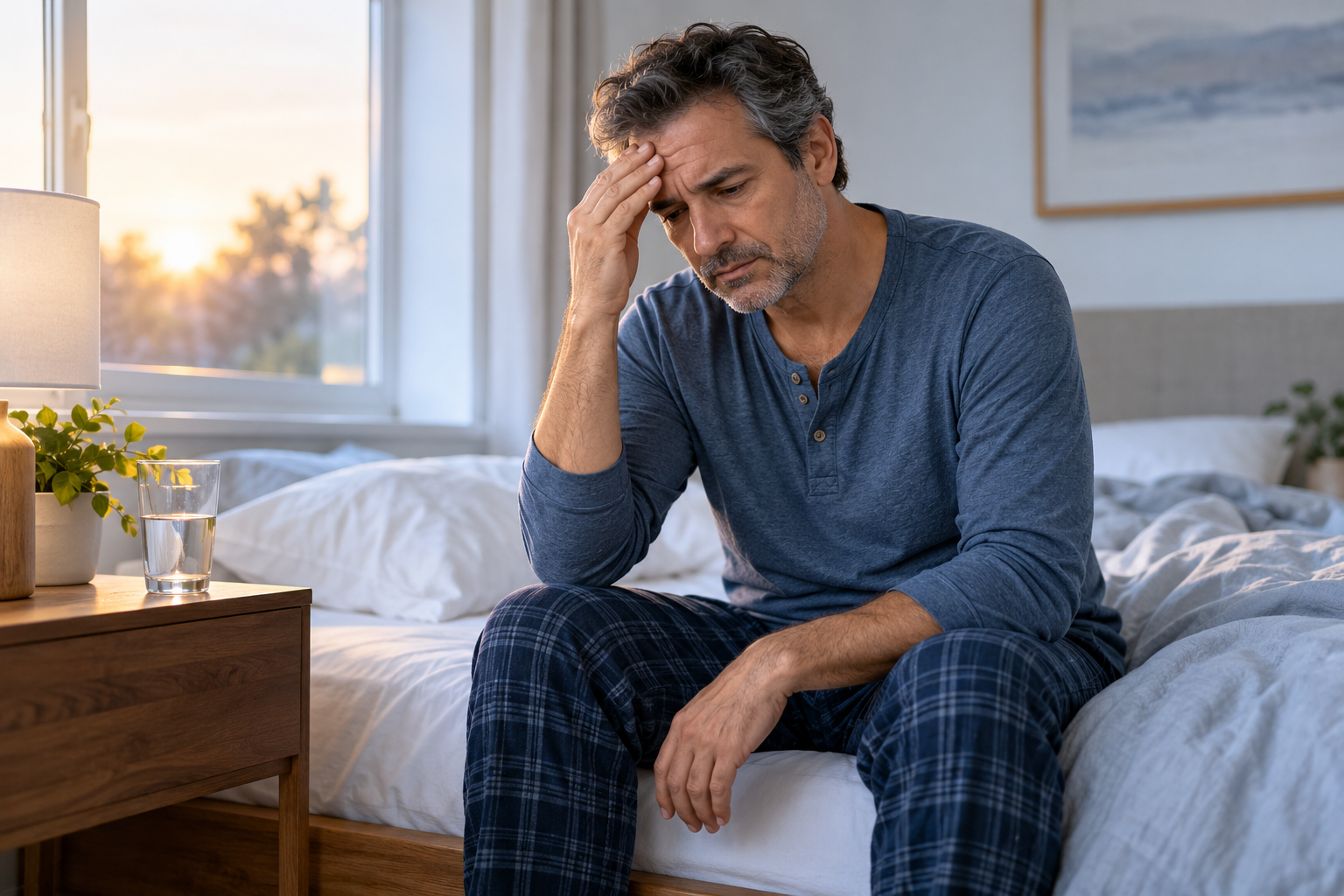
Sleep apnea can cause morning headaches, especially when they occur with loud snoring, witnessed breathing pauses, gasping, dry mouth, or daytime sleepiness. But morning headache alone cannot diagnose apnea, and sudden or neurological headache symptoms need urgent care.
The short answer
Yes—obstructive sleep apnea can be one reason a person wakes with a headache. Repeated narrowing or closure of the upper airway disrupts sleep and may cause changes in oxygen and carbon dioxide during the night. The National Heart, Lung, and Blood Institute and the NHS both include headache, particularly on waking, among possible sleep-apnea symptoms.
A morning headache by itself is not enough to diagnose apnea. Dehydration, migraine, teeth grinding, medication overuse, alcohol, caffeine withdrawal, poor sleep, high blood pressure, infection, and other conditions can produce similar pain. Sleep apnea becomes more plausible when headache occurs alongside loud habitual snoring, witnessed pauses in breathing, choking or gasping, unrefreshing sleep, dry mouth, frequent nighttime urination, or marked daytime sleepiness.
What a sleep-apnea headache may feel like
There is no single pain pattern that proves sleep apnea. People often describe pressure or a dull ache present on waking, sometimes on both sides of the head, that improves after getting up. It may be less typical of migraine if it lacks nausea, light sensitivity, sound sensitivity, or a one-sided throbbing pattern—but symptoms overlap, and a person can have both migraine and sleep apnea.
Frequency matters. An occasional headache after a short night is different from a recurring pattern that appears most mornings. Record when the pain begins, where it is felt, how long it lasts, what other symptoms occur, and whether anyone has noticed snoring or breathing pauses. This diary helps a clinician distinguish a sleep-related pattern from primary headache disorders and medicine-related causes.
Why interrupted breathing may trigger pain
During obstructive sleep apnea, throat tissues repeatedly narrow or block airflow while breathing effort continues. Each event may lower oxygen, raise carbon dioxide, and prompt a brief arousal that reopens the airway. These repeated physiological shifts and fragmented sleep are plausible contributors to morning headache, although not every person with apnea develops one and headache severity does not reliably measure apnea severity.
Morning headache can also occur with central sleep apnea or sleep-related hypoventilation. Central apnea involves impaired breathing signals rather than a blocked throat; hypoventilation means breathing is too shallow to remove enough carbon dioxide. Heart failure, stroke history, opioid use, neuromuscular disease, kidney failure, severe obesity, and high altitude can change the differential. These conditions require medical evaluation rather than a snoring remedy.
Look for the symptom cluster, not one clue
Ask a bed partner about breathing that stops and starts, loud snoring, snorting, choking, or restless sleep. Notice whether you wake with a dry mouth, feel unrefreshed despite enough time in bed, struggle to concentrate, or become sleepy during quiet activities. NHLBI notes that women may be more likely to report morning headaches, tiredness, insomnia, depression, or anxiety rather than classic loud snoring alone.
Risk rises with excess weight, a larger neck or crowded airway, aging, alcohol or sedative exposure, smoking, nasal obstruction, enlarged tonsils, and family or anatomical factors. However, thin people and people who do not fit a stereotypical profile can still have apnea. Snoring is common and does not always mean apnea, while absence of reported snoring does not rule it out—especially for someone who sleeps alone.
A phone recording or smartwatch cannot make the diagnosis
Consumer devices may record snoring, estimated oxygen changes, movement, or sleep stages. They can provide a clue worth discussing, but they do not replace a validated sleep study interpreted in clinical context. Device algorithms, loose sensors, skin factors, movement, and proprietary scoring can create false reassurance or false alarms.
Similarly, online questionnaires such as STOP-Bang can estimate risk but cannot confirm or exclude disease. A high score supports evaluation; a low score does not settle a concerning history. Do not buy or adjust a CPAP machine based only on an app. Pressure settings, mask choice, other breathing disorders, and treatment follow-up need qualified oversight.
How sleep apnea is actually tested
Diagnosis begins with a comprehensive sleep evaluation. A clinician reviews symptoms, medicines, alcohol and opioid use, medical conditions, sleep schedule, examination findings, and safety risks. Testing then measures breathing during sleep. Polysomnography in a sleep laboratory can record airflow, breathing effort, oxygen, heart rhythm, brain activity, sleep stages, and limb movement.
The American Academy of Sleep Medicine supports either polysomnography or a technically adequate home sleep apnea test for uncomplicated adults with signs suggesting moderate-to-severe obstructive sleep apnea. Home testing is not simply a general sleep tracker. If one home test is negative, inconclusive, or technically inadequate while suspicion remains, laboratory polysomnography may be needed. Significant heart or lung disease, neuromuscular weakness, stroke history, chronic opioid use, suspected hypoventilation, or other complex features can change the preferred test.
What the AHI does—and does not—tell you
Sleep reports commonly include the apnea–hypopnea index, or AHI: the average number of qualifying breathing reductions or pauses per hour of sleep or recording time. In adults, values are often grouped as 5–14 mild, 15–30 moderate, and above 30 severe, though exact interpretation depends on the scoring method, symptoms, oxygen changes, and medical context.
AHI is not the whole story. A person with a lower index may still have disabling sleepiness, major oxygen drops, cardiovascular disease, or events concentrated in REM sleep or while lying on the back. Home tests may underestimate severity because recording time is not always true sleep time. Treatment decisions should combine the report with symptoms, risks, preferences, and professional assessment.
Treating confirmed apnea is more than stopping snoring
Positive airway pressure—often CPAP—uses air pressure to keep the airway open and is a central treatment for many adults. It should be used whenever sleeping, including naps and travel, as prescribed. Mask leak, nasal congestion, dryness, pressure discomfort, and claustrophobia can often be improved by mask fitting, humidification, pressure review, or gradual acclimatization rather than abandoning treatment.
Depending on anatomy and disease severity, options may include a professionally fitted oral appliance, positional treatment, weight management when relevant, treatment of nasal obstruction, selected surgery, or hypoglossal nerve stimulation. Orofacial exercises may be useful for selected patients but should not be presented as a guaranteed replacement for established therapy. The goal is to control airway events, oxygen changes, symptoms, and risk—not merely make the bedroom quieter.
Lifestyle steps that help—but have limits
Avoiding alcohol near bedtime may reduce airway collapse and sleep fragmentation. Review sleeping pills, opioids, and sedating medicines with the prescriber; never stop them abruptly without advice. Side sleeping can reduce events for some position-dependent cases. Regular sleep timing, adequate sleep opportunity, physical activity, smoking cessation, and gradual weight loss when indicated can improve general sleep and cardiometabolic health.
These measures do not prove that apnea has resolved. A person can lose weight, stop drinking, or sleep on the side and still have clinically important obstruction. Repeat testing may be appropriate after a major weight change, surgery, recurrence of symptoms, or a clinician-directed treatment adjustment. Do not use mouth taping, unregulated appliances, essential oils, or supplements as substitutes for diagnosis and monitored care.
Safety matters before the test is completed
Excessive sleepiness can impair reaction time and driving. If you have nodded off at the wheel, had near misses, or cannot stay alert during safety-critical work, stop driving or operating machinery and seek prompt medical advice. Coffee, open windows, loud music, and short naps are not dependable protection against a microsleep.
Tell surgeons, anesthetists, dentists, and clinicians who prescribe sedatives or opioid pain medicine if apnea is diagnosed or strongly suspected. Breathing can worsen around sedation and after procedures. If you already use CPAP, ask whether to bring the machine. Continue prescribed treatment unless the care team advises otherwise.
Headache red flags that are not a wait-and-see problem
Call emergency services for a sudden, extremely severe headache; headache with new facial droop, arm weakness, speech trouble, confusion, fainting, seizure, loss of vision, severe imbalance, or repeated vomiting; or headache after a significant head injury. The CDC includes sudden severe headache with no known cause among stroke warning signs. Fever with a stiff neck, severe breathlessness, blue lips, or chest pain also requires urgent assessment.
Seek timely medical review for a new headache after age 50, steadily worsening pain, headache triggered by coughing or exertion, cancer or immune suppression, pregnancy or the postpartum period, or a major change from your usual pattern. Sleep apnea may coexist with another headache cause; discovering snoring should not delay evaluation of danger signs.
A practical next-step plan
For two weeks, record morning headache days, duration, associated nausea or light sensitivity, bedtime, wake time, alcohol, medicines, and daytime sleepiness. Ask someone to observe or record only the sound of snoring and gasping if privacy permits. Bring the information—not just an app score—to primary care or a sleep clinician. Mention heart, lung, neurological, kidney, and opioid history.
If a sleep study confirms apnea, use the prescribed treatment consistently and schedule follow-up to review objective device data and symptoms. Improvement in morning headache supports—but does not alone prove—effective control. Persistent headache deserves its own assessment even when the AHI improves. The most useful outcome is safer, restorative sleep plus appropriate headache care, not a single number or testimonial.
Where a commercial program may fit
Stop Snoring And Sleep Apnea Program by Christian Goodman is a commercial guide focused on breathing, nighttime habits, and home routines. Some general habits may complement professional care, but a guide cannot measure overnight airflow, oxygen, sleep stages, carbon dioxide, or treatment response. We have not identified clinical trials showing that this specific program diagnoses or controls obstructive sleep apnea.
Use the linked review to understand the program’s scope and evidence limits. Do not replace a recommended sleep study, CPAP, oral appliance, or medical follow-up with exercises or lifestyle advice alone. Any commercial claim should be separated from established diagnostic and treatment guidance, particularly when daytime sleepiness creates a driving risk.
Sources and further reading
Medical sources were checked on October 1, 2026. The linked commercial program is discussed separately from clinical evidence.
RELATED GUIDE · CHRISTIAN GOODMAN
Stop Snoring And Sleep Apnea Program
A commercial breathing and nighttime-routine guide. Read our existing review for its scope, evidence limits, and safety context. It cannot diagnose apnea, measure oxygen, or replace prescribed airway treatment.
Read the program review →
This article is general health education, not personal medical advice. Consult a qualified professional for diagnosis, sleep testing, headache assessment, or treatment decisions.