PARKINSON'S DISEASE · MEDICATION & NUTRITION
Does Protein Interfere With Levodopa? How to Time Meals Safely
Protein can reduce levodopa's effect for some people with Parkinson's, but eliminating protein is rarely the answer. Learn who may benefit from changing meal timing and how to do it safely.
The short answer
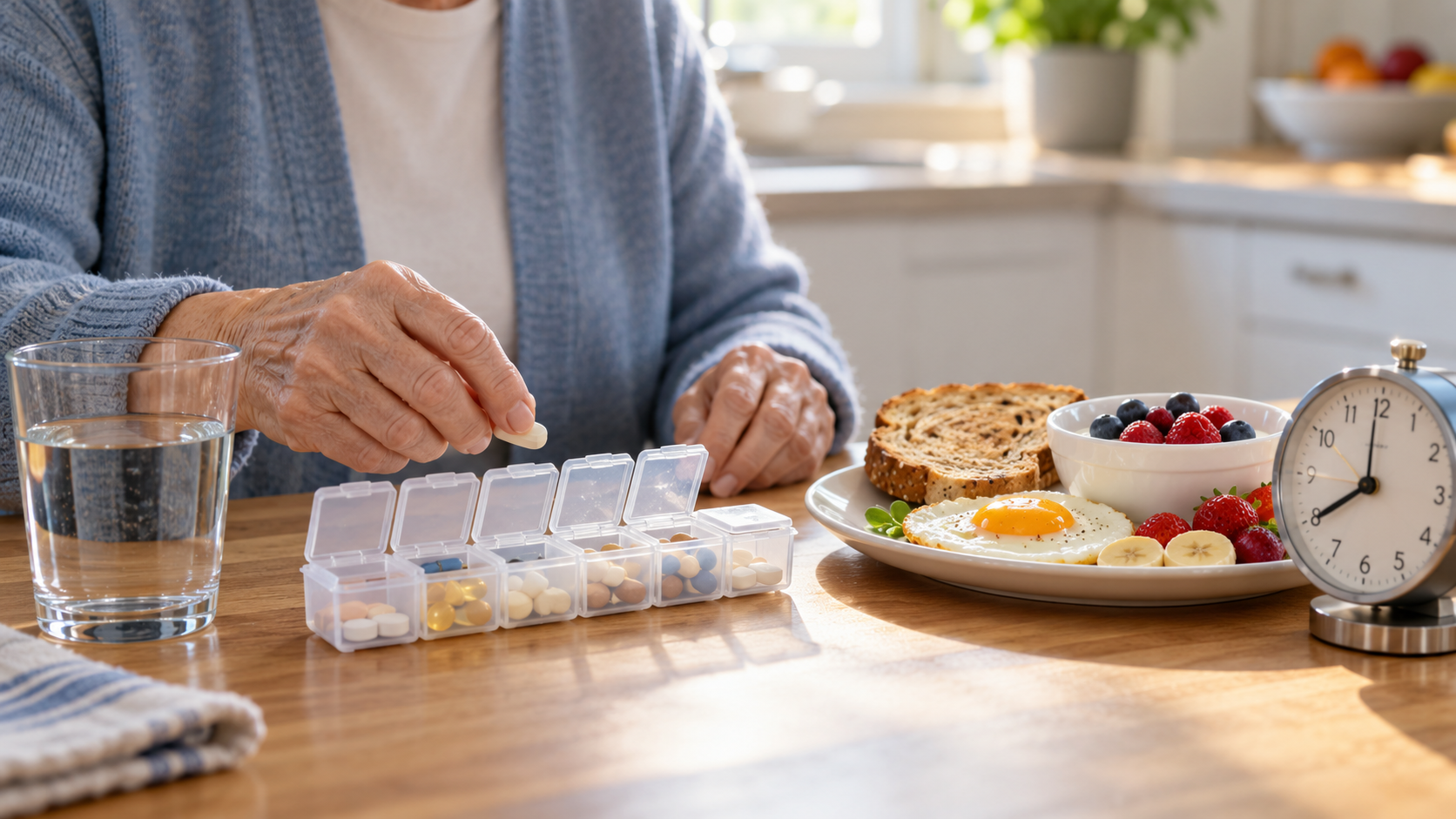
Yes, dietary protein can interfere with levodopa for some people with Parkinson's disease. The amino acids produced when protein is digested can compete with levodopa for transport from the gut and into the brain. The practical result may be a dose that takes longer to work, feels weaker, or wears off unpredictably. However, this interaction is not equally important for everyone, and eating protein is not dangerous when taking levodopa.
Do not stop protein or change carbidopa/levodopa on your own. Protein is essential for maintaining muscle, immune function, wound healing, and strength—especially in older adults. If meals seem linked to medication off periods, record the pattern and discuss it with a neurologist, movement-disorders clinician, pharmacist, or Parkinson's dietitian. The goal is reliable medication response without malnutrition or unwanted weight loss.
Why protein can change levodopa's effect
Levodopa is a building block the brain can convert to dopamine. After a tablet reaches the stomach, it must move into the small intestine, enter the bloodstream, and cross the blood-brain barrier. Large neutral amino acids from foods such as meat, fish, eggs, dairy, soy, beans, nuts, and protein supplements use some of the same transport systems. When many amino acids are present at the same time, less levodopa may reach its target quickly.
Food can also delay stomach emptying. Parkinson's itself may slow digestion, and a large or high-fat meal may keep a tablet in the stomach longer before it reaches the small intestine. This helps explain why a dose can sometimes feel delayed after a substantial meal even when protein is not the only factor. Constipation, dehydration, and other medicines may add to the variability.
Not everyone needs a special protein schedule
Some people take levodopa with meals for years and notice no meaningful difference. The interaction often becomes more noticeable after motor fluctuations develop: predictable or unpredictable periods when stiffness, slowness, tremor, pain, or anxiety return between doses. The American Parkinson Disease Association emphasizes that no food is inherently unsafe with carbidopa/levodopa; meal advice is about improving absorption in people who experience a problem.
A single difficult afternoon does not prove that protein is responsible. A late dose, poor sleep, stress, infection, constipation, a very large meal, or progression of symptoms can look similar. Before changing the diet, look for a repeatable pattern over several days and ask the care team to review the whole medication schedule.
The usual timing approach
Many clinical resources suggest taking immediate-release levodopa on an empty stomach, often about 30 to 60 minutes before a meal or one to two hours after eating, when this is practical and tolerated. Follow the instructions for your exact formulation and prescription, because controlled-release, extended-release, intestinal, and other levodopa products do not all behave identically. Do not use a general article to override the pharmacy label or your prescriber's plan.
If taking levodopa without food causes nausea, a small low-protein snack such as plain crackers, toast, fruit, or oatmeal may help. Nausea can also reflect the dose or carbidopa content and deserves professional advice. Persistent vomiting, inability to keep medicine down, or dehydration needs prompt attention.
What is protein redistribution?
Protein redistribution keeps an adequate daily amount of protein but moves more of it to the evening, while breakfast and lunch contain less. The aim is to reduce daytime competition when mobility is most needed. This strategy may help selected people with troublesome motor fluctuations, but it is not a universal Parkinson's diet and should be supervised. It can make evening symptoms or dyskinesia harder to manage in some people.
Research reviews report potential benefit from protein redistribution, yet the evidence base is limited by small, older, or uncontrolled studies. A 2023 review in npj Parkinson's Disease concludes that management is not one-size-fits-all and highlights the need to protect nutritional status. This is an option with a plausible mechanism and some clinical support, but not a guarantee of better movement for every patient.
Why eliminating protein can backfire
A very low-protein diet can contribute to weight loss, weakness, loss of muscle, poorer balance, and slower recovery from illness. Parkinson's can already increase the risk of unintentional weight loss because of reduced appetite, swallowing difficulty, constipation, tremor, dyskinesia, and the effort required to shop or cook. Restricting several food groups without a replacement plan may worsen those problems.
Ask for a dietitian experienced in Parkinson's if you are losing weight, frail, exercising regularly, recovering from illness, or considering protein redistribution. The dietitian can estimate needs, spread calories through the day, and choose foods that fit chewing, swallowing, diabetes, kidney disease, and cultural preferences. People with chronic kidney disease need individualized protein guidance rather than a generic Parkinson's plan.
A safe seven-day test to discuss with your care team
Before making a major dietary change, keep a short diary for seven days. Record the exact time each levodopa dose is taken, meal and snack times, the main protein foods, when movement becomes easier, and when symptoms return. Note constipation, nausea, sleep, stress, and missed doses. A description such as 'dose at 8:00, breakfast at 8:15, walking easier at 9:20' is often more useful than a vague statement that the medicine failed.
Bring the diary to the prescribing clinician or pharmacist. They may suggest separating one dose from a meal, adjusting meal composition, treating constipation, reviewing interacting medicines, or changing the prescription. Change one variable at a time when possible. Never double a dose because it feels delayed, and never stop levodopa suddenly; abrupt withdrawal can cause dangerous severe rigidity, fever, confusion, and autonomic instability.
Other food and supplement issues
Iron supplements and iron-containing multivitamins can reduce levodopa absorption in some circumstances. Ask a pharmacist how far apart to take them; do not stop prescribed iron if you have iron deficiency. High-fat meals may delay stomach emptying. Fiber and adequate fluids can support constipation management, but increase fiber gradually and follow any fluid restriction given for heart or kidney disease.
Supplements marketed for dopamine, detoxification, or Parkinson's are not proven substitutes for levodopa. Some can interact with medicines or contain uncertain doses. Vitamin B6 can reduce the effect of levodopa taken without carbidopa, although modern combination products contain a decarboxylase inhibitor; the medication list still matters. Give the clinician and pharmacist a complete list of vitamins, powders, teas, and over-the-counter products.
When symptoms need prompt or urgent care
Call the Parkinson's team promptly for repeated dose failures, worsening falls, frequent freezing, new hallucinations, significant nausea, choking, or unintended weight loss. Swallowing trouble deserves assessment because aspiration can occur even when coughing is subtle. A speech-language pathologist can evaluate swallowing, and occupational or physical therapy may help with safe meals and mobility.
Seek emergency help for sudden one-sided weakness, facial droop, new speech trouble, severe chest pain, loss of consciousness, or choking with inability to breathe. High fever with profound rigidity, severe confusion, or a sudden major decline after missed or stopped Parkinson's medicine is also an emergency. Do not assume an abrupt neurological change is merely an off period or a food interaction.
What the evidence establishes—and what remains uncertain
Established evidence supports levodopa as an effective treatment for Parkinson's motor symptoms, and the biological competition between levodopa and large neutral amino acids is well described. Reputable Parkinson's organizations advise considering meal separation when a person notices a consistent food-related response. They do not recommend that everyone with Parkinson's eliminate protein.
Evidence for a specific protein-redistribution schedule is less certain. Reviews find possible improvement in motor fluctuations for selected patients, but study quality and methods vary. There is no good evidence that manipulating protein cures Parkinson's or stops neurodegeneration. The practical standard is individualized experimentation with professional supervision, adequate nutrition, and objective symptom tracking.
How to think about The Parkinson's Protocol
The Parkinson's Protocol by Jodi Knapp is a commercial lifestyle guide that discusses food and daily habits. It may help readers organize questions, but its recommendations should be separated from established medical evidence. We have not found evidence that this program cures Parkinson's, replaces levodopa, or prevents disease progression. Any suggestion to restrict food groups, add supplements, or alter medication timing should be checked with the treating team.
Use the guide as an optional discussion resource rather than a prescription. Ask: Is this recommendation compatible with my exact levodopa formulation? Could it increase weight loss, constipation, or swallowing risk? How will we measure whether it improves predictable off time? Keep prescribed treatment in place unless the clinician responsible for it recommends a change.
Questions for your next appointment
Ask whether your symptoms truly suggest delayed-on or wearing-off periods, whether a meal diary would help, and what interval is appropriate for your formulation. Ask how to handle nausea, whether iron or another medicine should be separated, and whether constipation or slow stomach emptying may be contributing. If weight or strength is falling, request nutrition and swallowing assessment early.
The most useful plan is specific enough to follow and flexible enough to nourish you: which dose to separate, which snack is acceptable, how much protein you need, and when to report a problem. Meal timing can improve consistency for some people, but preserving strength and safety matters just as much as making a tablet work predictably.
Sources and further reading
Medical sources were checked on October 4, 2026. The commercial program is discussed separately from clinical evidence.
- NINDS — Parkinson's Disease ↗
- American Parkinson Disease Association — Levodopa Dosing and Food Intake ↗
- Rusch et al. — Practical considerations for dietary protein and levodopa ↗
- Boelens Keun et al. — Food and Parkinson's medication review ↗
- Michael J. Fox Foundation — Parkinson's Disease and Diet ↗
- NHS — Parkinson's Disease ↗
RELATED GUIDE · JODI KNAPP
The Parkinson's Protocol
A commercial lifestyle guide covering food and daily habits. Read our existing review for its scope, evidence limits, and safety context. It does not replace Parkinson's medication or specialist care.
Read the program review →
This article is general health education, not personal medical advice. Consult a qualified professional for diagnosis or treatment decisions.