Everyday oral hygiene · Cleaning between teeth
Cleaning Between Teeth: Choose a Tool You Can Use Gently
Floss, holders, and interdental brushes serve different practical needs. Learn what to ask about fit, technique, and comfort without forcing a tool or treating pain as proof of cleaning.
AI assisted with drafting, organization, and the original fictional image. Mr.Hotsia reviewed sourcing and clarity only; no clinical review or medical qualifications are implied.
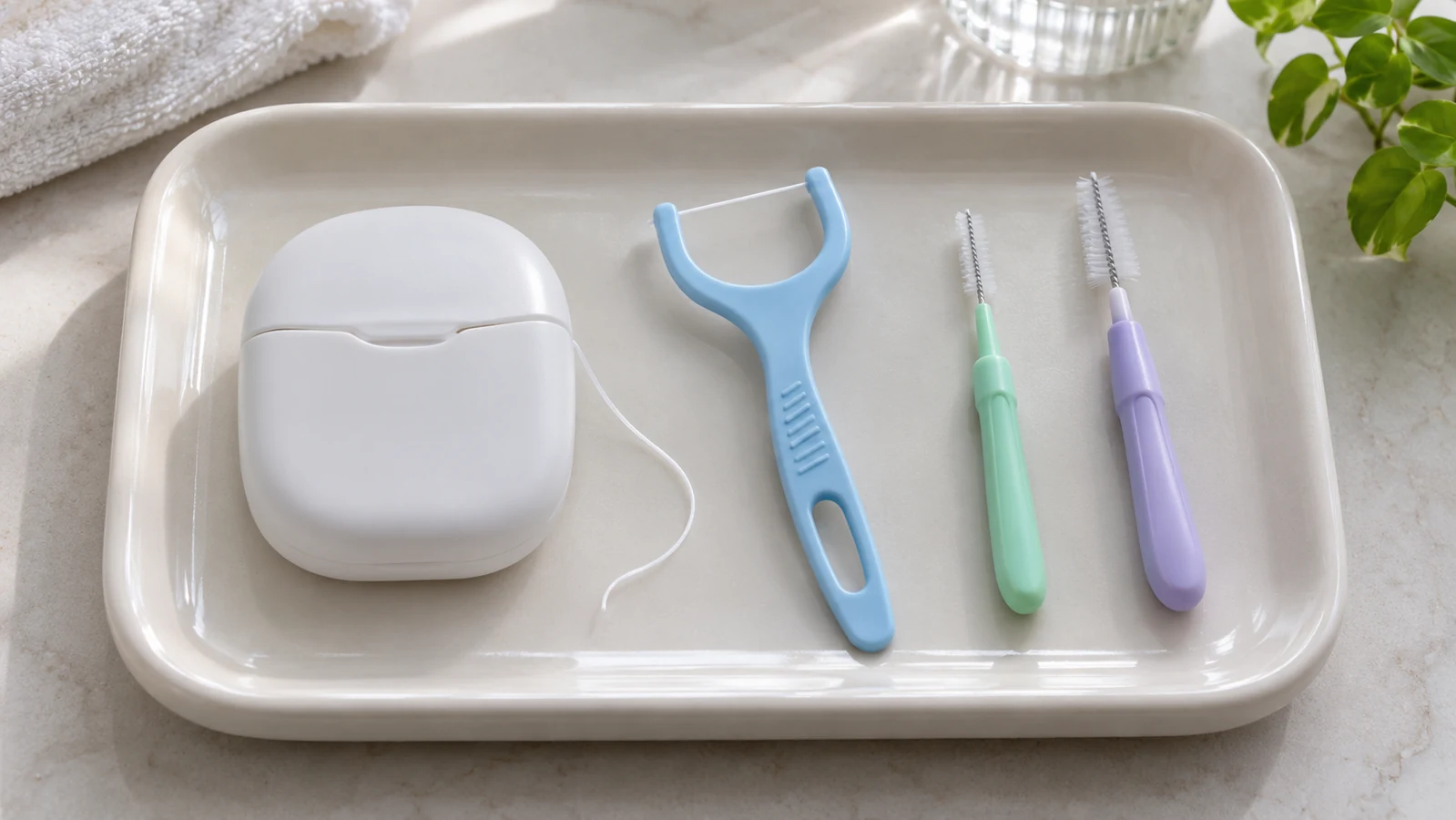
Brushing and cleaning between teeth do different jobs
A toothbrush is important, but it cannot fully clean every space between teeth. The American Dental Association recommends daily cleaning between teeth as part of an oral-hygiene routine. That does not mean the answer is to push a tool through any gap at any cost. A useful method has to suit the spaces in your mouth and be manageable in your hands. This article introduces floss, floss holders, and interdental brushes, with questions to take to a dentist or dental hygienist. It is written for adults seeking general information, not as a diagnosis of gum disease or a replacement for a personal demonstration.
Understand the target before choosing the tool
The National Institute of Dental and Craniofacial Research, or NIDCR, describes plaque as a film of bacteria on teeth. Cleaning between teeth helps remove plaque and food particles in areas that brushing alone may miss. Plaque is not simply another name for a large piece of food you can feel after lunch. Nor does the absence of visible debris prove that every surface is clean. NIDCR also distinguishes plaque from hardened tartar, which needs professional removal. The practical point is to make appropriate cleaning a regular habit, not to scrape harder in an attempt to remove deposits yourself.
Begin with the space, not a product ranking
Start by asking which tool suits the particular spaces you need to clean. The NHS describes interdental brushes as an option, especially where there are gaps, while the ADA lists several tools, including floss and water flossers. These are options to discuss, not a ranking in which the most expensive device automatically wins. An editorial example is to tell your dental team that you can reach one area comfortably but struggle with another. That is more informative than asking which product is best for everyone. Different areas may need different advice, and a general article cannot assign sizes by looking at a smile.
Gentle flossing follows the tooth
NIDCR advises easing floss between teeth without forcing it, then curving it around the side of a tooth and moving it along that surface. The ADA similarly warns against snapping floss into the gums. The movement is not a competition to reach deeper or apply more force. If you are unsure where the floss should rest or how to move it, ask for a demonstration in your own mouth. This short description does not account for every dental restoration or individual gum condition. A video can introduce an idea, but it cannot confirm that the pressure or position you use is appropriate.
Interdental brushes need a suitable fit
An interdental brush is a small brush designed for the spaces between teeth. The NHS says it should fit snugly and advises asking a dentist or hygienist about the best cleaning method. That is not an invitation to force the largest brush through a resistant gap. As an editorial shopping safeguard, ask which size or sizes were recommended and write down the actual product details rather than relying on a colour alone. This article does not define a universal colour code, select a brush size remotely, or suggest bending and pushing a tool until it passes through an area that feels blocked.
Hand comfort is part of choosing a method
The ability to hold and guide a tool matters. NIDCR notes that arthritis or other difficulties can make string floss hard to handle, and describes alternatives such as floss holders, threaders, water flossers, and tiny interdental brushes. If wrapping floss around fingers is awkward, that is useful information for the dental team rather than a personal failure. An editorial example is to bring the tool you currently use and explain which movement is difficult. Ask for a method you can manage without excessive strain. This is not advice to diagnose hand symptoms or to buy a device as treatment for arthritis.
Dental work deserves a specific demonstration
Braces, bridges, or other dental work can change the practical question from which tool to how to reach a particular area. The ADA notes that some people with dental work find water flossers useful, but that does not make one device suitable for every mouth. Ask the professional who knows your dental work to show where and how to clean, and whether any product has restrictions. An editorial preparation tip is to describe the exact spot that catches or feels inaccessible. Do not copy a technique intended for someone else’s bridge or braces, or treat a general illustration as a map of your own mouth.
Pain is feedback, not a cleaning target
The ADA says cleaning between teeth should not cause pain and recommends speaking with a dentist if it continues to hurt. Pain is not proof that a cleaning method is working especially well. Do not use this article as encouragement to push through discomfort, increase pressure, or repeatedly test a sore spot. An editorial way to describe the problem is to say which tool you used, where it hurt, and whether the difficulty happened each time. That information can help a professional assess technique and other possibilities. It cannot establish a cause by itself, and this article does not offer pain medicines or a home treatment plan.
Bleeding gums deserve a dental conversation
The NHS advises seeing a dentist when gums bleed during brushing or cleaning, or are painful and swollen. Bleeding should not be used here to decide either that you certainly have a particular disease or that nothing needs checking. A dental professional can examine the area and discuss the cleaning method you are using. Tell them what you have noticed rather than trying to name the cause from a photograph or an online list. This article does not set a waiting period, prescribe a gum treatment, or advise changing medicines. Follow any specific instructions you have already received from your own dental team.
Build a routine you can actually repeat
NIDCR recommends aiming to clean between teeth once a day. For the practical question of timing, the ADA emphasizes choosing a time you can use consistently and thoroughly; the NHS suggests flossing before brushing. Follow your own dental team’s advice if they have given you a particular sequence. An editorial habit-building option is to keep the recommended supplies together and choose a regular point in your routine when you are not rushing. The goal is not to create an elaborate tracking system or earn a perfect score. A manageable routine still needs an appropriate tool and technique, not merely a reminder on a phone.
Ask to demonstrate the technique back
A demonstration is most useful when you can show what you understood. After a dentist or hygienist explains a method, an editorial question is whether you can try it while they watch and correct the movement. Ask which areas need attention, how to recognize a suitable fit, and what to do if the tool will not pass comfortably. If finger movement, vision, or access is difficult, say so during the demonstration. These are communication suggestions, not a claim that a particular script guarantees a clinical outcome. You do not need to pretend a method feels easy simply because it looked simple when someone else performed it.
Bring useful details rather than a self-diagnosis
A useful appointment note can be short: the tool’s name, the area you struggle to reach, what happens when you try, and any discomfort or bleeding you have noticed. If you use several products, bring their packaging or a clear photograph of the labels. This is an editorial organisational suggestion, not a requirement to collect daily pictures or measure gum changes at home. Avoid turning your note into a diagnosis. The professional may need information you have not thought to record, and an examination can reveal things a description cannot. The purpose is to make the conversation clearer, not to replace it with a checklist.
Do not turn household objects into dental tools
Do not improvise with sharp household objects to clean between teeth. The ADA warns that objects not designed for the task can be harmful, and the NHS advises against wooden toothpicks for removing trapped food because they can damage gums. Keep a distinction between a tool specifically recommended by a dental professional and an object that happens to fit. An editorial alternative when your normal method is difficult is to ask for advice, not to look for a sharper substitute. This article does not recommend scraping under the gums, repairing dental work yourself, or using a tool to remove hardened deposits.
Keep product claims in proportion
A package may highlight convenience, cleaning technology, or a particular design, but a claim on a box does not establish personal suitability. An editorial comparison starts with the recommendation you received: what tool, which size if relevant, what technique, and what limitations. Then check that the item you are buying matches it. This article does not compare brands, certify the products in its image, or claim one method prevents every cavity or gum problem. Keep brushing and professional dental care in the picture. Cleaning between teeth is one component of care, not a guarantee that no other assessment or treatment will ever be needed.
Optional commercial reading has a separate role
Three optional commercial links on this page concern separate topics: The Arthritis Strategy for readers exploring joint-related information, TMJ No More for a separate interest in jaw comfort, and Overthrowing Anxiety for a separate interest in anxiety. None is a flossing guide, evidence for the dental recommendations here, or a treatment for bleeding gums. They are not substitutes for dental assessment or an individually suitable cleaning method. No purchase is needed to read the free sources below, and the cited NHS, ADA, and NIDCR resources do not endorse those programs through this article. Skip the links if these broader topics are not relevant to you.
A practical summary and general-information disclaimer
The main habit is to clean between teeth regularly with a method you can use appropriately, not to force a particular tool because someone else prefers it. Ask about fit and technique, describe practical difficulties, and seek dental advice about pain or bleeding. The sources here provide UK and US educational guidance; they do not set identical service arrangements or product rules for every country. This is general information, not personalized medical or dental advice, diagnosis, or treatment. AI assisted with drafting, organisation, and the fictional image. Mr.Hotsia’s review credit is limited to sourcing and clarity; no clinical review or medical qualifications are implied.
Sources and further reading
Medical information was checked against these public health sources on November 22, 2026.
This article is general health education, not a diagnosis or personal medical advice. Do not change treatment or supplements based on this article. Discuss individual results with a qualified healthcare professional.