Nutrition · Beans and lentils
Beans and Lentils: Practical Ways to Add Them Without Overcomplicating Meals
Canned and dried legumes can both fit everyday cooking. Compare convenience, sodium, preparation, and digestive comfort—and keep red kidney bean safety separate from nutrition hype.
AI assisted with drafting, organization, and the editorial image. Mr.Hotsia reviewed sourcing and clarity only; no clinical review or medical credentials are implied.
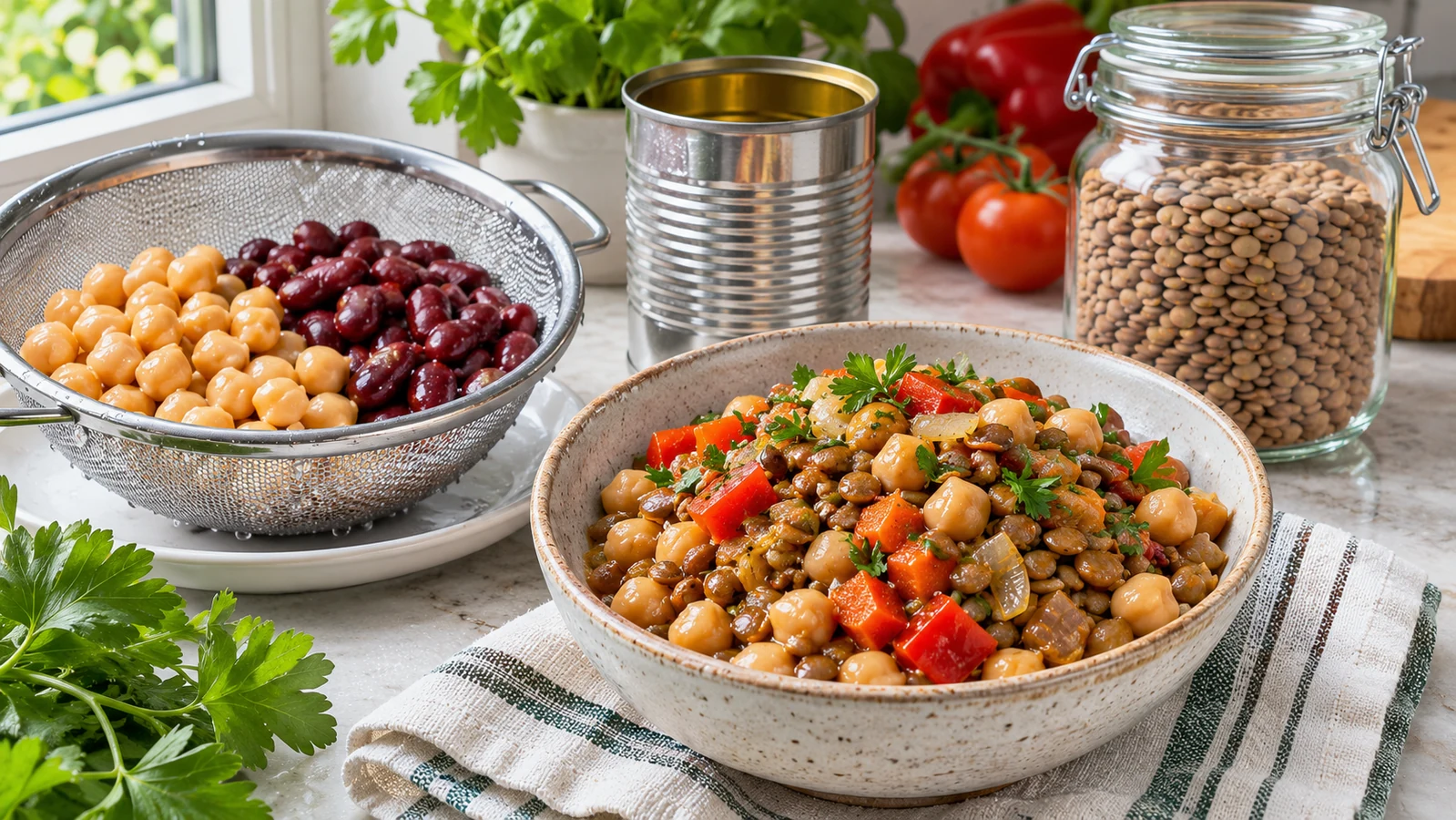
An ordinary ingredient, not a miracle food
A tin of chickpeas or a bag of lentils can open up several meal options without requiring a new identity as a cook. Some people already eat legumes regularly; others know only one recipe or worry about preparation and gas. The aim here is not to persuade everyone to eat the same food. It is to make the choices clearer: which form fits the kitchen, how the product is prepared, and whether a modest addition works in meals you enjoy. This guide concerns general adult eating, not a prescribed diet or a challenge to eat beans every day.
What beans and lentils contribute
Beans, peas, and lentils belong to a broad group of foods called legumes. The American Heart Association describes beans and other legumes as sources of plant protein, minerals, and dietary fiber, and recommends them within a healthy eating pattern. Examples include chickpeas, black beans, kidney beans, and lentils. Those shared features do not make every product nutritionally identical. A plain cooked ingredient, a salty soup, and beans in a sweet sauce are different foods. Nor does belonging to a recommended food group prove that one serving will change a blood test or relieve a symptom.
Think about the meal, not a single ingredient
Health Canada includes beans, peas, and lentils among protein foods and encourages variety. That supports treating them as one useful option rather than a complete menu on their own. Consider what else is in the meal, what the legumes replace or accompany, and what you can comfortably prepare. For example, a household might include lentils in a familiar mixed dish while keeping the other ingredients it enjoys. This is not a promise of weight loss or cholesterol reduction. Clinical goals depend on the overall pattern and individual care, not simply on adding a spoonful of one ingredient.
Canned is a practical option
Canned legumes can remove a preparation barrier when time, energy, or equipment is limited. Choosing them is not a nutritional failure or evidence of poor cooking skills. Both the American Heart Association and Health Canada suggest no-salt-added or lower-sodium canned options; draining and rinsing can help reduce excess sodium. Read the label for the particular food and follow its handling directions. A can of plain chickpeas is not interchangeable with every prepared bean dish. If rinsing is awkward because of hand function or the available sink, choosing a suitable lower-sodium product may be a more workable approach.
Read the product rather than the front-panel promise
When comparing two products, first check that you are comparing the same kind of food and the same amount. Look at the ingredients and sodium information rather than relying only on words such as natural or plant-based. A useful shopping question is whether the product fits the meal you intend to make, including any salt or sauce added elsewhere. You do not need to choose a perfect product or solve the whole diet in one aisle. If you have a clinician-set sodium allowance, use that plan rather than a general article to decide what fits your day.
Dried legumes need a realistic preparation plan
Dried legumes offer flexibility, but the purchase price is only one part of convenience. They also require suitable water, equipment, time, and a reliable preparation method. Health Canada notes that dry lentils and split peas do not need overnight soaking, unlike the preparation commonly used for dry beans. Do not turn that distinction into a universal cooking time: varieties and products differ. Read the package and a trusted recipe that addresses the specific legume. If a week is too busy for that process, using canned legumes may be the option that actually gets eaten rather than left in a cupboard.
Red kidney beans need special safety attention
Dry red kidney beans deserve a separate safety check. Health Canada warns that raw or improperly cooked red kidney beans can contain high levels of a lectin called phytohaemagglutinin and cause foodborne illness. Its guidance specifically advises against cooking dry red kidney beans in a slow cooker, which may not reach the temperatures needed to destroy lectins. Soaking alone is not the same as adequate cooking. Follow authoritative preparation instructions for that food, rather than guessing from a recipe for lentils. Commercially canned red kidney beans have already received heat treatment sufficient to destroy these lectins; this does not remove ordinary food-handling responsibilities.
Try a familiar dish first
Start with an existing meal rather than designing an entirely new weekly menu. As an illustrative option, you could add properly cooked lentils to a vegetable soup you already make, or include ready-to-eat canned chickpeas in a salad if the label permits that use. These are meal ideas, not prescribed quantities or treatment instructions. Keep the first attempt manageable enough that you can notice whether the flavor and texture suit you. There is no obligation to replace all meat or to finish a large portion simply because the ingredient has a healthy reputation.
Use texture and flavor to find a fit
Different textures serve different preferences. Someone who dislikes whole beans might enjoy a smooth preparation, while another prefers beans that hold their shape in a mixed dish. Health Canada offers examples such as adding lentils to soups and sauces and using beans in familiar recipes. The practical lesson is flexibility, not that disguising food is necessary. Tell household members what is in a dish, especially when allergies or dietary restrictions matter. You can offer components separately so that trying something new does not turn dinner into a test of willpower or an argument about who eats correctly.
Increase fiber gradually rather than chasing a target
A sudden jump in fiber can bring digestive discomfort. CDC advises increasing fiber slowly rather than making a large change all at once. That is a reason to keep an experiment modest, not to force a particular daily amount from this article. You might change one meal and observe how it fits before changing several others. The usual advice about drinking water also needs context: anyone given a fluid restriction should follow their care plan. Do not use an online fiber challenge to override medical advice, and do not assume that discomfort must be endured to obtain a benefit.
Gas is not a diagnosis or a moral verdict
NIDDK explains that some carbohydrates are not fully digested before reaching the large intestine, where bacteria can produce gas. Legumes are among foods that may contribute to gas symptoms for some people. This does not mean everyone will react alike or that beans are universally harmful. A brief note about the food, amount, and symptoms can be useful when speaking with a professional, but it cannot establish an intolerance by itself. If symptoms persist, interfere with daily life, or concern you, seek assessment instead of repeatedly removing more foods or assuming that one ingredient explains everything.
Special dietary needs change the conversation
People following a medical nutrition plan should check how a change fits that plan. A kidney condition, a diagnosed food allergy, digestive disease, or another health issue can make general advice insufficient. Ask a registered dietitian or your care team about appropriate choices rather than borrowing another person’s restrictions. Do not stop medicines, alter prescribed nutrition support, or use legumes as a substitute for treatment. The presence of protein and fiber is useful information about food, but it is not a complete assessment of a person’s nutritional needs or the safety of a specific product for them.
Plan for the food you will actually use
Choose a quantity you can prepare and use realistically. A large bag can be poor value if you lack the time to cook it, while a convenient can may fit a small household better. Think about storage space, opening the container, handling hot cookware, and cleaning up afterward. These practical considerations are not less important than the nutrient panel. Follow product-specific storage directions and established food-safety guidance for cooked food and opened containers. Do not assume that a shelf-stable unopened product remains shelf-stable after opening, or that a pleasant smell proves leftovers are safe.
A small shopping-and-cooking experiment
One low-pressure experiment is to choose a familiar legume and one meal where it might fit. Before shopping, check what is already available and whether you need a ready-to-use product or can prepare a dried one safely. At home, follow its directions, try an amount that feels manageable, and note what you would change next time. Perhaps a different texture, smaller pack, or simpler recipe would work better. This is an organizational example, not a validated nutrition intervention. Success can mean learning that a particular option does not suit the household without turning that result into a judgment about health.
Keep commercial resources separate from evidence
The existing pages for The Oxidized Cholesterol Strategy, The Blood Pressure Program, and Weight Loss Breeze are optional commercial reading for visitors interested in broader cardiovascular or everyday lifestyle topics. They are not the evidence for this article, endorsements by the cited organizations, or proof that a program lowers cholesterol, blood pressure, or weight. No purchase is needed to choose, rinse, or prepare legumes. Evaluate commercial claims separately, and do not use a product page to decide treatment or override advice from a qualified health professional who knows your circumstances.
The takeaway and general-information disclaimer
Beans and lentils can be ordinary, adaptable ingredients: choose a form that fits, compare the product, prepare it safely, and make dietary changes at a tolerable pace. They do not need to become a superfood, a daily score, or the centerpiece of every meal. This article provides general health education, not diagnosis, individualized dietary treatment, or medical advice. AI assisted with drafting, organization, and the original editorial image. Mr.Hotsia reviewed sourcing and clarity only; no clinical review or medical credentials are implied. The sources below explain the public-health guidance, while the practical household examples are illustrative rather than research findings.
Sources and further reading
Medical information was checked against these public health sources on November 20, 2026.
- American Heart Association — The Benefits of Beans and Legumes ↗
- Health Canada — Eat protein foods ↗
- Health Canada — Cooking with plant-based protein foods ↗
- Health Canada — Lectins in Dry Legumes ↗
- CDC — Fiber: The Carb That Helps You Manage Diabetes ↗
- NIDDK — Eating, Diet, & Nutrition for Gas in the Digestive Tract ↗
This article is general health education, not a diagnosis or personal medical advice. Do not change treatment or supplements based on this article. Discuss individual results with a qualified healthcare professional.