Sleep health · Sleepiness and driving safety
Sleep Apnea and Driving: Recognizing Sleepiness and Reducing Road Risk
Sleep apnea is one possible cause of daytime sleepiness, but a diagnosis alone does not describe every driver’s risk. Learn which warning signs matter, why fatigue has many causes, and what to discuss with a qualified professional.
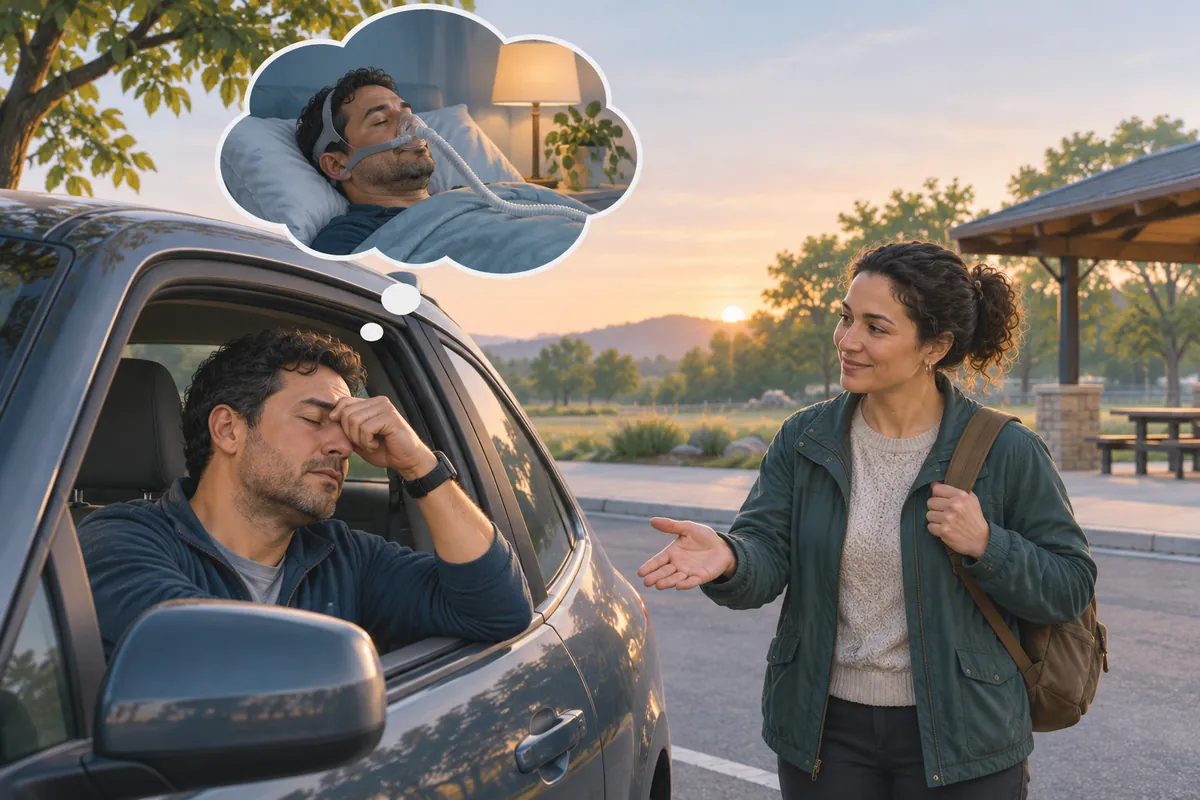
Why sleepiness behind the wheel deserves attention
Sleepiness while driving is a safety problem, not a character flaw or something to solve by trying harder. A person who struggles to stay awake, drifts across lane markings, misses turns, or has a near miss should take the warning seriously. Sleep apnea can be one contributor, but many other factors can also make a driver drowsy. This article explains general safety information and questions that may help with a professional conversation. It cannot assess any person’s fitness to drive, diagnose a sleep disorder, or tell someone what the law requires in their location.
How sleep apnea can affect daytime alertness
Obstructive sleep apnea (OSA) involves repeated narrowing or blockage of the upper airway during sleep. These interruptions can fragment sleep and contribute to daytime sleepiness or difficulty concentrating. The National Heart, Lung, and Blood Institute (NHLBI) specifically notes that untreated sleep apnea can make someone sleepy during the day and make attention and decision-making more difficult while driving; it advises people not to drive when tired or sleepy. That does not mean every person with OSA will fall asleep at the wheel, or that every sleepy driver has OSA. A personal evaluation considers the full situation.
A driver may not notice every breathing pause
A bed partner may notice loud snoring, pauses in breathing, gasping, or restless sleep before the person affected does. Others may mainly notice unrefreshing sleep, daytime dozing, or trouble staying focused. These signs can be worth discussing, but none of them alone proves OSA. The American Thoracic Society (ATS) patient information explains that diagnosis generally involves a sleep study interpreted in a clinical context. Smartwatch alerts, snoring recordings, online questionnaires, and a relative’s observation can provide useful discussion points; they do not replace a sleep evaluation or determine whether it is safe for an individual to drive.
A diagnosis is not the same as an individual risk assessment
Not everyone who has an OSA diagnosis has the same symptoms, driving exposure, treatment history, or risk factors. ATS guidance for clinicians emphasizes asking about excessive daytime sleepiness—especially unintended sleep during daily activities—and recent crashes or near misses that may relate to sleepiness, fatigue, or inattention. It describes drivers with these features as high risk and says they should be warned promptly. The guideline does not support treating every diagnosis as an automatic driving ban. It also does not provide a simple home score that clears a person to drive; judgment requires clinical context and applicable local rules.
Sleep apnea is not the only cause of drowsy driving
Short sleep, shift work, long or monotonous trips, alcohol, and medicines that cause drowsiness can also affect alertness. NHTSA warns that prescription and over-the-counter products—including some cold, allergy, and sleep medicines—may impair driving. A new prescription, dose change, combination of medicines, or alcohol can change how alert someone feels. If a label warns about drowsiness or operating machinery, take that warning seriously and ask a pharmacist or prescriber how it applies; do not stop a necessary medicine without advice. More than one factor may be present, so identifying OSA would not automatically explain every episode.
Warning signs are a reason to stop—not push through
Signs such as repeated yawning, heavy eyelids, difficulty focusing, missing exits, drifting within a lane, or not remembering the last few miles are reasons to stop driving as soon as it is safe. Do not try to overcome them by opening a window, turning up music, or relying on willpower. If sleepiness is occurring right now, prioritize getting off the road safely and arranging another way to travel. Do not continue on a busy road merely to reach a preferred destination. If there has been a crash, near miss, or recurrent unintended sleep while driving, tell a qualified healthcare professional promptly and ask about local transport options in the meantime.
Why brief lapses can matter on the road
Sleepiness can slow reaction time, attention, and information processing—the abilities a driver uses to notice hazards and respond. NHTSA says drowsy-driving crashes are difficult to count precisely because evidence of sleepiness may not be obvious after a crash. Its public safety guidance describes higher-risk periods such as overnight hours and late afternoon, while emphasizing that sleepiness can occur at other times too. These patterns describe populations, not an individual prediction. A quiet highway, familiar route, or short remaining distance does not make it safe to continue once a person is struggling to stay awake.
What to do if sleepiness starts during a trip
If you become sleepy during a trip, move to a safe stopping place rather than stopping in a travel lane or shoulder where it is unsafe. Arrange a rested driver, a taxi or rideshare where available, public transport, or a safe place to rest before continuing. If you cannot remain alert, do not resume driving simply because the trip is nearly over. Planning ahead can help: avoid setting out when already tired, share driving where appropriate, and schedule breaks on a long trip. These are general harm-reduction steps; adequate sleep is the primary protection, and a clinician should assess recurring sleepiness or suspected sleep apnea.
Coffee and a short nap are not a reliable cure
NHTSA notes that coffee or energy drinks alone may not reliably overcome serious sleep deprivation; a person can feel more alert than they actually are. It describes coffee followed by a short nap in a safe place as a short-term measure, not a substitute for enough sleep or evaluation of a health condition. Caffeine can also have effects or interactions that are not suitable for everyone. Do not use stimulants, someone else’s medicine, or extra doses to mask persistent sleepiness. If symptoms keep returning, the safer response is to reduce driving exposure and seek professional advice about possible causes and next steps.
How to raise driving concerns during a sleep evaluation
If OSA is suspected or already diagnosed, tell the clinician directly about any drowsiness while driving, unintended sleep, lane drift, collision, or near miss. Note when it happened, the approximate time of day, how long you had been awake, recent work or sleep schedules, alcohol, and medicines that may cause drowsiness. ATS recommends that clinicians ask about these details when evaluating suspected or confirmed OSA. The record is not a diagnostic test and should not delay care. Its purpose is to help the clinician understand the safety concern, arrange appropriate evaluation, and discuss how to avoid driving while sleepy.
Treatment discussions belong with the care team
Treatment decisions should be based on a confirmed diagnosis and a clinician’s assessment—not on a driving scare alone. The ATS guideline recommends CPAP for people with confirmed OSA who have been assessed as high-risk drivers, based on the evidence available to that guideline. It also advises against starting CPAP empirically solely to reduce driving risk when OSA is only suspected. These recommendations are clinician-facing and do not prescribe a device or setting for a particular reader. If you already use CPAP or another prescribed treatment, do not alter or stop it based on this article; discuss ongoing sleepiness, equipment problems, and follow-up with the care team.
Commercial driving and local rules need separate advice
People who drive commercially, operate heavy machinery, or have a safety-sensitive job may face additional workplace or licensing requirements. Those rules vary by country, vehicle class, employer, and medical history; U.S. ATS guidance for noncommercial drivers should not be treated as a universal legal standard. Ask the relevant licensing authority, occupational-health service, employer, or qualified clinician about the rules that apply to your role. Do not rely on an online forum or a general health explainer to decide whether to disclose a diagnosis or continue a regulated activity. If you are too sleepy to operate a vehicle safely now, stop and seek a safe alternative regardless of job category.
How family members can support a safer conversation
A family member can share observations without shaming or arguing about a diagnosis. Specific examples—such as repeated dozing during conversations, a witnessed breathing pause, or a recent lane-drift event—are more useful than labels like “lazy” or “careless.” Offer help arranging an appointment or transport if the person should not drive while sleepy. ATS notes that education of patients and families may help reduce sleepiness-related risk. At the same time, family members cannot certify that a driver is safe, interpret a sleep study, or change treatment. Encourage professional discussion and focus on immediate practical safety rather than blame.
A practical, non-diagnostic checklist for an appointment
Before an appointment, consider writing down: when sleepiness happens; whether you unintentionally doze during quiet activities; snoring or breathing pauses reported by someone else; usual sleep and work schedule; medicines and supplements; alcohol use; prior sleep testing or treatment; and any driving incident or near miss. Ask who will interpret a sleep test, what follow-up is planned, and what to do about driving if sleepiness continues. You do not need to complete a checklist before seeking care. If the symptoms are severe or you have had a recent near miss, contact a qualified professional sooner rather than waiting for a routine visit.
Keep commercial wellness separate from clinical evidence
The site’s existing Stop Snoring And Sleep Apnea Program page is an optional commercial resource, not evidence for this article. It cannot diagnose OSA, measure alertness, determine driving fitness, replace a sleep study, or substitute for prescribed care. The three links below point to that existing page only so readers can review its stated scope if they choose. No purchase is needed to use the safety information here. Keep any commercial claims separate from guidance from public health agencies and qualified clinicians, and do not allow a wellness program to delay evaluation or encourage driving while sleepy.
The takeaway: do not drive while sleepy
The most important immediate rule is simple: do not drive while you feel sleepy or struggle to remain alert. OSA is one possible contributor, but sleep loss, work schedules, alcohol, medicines, and other health conditions may also matter. If sleepiness is recurring, discuss it and any near miss with a qualified professional; do not self-diagnose, begin a device, or change a prescribed treatment based on a web article. This is general health and road-safety education, not individual medical advice or a fitness-to-drive assessment. Mr.Hotsia’s editorial role was limited to checking sources and clarity; he is not a healthcare professional, and this article has not had clinical review.
Sources and further reading
Medical information was checked against these public health sources on November 6, 2026.
- NHLBI (NIH) — Living With Sleep Apnea: driving safety and daytime sleepiness (updated January 9, 2025) ↗
- American Thoracic Society — Sleep Apnea, Sleepiness, and Driving Risk in Noncommercial Drivers: Clinical Practice Guideline (2013) ↗
- American Thoracic Society — What Is Obstructive Sleep Apnea in Adults? Patient Information Series (updated June 2019) ↗
- NHTSA — Drowsy Driving: Avoid Falling Asleep Behind the Wheel ↗
- NHTSA — Dangers of Driving After Taking Prescription or Over-the-Counter Medicines ↗
This article is general health education, not a diagnosis or personal medical advice. Do not change treatment or supplements based on this article. Discuss individual results with a qualified healthcare professional.