Healthy aging · Falls and home safety
Preventing Falls at Home: Strength, Vision, Medicines, and Safer Rooms
A practical, evidence-aware guide to fall prevention for older adults—why home changes help, what exercise research supports, and when to involve a clinician.
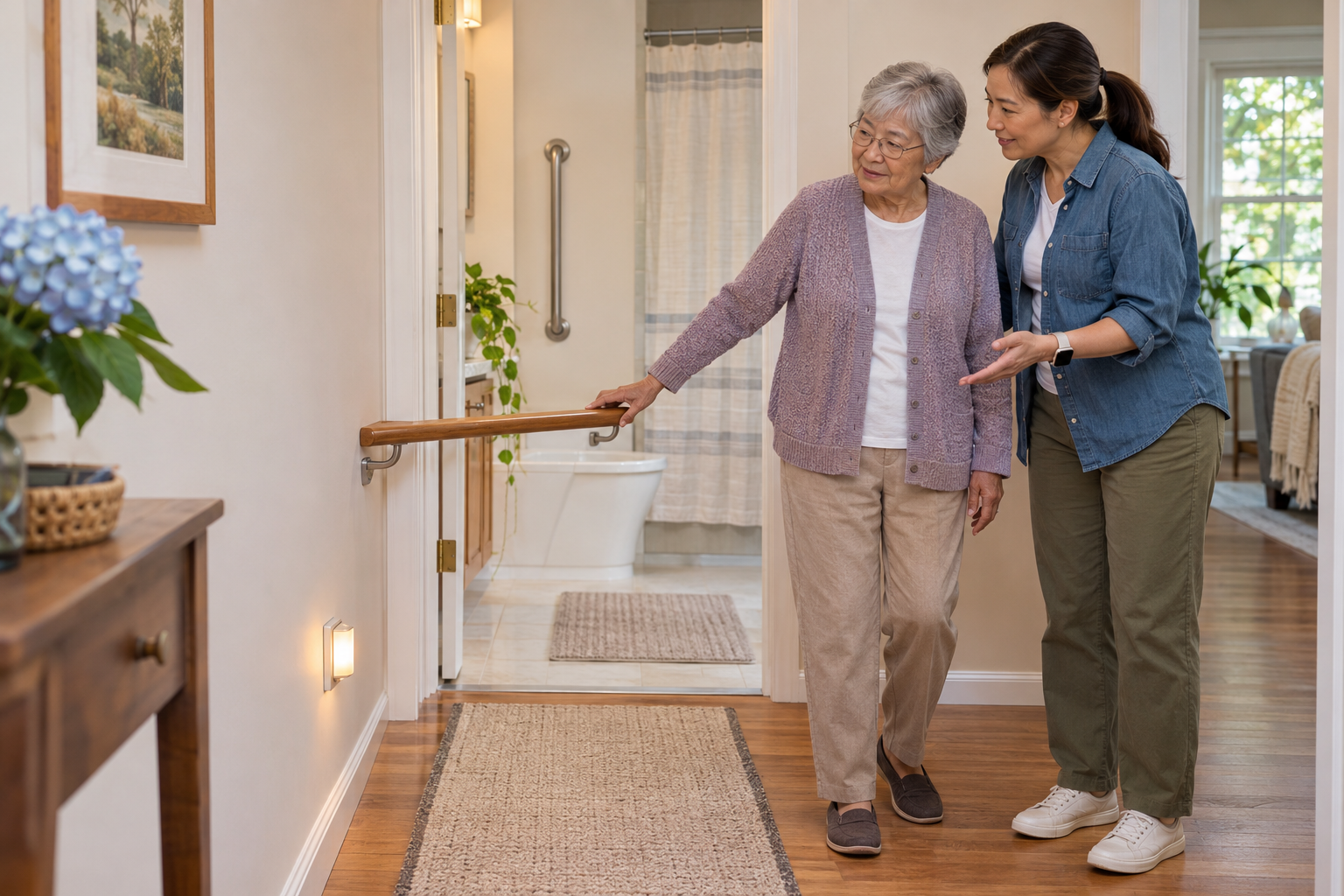
A safer home is one part of a larger plan
A loose rug or dim hallway can make a fall more likely, but falls rarely have just one cause. Balance, leg strength, vision, medicines, blood pressure changes, pain, footwear, and the layout of a home can interact. That is why a useful prevention plan is broader than removing every object from a room. It should respect a person’s routines and priorities while identifying changes that are both safe and realistic. This guide focuses mainly on adults 65 and older living in the community, the population addressed by current U.S. preventive guidance. It is general education, not an individual risk assessment.
What the evidence says—and who it applies to
The U.S. Preventive Services Task Force (USPSTF) recommends exercise interventions for community-dwelling adults aged 65 or older who are at increased risk of falls. It advises clinicians to individualize whether to offer a multifactorial intervention, because the overall net benefit of routinely offering that package is small. The recommendation does not mean every older adult needs an identical exercise class, home inspection, or medication change. The CDC’s STEADI resources similarly organize care around identifying risk, assessing modifiable factors, and choosing appropriate interventions. These are population-level recommendations; personal circumstances and access matter.
Start with a conversation, not a checklist score
A fall, a near-fall, new unsteadiness, or worry about falling is useful information to share—not a reason for shame. Tell a healthcare professional what happened, when it happened, whether you were hurt, and what you were doing just beforehand. Mention episodes of dizziness, faintness, blurred vision, trouble walking, or a recent change in health. A clinician can decide whether an assessment of gait, balance, vision, blood pressure, medicines, or other factors is appropriate. A checklist or online quiz cannot diagnose why someone fell, and a low score should not override a concerning symptom.
Build strength and balance with the right support
Exercise is the intervention with the clearest recommendation in current USPSTF guidance for older adults who are at increased risk. The trials reviewed commonly combined gait, balance, and functional training with strength or resistance work; many used supervised group programs. The point is not to copy a study routine at home without support. A physical therapist, clinician, or qualified community instructor can help match activity to ability, pain, mobility aids, and other conditions. If standing balance is uncertain, avoid practicing challenging movements alone or near stairs; ask for an appropriate, supported starting point.
Review medicines without stopping them yourself
Some medicines can contribute to sleepiness, dizziness, blurred vision, or slower reactions, and those effects may affect balance. Bring a complete list to a clinician or pharmacist, including prescriptions, over-the-counter products, and supplements. Ask whether any timing, dose, interaction, or side effect deserves review. Never stop or reduce a prescribed medicine on your own: suddenly changing some treatments can be harmful, and the medicine may be treating an important condition. The aim is a careful review with the person who knows why each medicine was prescribed, not a blanket effort to take fewer medicines.
Make the route through each room easier to navigate
Walk the usual routes through the home at the times they are used: getting out of bed at night, reaching the bathroom, carrying laundry, or opening the front door. Move cords and clutter out of walkways, secure or remove loose rugs if they slide or curl, and keep frequently used items within comfortable reach. Arrange furniture to leave a clear path rather than asking someone to squeeze around it. A home-safety checklist can prompt useful questions, but the resident should decide which changes fit their habits, culture, budget, and ability. A perfect-looking room is not the goal; a usable, safer route is.
Light, vision, footwear, and mobility aids all matter
Lighting matters most where people walk, turn, or change levels. Consider whether switches are easy to reach from a doorway, whether a night light makes a bedroom-to-bathroom route visible, and whether glare or shadows make edges difficult to judge. The CDC advises checking vision regularly and updating glasses when needed. Because multifocal lenses can affect how distances appear during outdoor walking for some people, ask an eye-care professional whether a separate pair for a particular activity is appropriate; do not change prescriptions based on an article. Shoes that fit securely and mobility aids adjusted for the user can also support steadier movement.
Notice symptoms that can change balance
Dizziness on standing, faintness, a sudden change in walking, or weakness can be more than a household hazard. Tell a healthcare professional about these symptoms, particularly if they are new, recurring, or connected with a recent illness or medication change. Blood pressure can change with posture, and clinicians may consider this alongside hydration, heart rhythm, medicines, or other causes. Do not try to diagnose the reason yourself or alter blood-pressure treatment without advice. If a person feels suddenly unwell, loses consciousness, or develops severe symptoms, use local urgent or emergency services rather than relying on a prevention checklist.
After a fall, tell a qualified professional
After a fall, write down what happened while details are fresh and share it with a qualified professional, even if the person seems to have recovered. A fall can reveal a change in balance, strength, vision, medication effects, or health that deserves attention. An assessment is not a prediction that another fall is inevitable; it is a chance to ask whether any contributing factor can be addressed. If fear has led someone to stop activities they value, say so. A tailored plan may include gradual supported movement, home changes, equipment, or referrals, depending on what the assessment finds.
Respond to urgent warning signs promptly
Some situations need prompt attention rather than routine follow-up. Contact local emergency services for loss of consciousness, severe pain, major bleeding, suspected serious injury, sudden weakness or numbness, new difficulty speaking, or another acute emergency. Seek urgent professional advice after a head impact, especially when the person takes a medicine that affects blood clotting or develops symptoms afterward. Do not try to move someone with a possible serious neck, back, or hip injury unless there is immediate danger. When in doubt about injury or safety, get help from local emergency or medical services.
Check the bathroom and bedroom carefully
Bathrooms combine hard surfaces, water, tight turns, and transfers, so they deserve a close look. The CDC recommends grab bars in and around the tub or shower and near the toilet, but they need to be securely installed for the intended load; a towel rail is not a substitute. A nonslip surface, a stable shower seat, or a handheld shower may help some people, but equipment should fit the person and room. In the bedroom, keep a lamp or accessible light source near the bed, leave a clear route to the bathroom, and consider whether getting up quickly is associated with dizziness that should be discussed.
Plan for stairs, pets, and daily routines
Stairs need good lighting, a clear surface, and handrails that are easy to grasp; the CDC recommends railings on both sides. If carrying objects makes a hand unavailable, consider whether the route or storage arrangement can be changed. Pets, thresholds, bags, and delivery items can turn a familiar path into a temporary obstacle, so include the household in simple routines for keeping passages clear. If a person uses a cane or walker, ask a therapist or clinician to check fit and technique rather than assuming that a device is automatically safe. Changes should support independence, not restrict movement unnecessarily.
Understand bones and fractures without blame
Preventing a fall and preventing a fracture are related but different goals. Bone health affects the consequences of some falls, while strength, balance, vision, medicines, and the environment can affect the chance of falling. Ask a qualified professional whether osteoporosis screening or bone-health assessment is appropriate for your age and history. Do not start high-dose supplements or other treatment solely because you read that they prevent falls; the USPSTF’s current falls recommendation does not assess vitamin D for this purpose. A separate recommendation may address supplementation and fractures. Personal decisions depend on health history, diet, medicines, and local guidance.
Make changes that are realistic and repeatable
A good plan is one a person can live with. Ask permission before moving furniture or installing equipment, explain the reason for each suggestion, and prioritize the changes that address the resident’s actual routines. Some modifications can be inexpensive; others may require a landlord, an occupational therapist, a contractor, or local aging services. If money, housing rules, disability, or caregiving time limits what is possible, mention that in the conversation. The USPSTF notes that an intervention must be available and accessible to achieve benefit. A recommendation that cannot be used is not a practical safety plan.
A practical first-week plan
A manageable first week might begin with one conversation and one walk-through. Record any recent falls or near-falls and the symptoms around them; bring a medicine list to a clinician or pharmacist; and choose one clear, well-lit route to improve. Ask whether an exercise or balance program is suitable, especially if there has been a fall or mobility difficulty. Use the CDC STEADI checklist as a prompt, not as a diagnosis or a substitute for assessment. Then review whether the change helped and what remains difficult. Small, agreed steps are easier to maintain than a long list imposed all at once.
The takeaway: prevention is personal, not perfection
The practical message is not that every fall can be prevented or that a home can be made risk-free. Rather, several modifiable factors may be worth discussing, and exercise has evidence-backed value for older adults at increased risk when appropriately provided. A tailored conversation can connect movement, vision, medicines, symptoms, and the home environment without blaming the person who fell. Optional Blue Heron program pages are commercial resources, not medical evidence or fall-prevention treatment. This article is general health education, not diagnosis or personal medical advice; do not change medication or begin a challenging exercise plan based on it. Mr.Hotsia’s editorial review is limited to source checking and clarity, not clinical review or medical credentials.
Sources and further reading
Medical information was checked against these public health sources on November 4, 2026.
This article is general health education, not a diagnosis or personal medical advice. Do not change treatment or supplements based on this article. Discuss individual results with a qualified healthcare professional.