PERIPHERAL NEUROPATHY · HEALTH GUIDE
Why Do Burning Feet Feel Worse at Night? A Peripheral Neuropathy Guide
Nighttime burning can be a real feature of peripheral neuropathy. Learn why quiet, touch, temperature, and sleep disruption may amplify it—and what to check, what may help, and when to seek urgent care.
The short answer
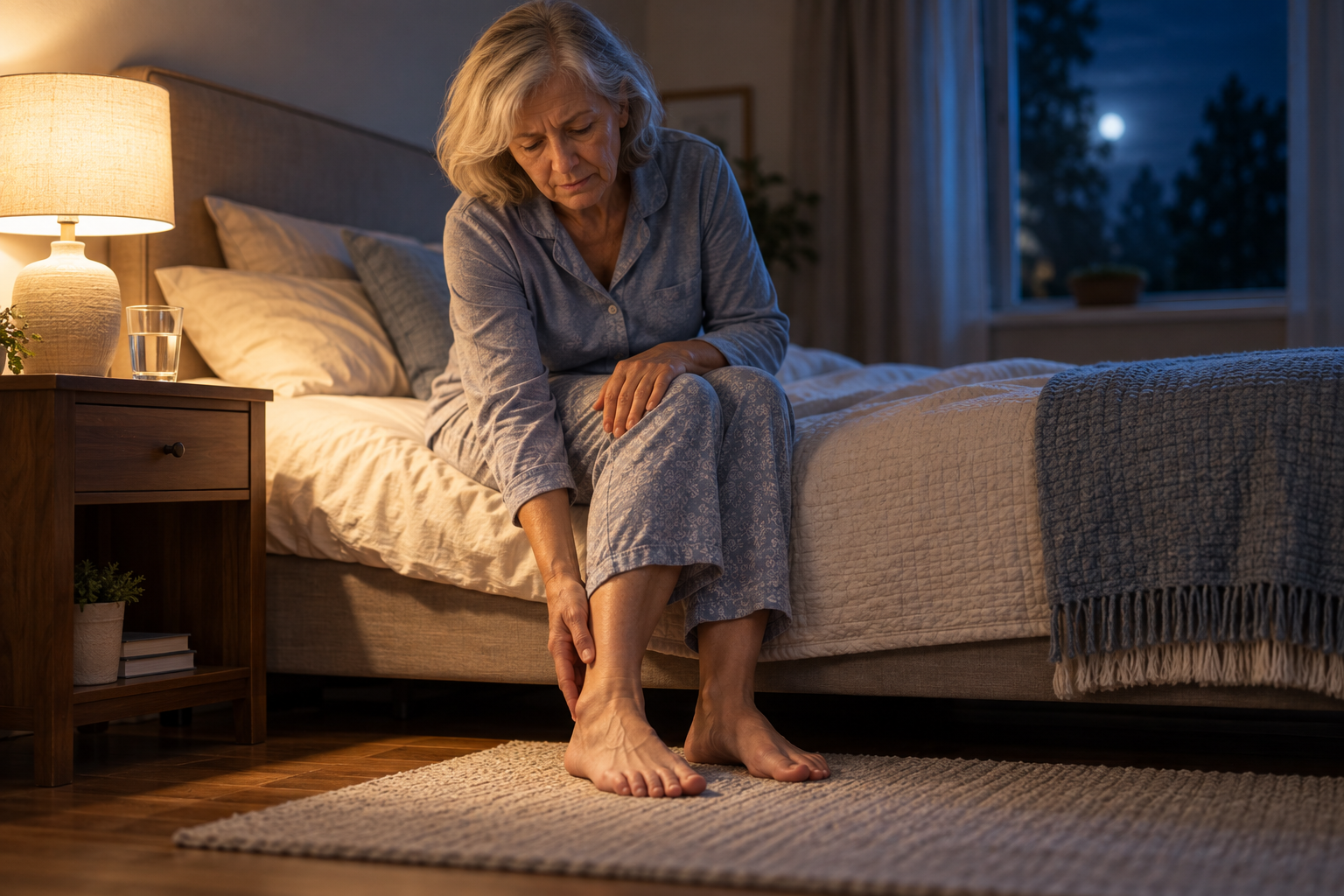
Burning, tingling, electric, or stabbing pain in the feet can feel worse at night because damaged nerves may send pain signals without an obvious trigger, while a quiet room leaves fewer competing sensations and distractions. Light contact from sheets can also hurt when neuropathy causes allodynia, and a day of standing, walking, temperature changes, or fluctuating glucose may affect symptoms. The National Institute of Neurological Disorders and Stroke explicitly notes that neuropathic pain is sometimes worse at night and may disrupt sleep.
The pattern is common enough to recognize, but it does not prove a particular cause. Diabetes is frequent, yet vitamin B12 deficiency, alcohol exposure, kidney disease, thyroid disease, autoimmune conditions, infections, inherited disorders, nerve compression, chemotherapy, and other medicines can also injure peripheral nerves. A clinician should confirm the diagnosis and look for treatable causes. New weakness, breathing or swallowing difficulty, rapidly rising numbness, or a red, hot, injured foot requires prompt care rather than a bedtime remedy.
What burning feet from neuropathy can feel like
Peripheral nerves carry information between the brain and spinal cord and the rest of the body. When sensory nerves are damaged, signaling can become distorted: a person may feel burning without heat, pain from a light touch, pins and needles, or numbness alongside pain. Symptoms often begin in the toes and feet because the longest nerves are commonly affected first. They may gradually spread upward in a stocking-like pattern, although not every neuropathy behaves this way.
Pain does not measure the amount of damage perfectly. A very painful foot may look normal, while a numb foot can have an unnoticed blister or pressure sore. That is why symptom relief and foot protection are separate goals. Do not assume that less pain means a wound is healing, or that severe burning must come from visible inflammation. Check the skin in good light and arrange an examination if symptoms are persistent, unexplained, or changing.
Why nighttime can magnify the sensation
NINDS describes neuropathic pain as arising when pain receptors fire spontaneously or when signal processing is altered, and it recognizes nighttime worsening. Several practical factors may add to that experience. During the day, movement, conversation, visual input, and tasks compete for attention; at bedtime, the nervous system has fewer external signals to process. This attention effect can change how prominent pain feels without making it imaginary.
Contact can matter too. If normally harmless touch has become painful, the weight or movement of a sheet may provoke burning. Warm bedding may be uncomfortable for one person, while cold worsens symptoms for another. Position can change pressure on a compressed nerve. Fatigue and poor sleep can also lower pain tolerance, and then pain causes further sleep loss. These explanations are plausible contributors, not a diagnostic test, and research has not identified one universal nighttime mechanism for every neuropathy.
First, check whether the foot itself needs attention
Before attributing a bad night to nerves, inspect both feet. Look at the soles, heels, between the toes, and around the nails for a blister, crack, redness, swelling, drainage, a warm spot, or an object inside the shoe. Use a mirror or ask for help if you cannot see the sole. In diabetes, reduced sensation can hide injury, and reduced blood flow can slow healing. NIDDK advises daily inspection because early treatment can prevent a small problem from becoming an ulcer or infection.
Compare both sides, but do not test numb skin with a heating pad, hot-water bottle, ice pack, or very hot bath. NIDDK specifically advises protecting neuropathic feet from hot and cold. Wash with warm—not hot—water and test temperature safely. Call a clinician promptly for a wound that is not beginning to heal, increasing redness or warmth, drainage, black skin, or a new swollen hot foot. Fever or feeling unwell makes the situation more urgent.
Keep a brief pattern diary
For one or two weeks, record the time symptoms begin, where they occur, their intensity, and whether there is numbness, weakness, cramping, balance trouble, or skin change. Note long periods of standing, new shoes, exercise, alcohol, meals, illness, and sleep. If you monitor glucose, record it according to your care plan. Also list medicines and supplements with the time you take them, but do not change doses simply to run an experiment.
A diary helps distinguish a reliable pattern from a single difficult night. Pain focused on one side or one nerve territory may suggest compression or another local problem. Symmetrical symptoms in both feet can fit length-dependent neuropathy but still require a cause. Bring the diary and all product labels to an appointment. It gives the clinician a clearer starting point for deciding whether examination, blood tests, nerve-conduction studies, or another evaluation is appropriate.
Safer steps that may make bedtime easier
Start with low-risk comfort changes. Keep the room at a comfortable temperature, choose soft loose socks if cold feet bother you, and prevent bedding from rubbing painful skin. Some people use a bed cradle to lift sheets, but it should not create a trip hazard. Follow a consistent sleep schedule and use a quiet wind-down routine. Slow breathing, relaxation, or calming audio may reduce distress and help with coping; they do not repair damaged nerves.
If a clinician has prescribed neuropathic-pain medicine, take it exactly as directed and ask whether timing could be adjusted safely. Do not double a dose after a bad night. Medicines used for nerve pain can cause sleepiness, dizziness, or blurred vision, and alcohol may worsen these effects. Common painkillers do not usually work well for neuropathic pain. Any topical product should be discussed first, especially if skin is broken or sensation is reduced.
Protect numb feet every day—not only when they burn
Wear well-fitting shoes and clean socks, including indoors if your clinician recommends it, and feel inside each shoe for stones, seams, or folded insoles. Do not walk barefoot when reduced sensation could hide injury. NIDDK recommends daily checks, properly fitting footwear, and a professional foot examination. People with diabetes should ask the care team how often their feet need a complete sensory and circulation assessment.
Avoid cutting corns or calluses yourself and avoid chemical corn removers on an at-risk foot. Ask a podiatrist how to trim nails and manage pressure areas if vision, reach, or sensation is limited. Activity can support circulation, balance, glucose management, and general health, but the right form depends on wounds, weakness, and fall risk. A physiotherapist or podiatrist can help choose footwear and movement that do not repeatedly injure the same area.
Finding the cause changes the treatment
An evaluation generally includes symptom history, medicine and alcohol review, neurological examination, and checks of sensation, strength, reflexes, balance, skin, and pulses. The NHS notes that blood tests may look for diabetes and vitamin B12 deficiency. Depending on the pattern, clinicians may assess thyroid and kidney function, abnormal proteins, autoimmune or infectious causes, and medication toxicity. Nerve-conduction testing and electromyography are useful in selected cases, not automatically required for everyone.
Cause-specific care matters. Better glucose management can help prevent diabetic neuropathy from worsening, B12 deficiency needs appropriate replacement, compression may need mechanical treatment, and a culprit medicine may need supervised adjustment. Never stop chemotherapy, antibiotics, heart medicines, or another prescription on your own. When no reversible cause is found, treatment still focuses on pain, function, sleep, foot safety, balance, and preventing complications.
What evidence-based treatment can—and cannot—do
Neuropathic pain is treated differently from an ordinary muscle ache. The NHS lists medicines such as amitriptyline, duloxetine, pregabalin, and gabapentin as commonly used options, along with selected topical treatment for localized pain. Choice depends on the cause, other conditions, kidney function, fall risk, and current medicines. Benefits are often partial, and side effects can limit a dose. A clinician may need to try more than one option while setting realistic goals such as better sleep or walking tolerance.
Physiotherapy may help weakness, gait, and balance, while splints or walking aids can support unsafe ankles. Good diabetes, blood-pressure, and cholesterol management reduces broader health risks and may help keep diabetic nerve damage from worsening. No supplement, diet, massage, or device can be promised to reverse every neuropathy. Complementary approaches have mixed or uncertain evidence, so ask about interactions and cost before adding them to established care.
When nighttime symptoms need urgent care
Seek emergency assessment for weakness that progresses over hours or days, especially if tingling begins in the feet and moves upward, or if there is trouble breathing, swallowing, speaking, standing, or walking. That pattern can occur in serious neurological illness such as Guillain–Barré syndrome. Sudden one-sided numbness or weakness, facial droop, severe headache, confusion, or loss of coordination may indicate a stroke and also needs emergency services.
Get prompt medical care for new bladder or bowel loss, numbness around the groin, a rapidly swollen red foot, fever with a wound, black or foul-smelling tissue, or severe pain after an injury. A person with diabetes, poor circulation, or immune suppression should not wait for a foot infection to become painful because protective sensation may be reduced. If symptoms are not emergent but repeatedly interrupt sleep, arrange a routine appointment rather than normalizing months of untreated pain.
What a commercial neuropathy guide can and cannot do
Neuropathy No More by Jodi Knapp is a commercial digital guide focused on nutrition, movement, and home-oriented habits. It may help a reader organize questions and routines, but it is not a diagnostic test and should not be represented as a proven cure. We have not identified clinical trials showing that this specific program reverses nerve damage or replaces evaluation, prescription treatment, diabetes care, or professional foot care.
Read the existing program review for its scope and limitations. Treat claims about rapid repair, detoxification, or universal results cautiously, and discuss major dietary changes or supplements with a clinician or pharmacist. The safest use of a lifestyle guide is alongside cause-specific medical care, with measurable goals and a willingness to stop anything that causes harm. Educational material should support informed decisions, not delay them.
Questions to take to your next appointment
Ask: What pattern of neuropathy does my examination suggest? Which causes have been checked? Do any of my medicines or supplements increase risk? Do I need B12, glucose, thyroid, kidney, or other testing? What pain option fits my health conditions and driving or fall risk? Should a podiatrist, neurologist, diabetes clinician, pain specialist, or physiotherapist be involved? What changes would require same-day care?
Also define a practical goal. Sleeping an extra hour, walking more safely, detecting a wound early, or reducing pain enough to tolerate shoes may be more useful than chasing a promise of zero symptoms. Review progress and side effects at an agreed interval. Nighttime burning is real and deserves attention, but the best plan protects the feet, searches for the cause, improves function, and keeps urgent warning signs visible.
Sources and further reading
Medical sources were checked on September 29, 2026. The linked commercial program is discussed separately from clinical evidence.
RELATED GUIDE · JODI KNAPP
Neuropathy No More
A commercial nutrition, movement, and lifestyle guide. Read our existing review for its scope, evidence limits, and safety context. It does not replace medical evaluation or treatment.
Read the program review →
This article is general health education, not personal medical advice. Consult a qualified professional for diagnosis or treatment decisions.