Heart & circulation · Blood pressure patterns
When Blood Pressure Readings Disagree: White-Coat and Masked Hypertension
A clinic reading and a home reading can tell different stories. Learn what white-coat and masked patterns mean, how clinicians confirm them, and why neither one number nor a device app is a diagnosis.
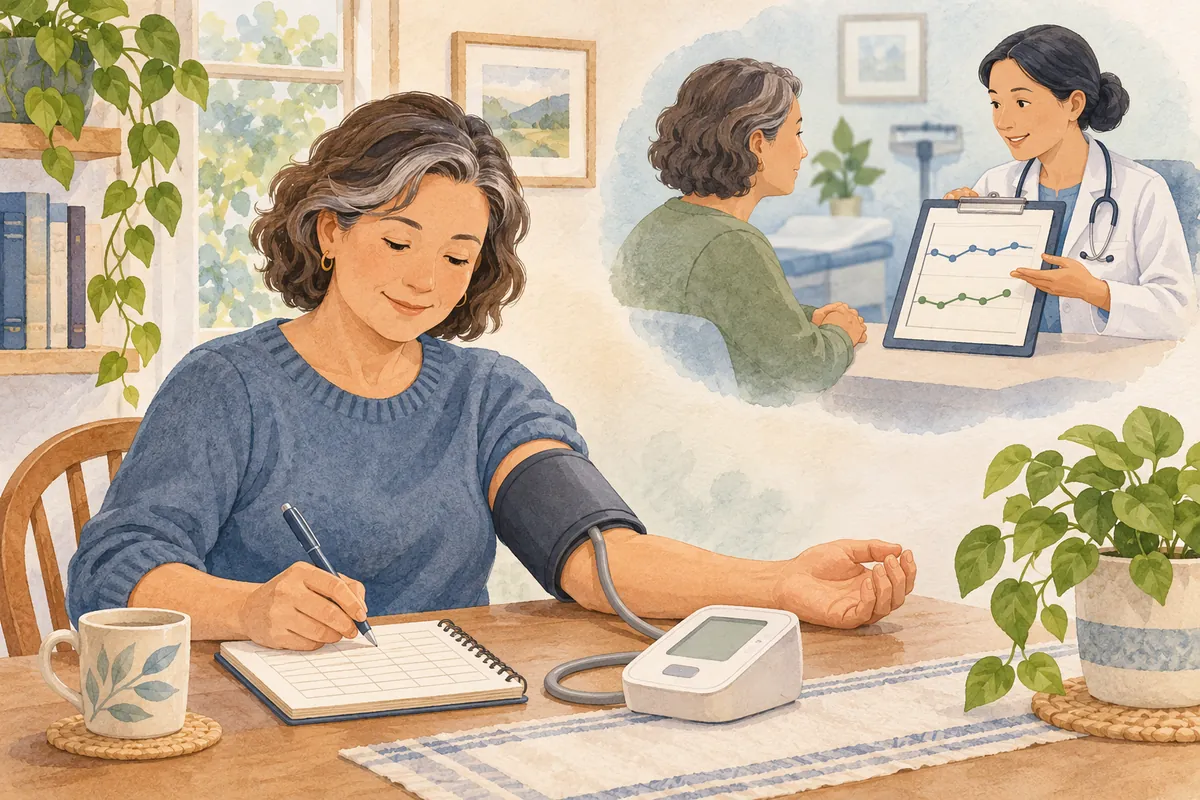
A different number is a reason to compare—not guess
Seeing one blood pressure number at a clinic and another at home can be unsettling. The mismatch does not prove that either device is broken, nor does it establish a diagnosis. Blood pressure naturally changes with activity, stress, time of day, measurement conditions, and health. The 2025 American Heart Association/American College of Cardiology guideline recognizes that measurements outside the clinic can help distinguish clinically meaningful patterns. The useful next step is usually a consistent, documented comparison interpreted by a qualified professional—not repeated checking until a preferred result appears.
What white-coat and masked patterns mean
When blood pressure is higher in a clinic but normal outside it, clinicians may describe a white-coat pattern. When clinic readings look normal but out-of-office readings are high, the term is masked hypertension. For people already taking medicine, related terms include white-coat effect and masked uncontrolled hypertension. These labels describe patterns across settings; they are not explanations of why a person has them, and a home device cannot apply the label on its own. The American Heart Association and U.S. Preventive Services Task Force both emphasize that readings need the right context and confirmation.
Why readings may rise in a clinic
A clinic reading captures a short moment. Feeling rushed, worried, in pain, cold, or unfamiliar with the setting may affect a reading, as can talking, a full bladder, recent exertion, or a cuff that does not fit. Some people feel tense around medical procedures; others simply arrive after a hurried trip. The 2025 guideline and American Heart Association measurement guidance support proper technique and repeated measurements rather than relying on a hurried single value. These influences do not mean a high clinic reading should be ignored. They mean it should be interpreted carefully and, when appropriate, compared with measurements taken elsewhere.
Why an office reading can miss high blood pressure
Masked hypertension is harder to notice because a reassuring clinic value may not reflect blood pressure during ordinary activities or sleep. Out-of-office measurements can capture periods that an appointment does not. The USPSTF notes that a strategy that checks outside the clinic only after a high office result can miss masked patterns. This does not mean everyone with a normal appointment result needs continuous monitoring. It means symptoms, risk factors, prior results, and clinical judgment may lead a clinician to request home or ambulatory measurements even when a clinic reading is not high.
A single measurement is a snapshot
Blood pressure is not fixed like height. The top number (systolic) and bottom number (diastolic) can vary from one moment to another, and small differences can reflect ordinary fluctuation or measurement technique. A high reading is not a complete diagnosis, and a normal reading does not prove that pressure is always normal. A diagnosis is usually based on an average of properly obtained measurements and thresholds selected by a professional guideline. Thresholds and protocols differ among countries and clinical contexts, so avoid comparing your number with a chart from a different population or using one reading to decide whether treatment is needed.
Why out-of-office confirmation matters
For adults being evaluated for high blood pressure, the USPSTF recommends confirming an elevated office screening result with measurements outside the clinical setting before starting treatment. The 2025 AHA/ACC guideline likewise describes out-of-office monitoring as a way to identify white-coat patterns and support confirmation. This approach can help reduce the chance of making decisions from an unrepresentative measurement, while also helping uncover a pattern that a clinic visit might miss. It does not mean treatment should be delayed in an emergency or that every person should buy a monitor; a clinician decides which method and timing fit the situation.
What ambulatory monitoring records
Ambulatory blood pressure monitoring (ABPM) uses a portable cuff and programmed recorder that takes readings repeatedly during normal waking activities and, often, sleep. The USPSTF describes typical readings about every 20 to 30 minutes across 12 to 24 hours; exact schedules depend on the device and local protocol. The cuff inflates periodically, which can briefly interrupt activity or sleep. A day-long record may show patterns that occasional home measurements cannot capture, including overnight readings. A clinician interprets the completed record and checks whether there were enough valid readings; the wearer should not try to diagnose a pattern from a few displayed values.
What home monitoring can—and cannot—do
Home blood pressure monitoring (HBPM) uses an automated device to collect readings at planned times over multiple days. It is less frequent than ABPM but may be easier to repeat and discuss. The measurement schedule should come from the care team or the local protocol rather than an improvised target. The 2025 guideline stresses standardized home procedures and interaction with a care team. A notebook or exported log can make trends easier to review, but app summaries, color labels, and alerts are not diagnoses. Do not change, skip, or add medicine because an individual home reading looks different from a clinic result.
Technique and cuff fit still matter
If a professional recommends HBPM, ask which monitor and cuff to use. The AHA advises a validated automatic upper-arm device when feasible; cuff size must match the arm. For a consistent measurement, sit quietly for five minutes with the back supported, feet flat, legs uncrossed, and the bare supported arm near heart level. Avoid talking during measurement. The AHA suggests taking two readings at least one minute apart and recording both. Follow the monitor instructions and any clinician-specific directions. Wrist devices may be needed in some situations, but positioning is more sensitive; a wearable without a cuff should not be assumed to give equivalent readings.
Keep a useful, low-stress record
A useful log is simple enough to maintain. Record the date and time, both readings, pulse if shown, the arm used, and any relevant circumstance such as recent exercise, illness, pain, missed measurement, or a device error. If your care team requests morning and evening measurements or a specific number of days, follow that plan rather than extending it indefinitely. Avoid repeatedly checking within minutes because each result may increase worry and make the sequence harder to interpret. Bring the device and log to an appointment if requested; staff may check cuff fit, technique, and whether the monitor agrees reasonably with clinic equipment.
What a clinician may review alongside the numbers
A clinician may review how and when readings were taken, the device and cuff, medication use, symptoms, sleep, recent illness, and other conditions that influence cardiovascular risk. A care team may ask whether readings were taken before or after a dose, whether a measurement was repeated, or whether the device displayed an error. Bring a list of medicines and supplements, but do not stop or adjust them to prepare for a test unless the prescribing professional specifically tells you to. A validated record is only one part of assessment; the meaning of a pattern depends on your history and the guideline used in your setting.
What may happen after patterns are confirmed
Next steps depend on the confirmed pattern, average values, health history, and the goal of the evaluation. A professional may repeat measurements, recommend ABPM or HBPM, review technique, assess cardiovascular and kidney risks, or discuss monitoring and treatment options. Sometimes a different cuff, a quieter measurement method, or a new set of readings clarifies a discrepancy. There is no single action that follows automatically from a label. The 2025 guideline includes specific thresholds and situations for clinicians; a public article cannot determine which applies to an individual. Ask what the test is intended to answer and when you will discuss the result.
White-coat does not mean risk-free; masked does not mean certain
White-coat hypertension is not simply ‘nothing,’ and masked hypertension is not something a person can confirm by feeling unwell or well. The USPSTF describes cardiovascular risk as generally highest with sustained hypertension, followed by masked patterns and then white-coat patterns, while noting important evidence gaps about the benefits of detecting and treating these patterns themselves. The 2025 AHA/ACC guideline recommends ongoing out-of-office monitoring in certain cases to watch for transition over time. This is one reason a clinician may plan follow-up even when readings differ, rather than declaring the issue permanently settled after one reassuring measurement.
Know when a high reading needs urgent attention
For a very high reading, follow local clinical advice rather than relying on a general article. The AHA advises that a reading above 180 systolic and/or 120 diastolic should be repeated after one minute. If it remains that high with chest pain, shortness of breath, back pain, weakness, numbness, a change in vision, difficulty speaking, or another new concerning symptom, call local emergency services now. If it remains very high without those symptoms, contact a healthcare professional promptly for instructions. Do not delay emergency care to take more readings, and do not take an extra medication dose unless a clinician has directed you to do so.
Keep commercial wellness material separate from care
The site also lists optional commercial wellness guides, including The Blood Pressure Program, The Chronic Kidney Disease Solution, and Weight Loss Breeze. Their pages may be useful to readers who want to understand what those products claim, but they are not evidence for the medical information above. This article does not endorse them as treatment, a way to diagnose blood pressure, or a substitute for a clinician or pharmacist. Do not buy a program or change prescribed care based on a single reading or an advertisement. These links are provided only to existing program pages, and readers should review each commercial page separately before deciding whether it is relevant to them.
The practical takeaway
When clinic and home readings disagree, the key is a properly collected series interpreted in context. Ask whether ABPM or a defined home schedule is appropriate, which validated device to use, what thresholds apply locally, and when results will be reviewed. Record readings as requested, share symptoms and medication information, and do not change treatment on your own. Seek urgent help for a severely high repeated result with emergency symptoms. This explainer is general health education, not personal medical advice, diagnosis, or treatment. Mr.Hotsia’s editorial review was limited to sourcing and clarity; he is not a healthcare professional, and this was not clinical review.
Sources and further reading
Medical information was checked against these public health sources on November 6, 2026.
- American Heart Association / ACC and partner organizations — 2025 High Blood Pressure Guideline: Top Things to Know ↗
- 2025 AHA/ACC Joint Guideline — Circulation (full guideline, DOI: 10.1161/CIR.0000000000001356) ↗
- U.S. Preventive Services Task Force — Hypertension in Adults: Screening ↗
- American Heart Association — Monitoring Blood Pressure at Home: How to Get It Right ↗
- American Heart Association — Understanding Blood Pressure Readings and Emergency Symptoms ↗
- NICE — Hypertension in Adults: Diagnosis and Management (NG136) ↗
This article is general health education, not a diagnosis or personal medical advice. Do not change treatment or supplements based on this article. Discuss individual results with a qualified healthcare professional.