Sleep health · PAP therapy and practical use
Starting CPAP for Sleep Apnea: Mask Fit, Side Effects, and Follow-Up
A practical guide to getting oriented with prescribed CPAP: what the equipment does, how to raise comfort problems, why follow-up matters, and what not to adjust on your own.
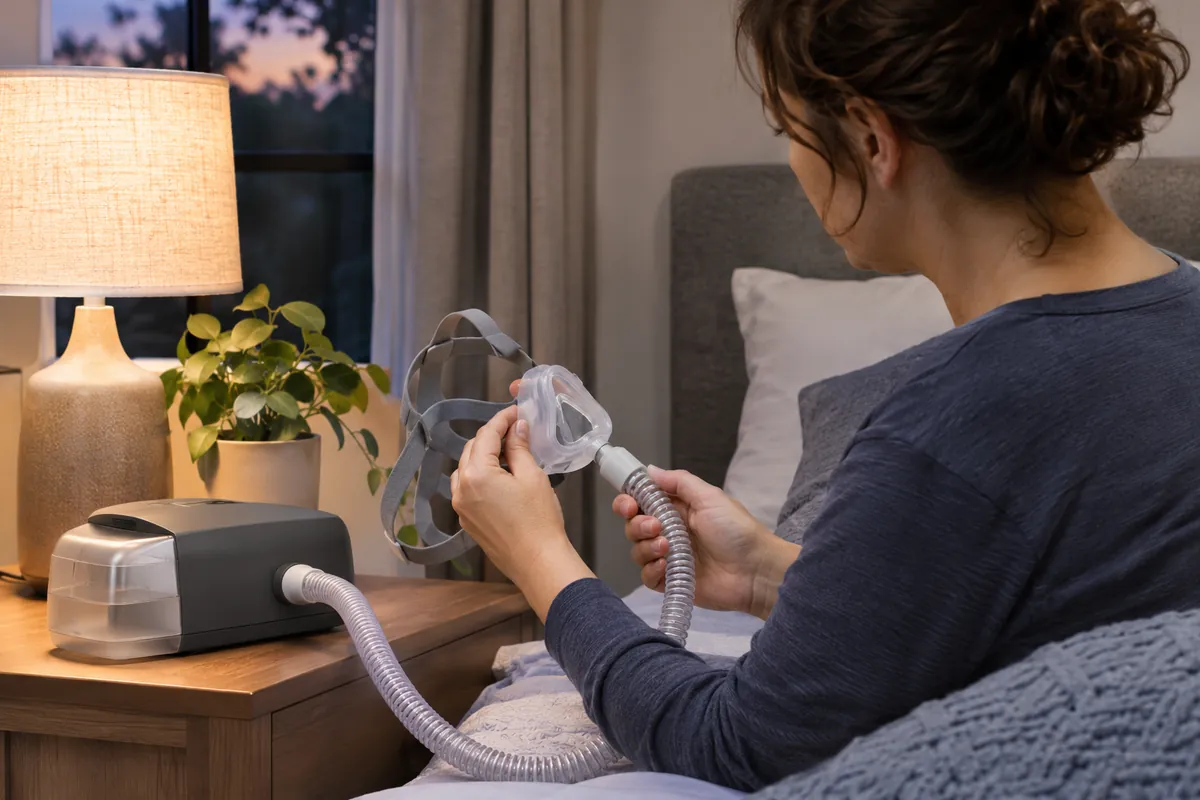
CPAP is a treatment, not a sleep test
Being prescribed continuous positive airway pressure (CPAP) can bring relief, questions, or both. The machine delivers air through a mask to help keep the upper airway open during sleep. It is different from the overnight test used to diagnose obstructive sleep apnea: the treatment plan should follow objective testing and a qualified professional’s evaluation. CPAP is one kind of positive airway pressure (PAP); some people are prescribed an auto-adjusting PAP (APAP) or bilevel device instead. This explainer covers general use and troubleshooting conversations, not whether a particular person needs CPAP or what settings are right for them.
What the machine and mask do
A typical setup includes a motorized device, a tube, and a nasal, nasal-pillow, or nose-and-mouth interface. Some systems also have a humidifier chamber. CPAP provides continuous pressure; APAP changes pressure automatically within prescribed limits, while bilevel PAP uses different pressures for breathing in and out. These descriptions do not make the devices interchangeable for every person. The NHLBI describes PAP as a common sleep-apnea treatment and emphasizes talking with a healthcare provider about which type is appropriate. Before the first night, ask the prescribing team or equipment supplier to show you each part and how it connects.
Getting comfortable can take time
The sensation of airflow or wearing a mask may feel unfamiliar at first. NHLBI notes that adjustment can take time and recommends patience; the sleep-care team can help with mask choice and practical problems. Some people are taught to wear the mask for a short period while awake to get used to the feel, then practice with the device according to their clinician’s instructions. Do not force yourself through distressing discomfort or assume that struggling means you have failed. Report what feels difficult and when it happens. A different interface or a supervised comfort adjustment may be more appropriate than abandoning the plan or buying an unprescribed product.
A mask leak is a problem to report, not a reason to overtighten
A mask that shifts, leaves marks, or leaks air can interrupt sleep and make therapy harder to tolerate. Check the device’s fitting guide and ask the supplier or clinician to review the fit while you are lying in your usual sleep position. Facial shape, sleeping posture, cushion wear, and headgear condition can all affect comfort. Tightening straps as much as possible is not a reliable fix and may worsen pressure on the skin. If air blows toward your eyes, the seal repeatedly breaks, or the mask comes off during sleep, write down the pattern and ask about a refit or another interface.
Dryness, stuffiness, and irritation deserve attention
Nasal congestion, a runny nose, dry mouth, dry eyes, nosebleeds, or skin irritation can occur with PAP. These symptoms are worth discussing, especially when they persist, cause injury, or make it difficult to use the device. Depending on the issue, a clinician may consider whether mask fit, humidification, nasal symptoms, or another factor needs attention. Do not start a spray or change a prescribed device setting based solely on a general article. Mention allergies, recent illness, and other equipment you use, and ask which options are suitable for your circumstances. Seek urgent local care for severe breathing distress or another emergency symptom.
The pressure setting is not a do-it-yourself control
Pressure and timing settings are part of the prescription. NHLBI says providers may help with pressure settings, humidification, mask type, or other PAP choices. A patient-facing device menu or a value seen online does not show what setting is safe or effective for another person. Do not copy someone else’s numbers, change a clinician-set range, or use a setting change to cover up a leak without asking the care team. If airflow feels too strong or too weak, exhaling feels uncomfortable, or the machine wakes you, note when it occurs and request guidance. Comfort features can be reviewed without guessing at treatment settings yourself.
Why routine follow-up matters
Follow-up is part of PAP care, not just an administrative check. The American Academy of Sleep Medicine guideline says follow-up should include troubleshooting and monitoring both usage and treatment-effectiveness data after starting PAP and during ongoing care. A clinician can pair device information with symptoms, medical history, mask fit, and the reason treatment was prescribed. That combination can help decide whether the equipment is functioning as intended or whether another issue needs review. The guideline also emphasizes closer attention in the early weeks and months and more frequent follow-up when symptoms or use problems persist. Timing varies; ask your own clinic what follow-up is planned.
What device data can—and cannot—tell you
Many devices store information such as how often they were used, hours of use, mask leaks, and machine-estimated breathing events. Those numbers can help a professional spot questions, but they are not a stand-alone medical report and do not prove that every symptom has been explained. A low number on a screen does not automatically mean treatment is sufficient, and an alert does not tell you which adjustment to make. Ask who can access the data, what the clinic reviews, and how to share a report if you travel or change equipment. Bring the display or app summary to follow-up rather than interpreting it as a diagnosis.
Cleaning and replacement are part of safe use
Keep the mask, tubing, humidifier chamber, and filters clean in the way specified by the device maker and your sleep service. NHLBI advises cleaning the mask and tube and explains that parts may need timely replacement through the device prescription. Follow the exact product instructions: materials and cleaning methods differ, and strong chemicals, unapproved cleaners, or excess moisture may damage equipment. Let parts dry as directed and inspect them for cracks, tears, or wear. If a part cannot be cleaned or no longer seals properly, ask the supplier when it should be replaced. Do not share masks or tubing, and do not improvise repairs that could affect airflow.
Travel and naps are easy to overlook
If your care team has asked you to use PAP whenever you sleep, plan for naps and travel as well as nights at home. NHLBI advises using the device for all sleep and taking it when traveling. Before a trip, confirm that you have the machine, power supply, compatible accessories, and enough prescribed consumables for the journey. Check airline or destination requirements in advance if relevant; local rules and power systems vary. If you use supplemental oxygen or another prescribed device, ask your clinician or supplier about transport and setup. A travel plan should preserve the prescribed treatment rather than substitute a consumer sleep gadget.
When bloating or discomfort needs prompt contact
One specific symptom needs prompt attention: NHLBI advises stopping PAP and contacting a healthcare provider right away if stomach discomfort or bloating occurs. Follow that advice rather than trying to resolve it by changing pressure yourself. For other persistent side effects—such as troublesome dryness, nosebleeds, skin injury, claustrophobia, or sleep disruption—contact the prescribing team to discuss the cause and options. If you cannot reach that team and symptoms are severe, worsening, or feel urgent, use local urgent-care services. This article cannot assess an individual symptom, and emergency signs such as severe shortness of breath, chest pain, fainting, or blue lips require urgent medical evaluation.
Daytime sleepiness remains a safety issue
PAP does not replace attention to sleepiness and driving safety. NHLBI warns that sleep apnea can impair attention and decision-making while driving and says not to drive when tired or sleepy. A treatment device may help, but a person should not assume a single night of use makes drowsy driving safe. If you are struggling to stay awake, do not drive; stop somewhere safe and arrange another way to travel. Tell the treating professional if sleepiness continues despite using the device or if you are unsure about alertness. Safety depends on how you feel and your clinical situation, not only on a device score.
Useful questions for the sleep-care team
At a follow-up visit, practical questions can make the discussion more useful: Is this the prescribed mask and setting range? What does the leak or usage summary mean? Who can review the data? What should I do when the mask leaks or my nose feels blocked? Which cleaning instructions apply to my exact model? When should parts be replaced? If symptoms continue, when should I contact the clinic again? Ask for written instructions and a contact number. If care is taking place in Thailand or another country, confirm which local clinic or equipment provider handles refits, prescription renewals, and repairs, since pathways and coverage vary.
Separate treatment information from commercial claims
The site has an existing Stop Snoring And Sleep Apnea Program page, linked below as an optional commercial resource. That page is not a medical source, PAP device, diagnostic tool, or substitute for follow-up with a qualified professional. It cannot set pressure, assess mask leaks, or show whether a prescribed treatment is working. The three links point to that one existing program page only so readers can review its scope separately. No purchase is needed to use prescribed therapy or ask a care team for help. Keep commercial claims separate from clinical evidence and do not stop or change treatment because of promotional material.
Make a problem log, not a pressure change
A brief log can help turn a frustrating experience into a clear conversation. Record the date, mask type, what happened, any visible device message, sleep position, dryness or irritation, and daytime symptoms. Avoid recording or sharing private health data in a public post. Bring the notes to the clinician or supplier and ask which details matter. If you use an app, check the service’s privacy settings and know who receives its data. A log is not a diagnostic tool; its purpose is to help describe a pattern so the professional can decide what to review. Do not wait for the next routine visit if symptoms are urgent or the device has failed.
The practical takeaway
The key points are straightforward: use the device as prescribed, give yourself time to adjust, raise leaks and side effects early, follow device-specific cleaning directions, and attend follow-up. A clinician can review whether the mask, settings, and measured response fit the treatment plan. Persistent symptoms deserve a conversation rather than a guess based on an online forum or a single score. If a prescribed device causes stomach discomfort or bloating, follow NHLBI’s instruction to stop and contact the provider right away. This article is general health education, not diagnosis or personal medical advice. Mr.Hotsia’s editorial review is limited to source checking and clarity; it is not clinical review, and no medical credentials are claimed.
Sources and further reading
Medical information was checked against these public health sources on November 5, 2026.
- NHLBI (NIH) — Sleep Apnea Treatment ↗
- NHLBI (NIH) — CPAP: Use, Care, Side Effects, and Follow-Up ↗
- NHLBI (NIH) — Living With Sleep Apnea: PAP Use and Safety (updated January 9, 2025) ↗
- American Academy of Sleep Medicine — PAP Treatment Guideline for Adults with Obstructive Sleep Apnea (2019) ↗
- NHS — Sleep Apnoea: CPAP and Treatment ↗
This article is general health education, not a diagnosis or personal medical advice. Do not change treatment or supplements based on this article. Discuss individual results with a qualified healthcare professional.