Sleep health · Consumer sleep technology
Sleep Trackers: What Wearables Can—and Cannot—Tell You
Smartwatches and rings can make sleep patterns easier to notice, but their estimates are not a diagnosis. Learn how to read trends without letting a nightly score replace symptoms, a sleep diary, or professional evaluation.
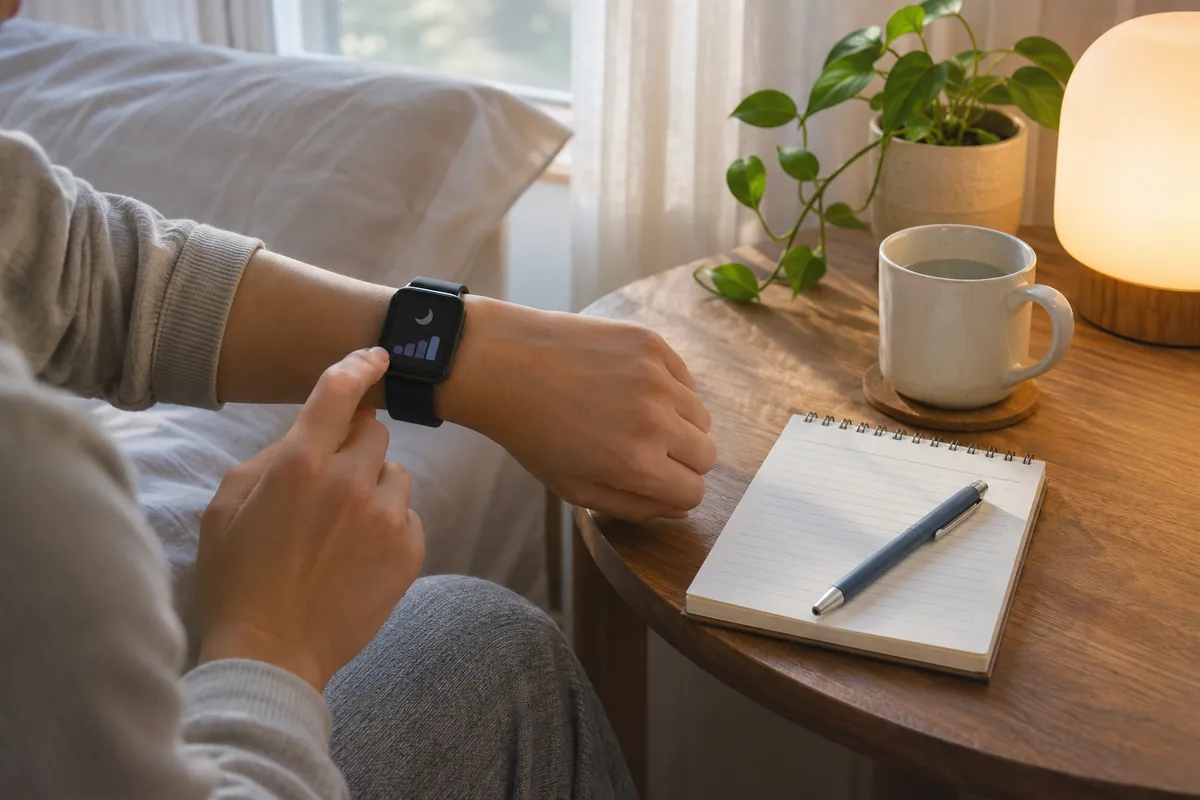
A useful prompt, not a verdict
A watch, ring, band, phone app, or bedside sensor may summarize the night with a sleep score, a duration estimate, or colored blocks labeled light, deep, and REM sleep. Those numbers can be interesting, and a repeated pattern may help someone notice a routine or a concern. But a consumer tracker is not a clinician, and a precise-looking graph does not prove that a person slept well or has a sleep disorder. This guide explains what the numbers can reasonably do, where uncertainty remains, and when symptoms deserve attention regardless of a score.
What a wearable is actually measuring
Most consumer devices do not record the same signals as an overnight polysomnogram. Depending on the product, a wrist device may use movement and optical pulse signals; a ring or bedside product may use a different combination of sensors. The device’s software then applies an algorithm to infer when a wearer may be asleep or awake, and some products also estimate stages or breathing-related measures. The sensors, algorithms, definitions, and available metrics vary by model and can change after a software update. Unless the manufacturer describes a measure and its validation clearly, it is safest to regard it as an estimate rather than a direct measurement of brain activity.
Why a sleep-stage chart can look more precise than it is
Sleep stages in a laboratory study are classified using several physiologic signals, including brain activity, eye movements, and muscle activity. A consumer device generally does not collect all those signals. A 2024 comparison of five commercial trackers with polysomnography studied 53 young adults for one lab night. It found device-specific differences; estimates of some stages and wake periods did not line up consistently with the reference measures. That study cannot tell us how every current device performs, or how well one works for every age, health condition, or sleeping environment. It does illustrate why a stage chart should not be treated as a precise nightly report card.
Consumer wellness tracking is different from a sleep study
AASM’s position statement on consumer sleep technology cautions against using consumer products to diagnose or treat sleep disorders. A 2026 joint statement from Australian sleep, primary-care, psychology, pharmacy, and sleep-health organizations likewise notes that accuracy varies by device and by the metric being estimated; it says sleep-stage information is rarely validated and trackers are not indicated for routine insomnia assessment. That statement allows a tracker to be considered alongside a person’s own account in an appropriate assessment. Separately, FDA’s January 2026 general-wellness guidance explains when low-risk products intended to encourage a healthy lifestyle may fall outside some medical-device rules. Regulatory category is not a personal accuracy certificate, and it does not mean all trackers have the same status.
Where a trend may be useful
A tracker may still help with a modest question: do bed and wake times seem to shift between workdays and weekends, or does a new schedule coincide with a change in how rested someone feels? A pattern across multiple weeks can serve as a reminder to reflect or a prompt for a conversation. It may also help someone keep a consistent record if they already find the device simple and non-stressful. The useful output is usually a broad trend, not a single night’s number. If the tracking takes too much time, increases worry, or changes behavior in a way that feels unhelpful, it is reasonable to stop or take a break.
Duration and timing are not the same as restorative sleep
Time in bed, estimated sleep time, sleep efficiency, awakenings, and stage estimates answer different questions. A longer estimated duration does not automatically mean better quality, and a target range set by an app may not reflect a person’s medical history or circumstances. The 2026 joint statement emphasizes that the accuracy of consumer trackers differs by parameter, including duration, onset, stage, heart-rate, and respiratory estimates. In its insomnia assessment table, it identifies a paper or digital sleep–wake diary as an assessment option and says consumer trackers are not a routine assessment tool. A diary also captures what the device cannot: the person’s experience and daytime functioning.
One night cannot define your normal
Sleep naturally varies from night to night. Travel, shift work, noise, caregiving, illness, pain, alcohol, medication changes, and an unfamiliar bed can all affect a particular night. A device may also be worn loosely, removed, run out of battery, or use a different algorithm after an update. Rather than deciding that one low score means something is wrong, consider whether the same concern appears repeatedly and whether it matches how you feel during the day. Do not average away an alarming symptom just because the rest of the week looks reassuring. Context gives a number meaning; without it, a score has limited value.
When tracking starts to create more worry than insight
Some people become preoccupied with reaching an ideal sleep score or checking whether every stage met a target. Sleep researchers and clinicians have used the term orthosomnia for an unhelpful fixation on tracker-derived sleep data. This is not a diagnosis readers should assign to themselves; it is a reminder that measurement can affect expectations. If checking the app increases bedtime anxiety, prompts repeated testing, or makes it harder to rest, consider turning off notifications, hiding stage scores, or pausing the device. A tool meant to support awareness should not become a source of pressure. If worry about sleep is persistent or disruptive, discuss it with a qualified professional.
A low-pressure way to use a tracker
If you choose to track, start by deciding what you want to learn before opening the app. For example, you might compare usual bedtimes with how alert you feel the next day, rather than trying to maximize a score. Keep a simple note for one or two weeks: approximate bedtime and wake time, major awakenings you remember, naps, relevant schedule changes, and daytime sleepiness or fatigue. Avoid adding detail that feels burdensome. If the device provides a trend that is easy to understand, you can note it separately, but do not treat the tracker as the source of truth. A low-tech diary is a reasonable alternative.
Bring a pattern—not just a score—to an appointment
At an appointment, describe the concern first: trouble falling asleep, repeated waking, waking too early, loud snoring, witnessed pauses in breathing, gasping, or unwanted daytime sleepiness. Then show only the tracker information that seems relevant, such as a sustained change in estimated schedule. Tell the professional which device you use and how often you wear it; do not assume they can interpret a proprietary score. The 2026 joint statement describes sleep assessment as a clinical evaluation that may draw on symptoms, history, and appropriate questionnaires or testing. A tracker can support a conversation, but it cannot replace that assessment or determine which test, if any, is appropriate.
Symptoms matter even when the app says everything is fine
A reassuring score does not rule out a sleep problem, and an alarming score does not confirm one. If someone regularly feels excessively sleepy during the day, struggles to remain alert while driving, or has persistent insomnia that affects daily life, those symptoms merit a conversation with a healthcare professional. Loud snoring, witnessed breathing pauses, or waking while choking or gasping are also useful details to report; a consumer watch cannot establish whether obstructive sleep apnea is present or how severe it may be. If sleepiness makes driving unsafe, do not drive while drowsy. Seek urgent help for severe breathing difficulty or another acute emergency rather than waiting for an app to flag it.
Check what the device claims and how it handles your data
Before buying or interpreting a tracker, read the product’s stated intended use and the definitions for the metric you care about. Ask whether the company provides validation against an appropriate reference method, for which population and device model, and whether the comparison covers the metric shown in the app. A validation result for one model or one metric does not automatically apply to another. FDA’s wellness guidance concerns how some low-risk products are treated under device policy; it is not a blanket approval of every consumer feature. Sleep information is personal data, so review the app’s privacy settings, sharing choices, account security, and deletion options before connecting or sharing it.
Sleep tracking is not a treatment plan
A sleep score cannot replace a treatment plan, and an app’s recommendation should not prompt someone to start, stop, or change medicine. Do not use a consumer breathing estimate to adjust prescribed therapy or decide that a sleep study is unnecessary. If you have a diagnosed sleep condition, follow the instructions from your treating professional and ask before changing treatment. A tracker can be a personal observation tool if it helps, but it should not take priority over symptoms, clinical advice, or safety. Be especially cautious with products that promise to diagnose a disorder, identify its cause, or guarantee a treatment result from a wrist or ring score alone.
When another kind of assessment may be needed
A sleep clinician may use a sleep diary, questionnaires, home testing, or an in-lab study depending on the symptoms and clinical question. These methods are not interchangeable, and an app cannot choose among them. The AASM position statement treats consumer technology differently from validated diagnostic instruments; the newer joint statement similarly distinguishes trackers from a structured interview and sleep study where indicated. A home or laboratory sleep test should be ordered and interpreted in the appropriate clinical context. If a professional recommends evaluation, do not delay it to gather more nights of wearable data. Bring the device if you wish, but let the clinician decide how useful the data are.
Questions to ask before relying on a sleep metric
Before acting on an app result, consider these questions: What exactly is this device estimating? Is the number a direct sensor output or an algorithmic inference? Has this model been compared with an appropriate reference for this specific metric? Does the trend match my symptoms and daily functioning? Is tracking making me calmer and better informed, or more anxious? What does the company collect, retain, or share? If I am concerned, what would a clinician need to know beyond the score? These questions do not validate a product, but they can keep an estimate in proportion and help identify when an experienced professional should interpret a health concern.
The takeaway: use the tool lightly and keep the human context
The practical takeaway is to treat consumer sleep data as an optional prompt, not a verdict. Trends may help some people notice timing or prepare a clearer conversation, but accuracy varies, especially for metrics such as sleep stages, and a score cannot diagnose or exclude a sleep disorder. Your symptoms, daytime safety, history, and appropriate clinical evaluation matter more than a nightly badge. The linked Blue Heron program pages are optional commercial resources, not medical evidence, diagnosis, or treatment recommendations. This article is general health education and not personal medical advice; do not change treatment based on a tracker or this article. Mr.Hotsia’s editorial review is limited to checking sources and clarity and does not imply clinical review or medical credentials.
Sources and further reading
Medical information was checked against these public health sources on November 6, 2026.
- American Academy of Sleep Medicine — Consumer Sleep Technology: AASM Position Statement ↗
- Sweetman et al. — Management of adult insomnia in Australia: joint position statement (2026), including assessment options for consumer sleep trackers ↗
- U.S. FDA — General Wellness: Policy for Low Risk Devices (January 2026 guidance) ↗
- Chinoy et al. — Evaluating Accuracy in Five Commercial Sleep-Tracking Devices Compared to Research-Grade Actigraphy and Polysomnography ↗
This article is general health education, not a diagnosis or personal medical advice. Do not change treatment or supplements based on this article. Discuss individual results with a qualified healthcare professional.