Everyday wellbeing · Music and health evidence
Music and Health: What Listening, Making Music, and Music Therapy Can—and Can’t—Do
Music can add enjoyment, comfort, or connection to everyday life, but listening to a playlist is not the same as music therapy. Here is what research suggests, where evidence remains uncertain, and how to explore music without treating it as a cure.
AI tools assisted with drafting and organization. Mr.Hotsia reviewed sourcing and clarity only; this was not clinical review and does not imply medical credentials.
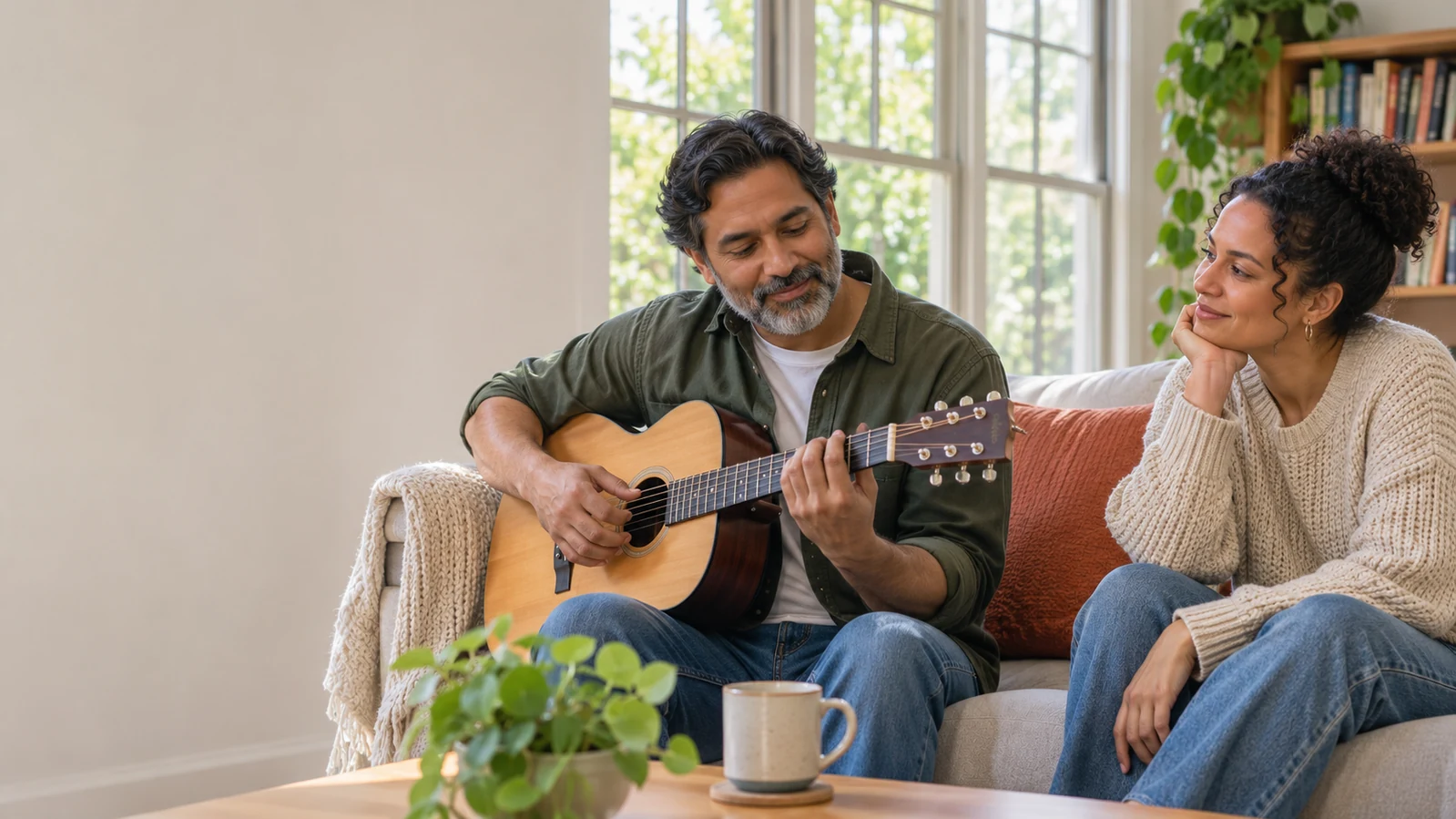
Music can be meaningful without being a treatment
Music is part of ordinary life: people listen while commuting, sing with friends, play an instrument, or use a familiar song to mark a moment. These experiences can matter to wellbeing without being medical treatment. Research has examined music in many settings, but effects depend on the person, activity, outcome measured, and study quality. A moving experience is real as an experience; it does not by itself prove that music prevents, diagnoses, or treats a condition. The safest starting point is curiosity rather than a promise: what do you enjoy, what feels comfortable, and what would count as a useful change for you?
Three different things people mean by music and health
The phrase “music for health” can describe at least three different activities. Listening to recorded music is usually self-directed. Making music includes singing, playing, songwriting, or learning an instrument, alone or with others. Music therapy is a distinct clinical service in which a credentialed music therapist uses music-based methods to work toward goals within a therapeutic relationship. Studies sometimes group or compare these activities, but they are not interchangeable. A playlist is not automatically therapy, and an enjoyable music class should not be advertised as a substitute for health care.
Listening is accessible, but response is personal
Listening may be an easy way to add something pleasant to a routine: a favorite song on a walk, soft background music while doing a hobby, or a familiar recording during a quiet break. Some people find music relaxing or energizing; others prefer silence, find certain sounds distracting, or have associations that make a song difficult to hear. There is no universal “best” genre, tempo, or playlist for a diagnosis. If music is helping you enjoy an activity, that can be valuable on its own. If it makes you tense, overwhelmed, or more focused on discomfort, it is reasonable to turn it off or choose something else.
Making music brings participation, practice, and connection
Making music involves participation rather than listening alone. Singing in a community group, practicing a few chords, improvising, or learning a simple rhythm may offer structure, skill-building, enjoyment, and social contact. Those experiences can support quality of life, but claims that a particular instrument strengthens the brain or prevents illness need specific evidence. A new musical activity also does not need to be difficult or expensive: borrowing an instrument, using a public class, or humming along can be enough to explore whether it fits. Adapt the activity to access, fatigue, hearing, hand comfort, time, and personal preference rather than turning it into a performance test.
Music therapy is a professional service, not a playlist
The American Music Therapy Association describes music therapy as the clinical and evidence-based use of music interventions to accomplish individualized goals within a therapeutic relationship, facilitated by a credentialed professional. That definition matters because therapy includes assessment, a planned approach, and professional training—not simply exposure to music. The therapist and participant may use listening, singing, movement, improvisation, or other methods depending on the setting and goals. Credentials and professional titles vary by country, so people considering a service can ask about the practitioner’s training, registration, scope, and how progress is reviewed locally.
What the research can—and cannot—say
A World Health Organization review surveyed thousands of studies on arts and health, including music, and found a wide range of research designs and settings. A broad review can show where arts-based approaches have been studied; it does not mean every activity has been proved for every health outcome. The U.S. National Center for Complementary and Integrative Health (NCCIH) likewise emphasizes that music research is still developing and that studies differ in design and quality. Small samples, varied interventions, short follow-up, and subjective outcomes can make findings difficult to compare. A careful summary distinguishes “may help some people in some contexts” from a guaranteed effect.
Pain and anxiety: promising findings need context
Some studies have examined music around surgery, cancer care, dialysis, or other stressful settings, including outcomes such as anxiety or pain. NCCIH describes findings that may be encouraging in particular situations, while noting important limitations such as risk of bias in some research. This evidence does not establish that music treats an anxiety disorder, replaces pain care, or works equally for everyone. Music may be offered as a preference-sensitive addition when a patient wants it and the care team considers it appropriate. It should not delay assessment of new, severe, or unexplained pain, and it should never be used to persuade someone to refuse indicated care.
Sleep: a possible comfort, not a proven insomnia cure
A familiar quiet routine before bed may feel comforting, and researchers have studied listening in relation to sleep. NCCIH says some evidence suggests music could improve people’s perceived sleep quality, but there is not enough evidence to conclude that it reduces insomnia severity or the number of nighttime awakenings. A calmer evening playlist therefore should not be presented as a cure for chronic insomnia or as equivalent to established evaluation and care. People differ: lyrics, headphones, volume, or a device left playing may be distracting. If a sleep problem persists, affects daytime safety, or comes with other concerning symptoms, discuss it with a qualified health professional rather than relying on music alone.
Parkinson’s research explores rhythm and movement
For Parkinson’s disease, studies have explored rhythm, singing, movement, and other music-based activities. NCCIH reports some promising findings—for example, research involving rhythmic auditory stimulation or music-based movement—but notes that the evidence has limitations and does not establish a cure or a replacement for standard care. A rhythm may be a cue used in a particular rehabilitation context, not a do-it-yourself instruction for every person. Someone with Parkinson’s who is interested can ask their treating team or rehabilitation professional whether a qualified music therapist or appropriately trained movement professional is available and whether the activity suits their mobility, hearing, goals, and safety needs.
Memory, dementia, and familiar songs
Familiar music may prompt memories or emotion, and group singing may provide a shared activity for some people living with dementia and their families. Yet research on music and dementia includes varied outcomes, interventions, and study quality. NCCIH notes uncertainty about effects on cognitive function and that benefits may differ depending on the person and the question being studied. A meaningful moment of recognition can be valuable without showing that a disease has changed. If supporting a relative, let them choose when possible, watch for signs of discomfort, and stop if a song increases distress. Music should complement—not replace—communication, supervision, medical evaluation, and caregiving support.
Music may affect mood in unexpected ways
Music can evoke strong memories and feelings. For one listener, a song may feel soothing; for another, the same recording may bring sadness, grief, or unwanted memories. People with sensory sensitivities, trauma histories, tinnitus, migraines, or difficulty processing sound may have specific preferences that are not obvious to others. There is no requirement to explain or justify turning music off. In a group or care setting, ask before playing a recording, keep a way to lower or stop it, and respect a person’s response. Positive effects reported by one group should not be used to pressure someone else into participating.
Sound level and hearing deserve attention
Listening at a high volume for long periods can contribute to hearing damage. The World Health Organization’s safe-listening guidance recommends keeping personal listening devices at a safe level and limiting exposure to loud sound; exact safe exposure depends on level and duration. Lower the volume if you need to raise your voice to be heard by someone an arm’s length away, take breaks, and move away from powerful speakers when a venue feels uncomfortably loud. Do not turn up headphones to cover surrounding noise if doing so makes listening intense. People with new hearing changes, sudden hearing loss, pain, or persistent ringing should seek appropriate professional advice promptly rather than trying to mask symptoms with louder sound.
A small, low-pressure way to explore music
If you want to see whether music adds something useful to your day, start with an activity that is already appealing and easy to stop. For a week, you could notice the situation, the music or activity, how long you engaged, and whether it felt pleasant, neutral, or unpleasant. This is a personal reflection, not a validated health measure or diagnostic test. Avoid tracking if it makes you anxious or turns leisure into an obligation. Consider practical details: volume, privacy, cultural fit, cost, access to equipment, and whether headphones affect awareness of traffic or other hazards. Keep what you enjoy; there is no need to make a health claim about it.
Questions to ask before choosing a music therapy service
Before engaging a music therapist, ask how the service defines music therapy, what training or local credential the practitioner holds, and whether the proposed goals match your priorities. You can ask what sessions involve, whether you need prior musical skill, how consent and cultural preferences are handled, and how the practitioner will coordinate with your existing care team if relevant. Ask how fees, privacy, and cancellation work. A responsible professional should be able to explain uncertainty and should not promise a cure, discourage necessary medical care, or claim that a playlist replaces an individualized clinical service. Availability and regulation differ between countries, so verify information with local professional bodies or health services.
When music should not replace other support
Music may be an enjoyable addition, but it cannot assess symptoms, identify a cause, or replace a treatment plan. Do not stop prescribed medicines, therapy, rehabilitation, or follow-up appointments because a song or music program seems helpful. If a serious or rapidly worsening symptom is occurring, use local urgent or emergency services instead of trying music first. For distress that is persistent or interfering with daily life, ask a qualified professional about appropriate support. Commercial wellness programs linked on this page are separate resources, not sources for the medical claims in this article and not treatments for a diagnosed condition.
Takeaway: choose what is useful, and keep claims modest
The evidence supports a modest conclusion: music may be enjoyable and may help some people with selected outcomes in particular settings, but research is mixed and does not justify broad cure claims. Listening, making music, and music therapy are different activities. Choose based on comfort, access, and personal preference; keep volume safe; and involve qualified professionals when a therapeutic goal or health concern is involved. AI tools assisted with drafting and organization. Mr.Hotsia reviewed sources and clarity only; this was not clinical review and does not imply medical credentials. This is general health education, not diagnosis, personal medical advice, or a treatment plan. Do not change care based on this article.
Sources and further reading
Medical information was checked against these public health sources on November 18, 2026.
- NCCIH — Music and Health: What You Need To Know ↗
- WHO Regional Office for Europe — What is the evidence on the role of the arts in improving health and well-being? ↗
- American Music Therapy Association — What Is Music Therapy? ↗
- NCCIH — Sleep Disorders and Complementary Health Approaches ↗
- NCCIH — Anxiety and Complementary Health Approaches ↗
- WHO — Deafness and hearing loss: Safe listening ↗
This article is general health education, not a diagnosis or personal medical advice. Do not change treatment or supplements based on this article. Discuss individual results with a qualified healthcare professional.