Everyday activity · Walking shoe fit and comfort
Walking Shoes: Fit, Comfort, and What Matters More Than the Label
A practical guide to checking length, width, heel hold, and comfort when choosing walking shoes—without assuming that one brand, price, or shoe type is right for everyone.
AI assistance was used to draft and organize this article. Mr.Hotsia reviewed sourcing and clarity only; no clinician reviewed this article and no medical credentials are implied.
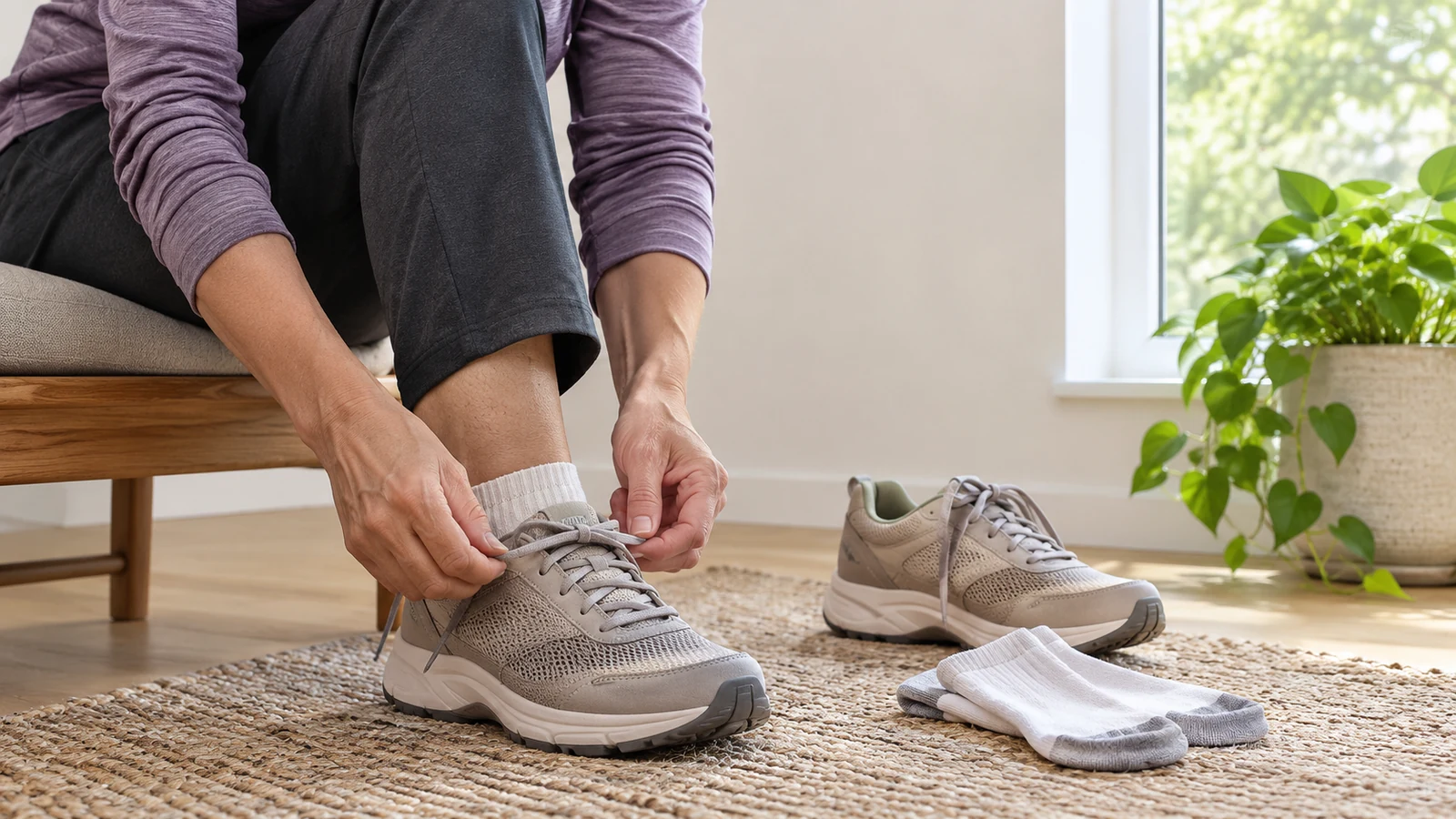
Comfort is a better starting point than a brand name
A walking shoe does not need to be the newest model, the most expensive pair, or the one most often recommended online. A useful starting point is simpler: does it fit the shape of your foot, feel comfortable while you stand and walk, and suit the surface and activity you have in mind? Footwear advice can offer practical checks, but it cannot promise that a shoe will prevent pain, improve a medical condition, or stop a fall. Feet and walking needs vary, so the aim is a comfortable choice—not a universal prescription.
Why shoe fit can change with time
The size printed inside a shoe is only a starting point. The American Orthopaedic Foot & Ankle Society’s FootCareMD notes that foot size and shape can change over time and that brands may fit differently. A shoe that worked years ago may not feel right now. Swelling, changes in activity, foot shape, and personal comfort can all affect how a pair feels. If you are selecting shoes because of ongoing joint or mobility concerns, an optional existing program page such as The Arthritis Strategy is commercial reading only; it is not a shoe-fitting service or a source for the guidance in this article.
Measure both feet and fit the larger one
If possible, have both feet measured while standing and try on both shoes. Many people have one foot slightly larger, so the larger foot should not be squeezed to match the smaller one. FootCareMD suggests measuring later in the day, when feet may be larger after being up and moving. That is a practical fitting tip, not a rule that guarantees comfort in every person. If measurements are not available, take time to compare how each shoe feels on both sides rather than relying on a familiar size number alone.
Leave room for toes without letting the shoe slide
Stand up when checking length. Guy’s and St Thomas’ NHS Foundation Trust and FootCareMD both describe leaving space in front of the longest toe; their suggested measurements are close to a finger-width, though exact guidance varies slightly. The important point is that toes should not press against the end when you stand or walk. At the same time, a much-too-long shoe can allow sliding. Walk a few steps and notice whether your foot moves forward, your toes grip to hold the shoe, or the heel repeatedly slips.
Width, depth, and shape are part of fit
A shoe can be long enough and still feel cramped across the ball of the foot or over the toes. Look for a shape that follows your foot rather than forcing toes together. A round or square toe box may provide more room than a narrow, pointed front; enough depth also matters if the tops of your toes rub. If you are thinking about exercise as part of a bone-health routine, the existing Bone Density Solution page is an optional commercial page, not medical evidence and not individualized advice about footwear or exercise.
Check that the heel stays comfortably in place
A fastener—such as laces, a strap, or hook-and-loop closure—can help hold a shoe on the foot without requiring it to be tight everywhere. Heel fit matters too: the heel should feel secure without painful pressure or persistent rubbing. FootCareMD advises standing and walking in the pair to check for chafing and heel slip. These are comfort checks, not tests of gait or a formal assessment of fall risk. If you use a brace or prescribed insert, make sure the shoe can accommodate it without squeezing your foot.
A walking shoe should match the activity
The best design depends partly on what you plan to do. FootCareMD describes walking shoes as having a shock-absorbing heel and flexibility near the ball of the foot; hiking footwear is designed with different traction and durability priorities. That distinction helps explain why a shoe marketed for running, court sports, or hiking may not feel the same during an ordinary neighborhood walk. It does not establish that a particular category is medically superior. Choose for the actual surface and activity, and prioritize a fit that remains comfortable when you move.
Cushioning and flexibility are personal trade-offs
Cushioning, stiffness, and flexibility are often discussed as if there were one ideal combination. In practice, a cushioned sole may feel pleasant on a hard surface, while another person may prefer a firmer feel. FootCareMD notes that shoe designs vary and recommends checking the shoe’s construction and comfort for the activity. Price, thick foam, arch branding, or a popular review score cannot tell you whether that pair suits your foot. If you have pain or a diagnosed condition, avoid treating a shoe feature as a substitute for advice specific to you.
Try shoes with your usual socks and any prescribed insert
Wear the kind of socks you expect to use for walking while trying on shoes. If a clinician or podiatrist has prescribed an orthotic or brace, bring it with you; Guy’s and St Thomas’ NHS guidance notes that shoes need enough depth to fit an insert without crowding the toes. Not everyone needs a custom insert, and a general article cannot determine whether one is appropriate. If the device changes the way the shoe fits, ask the professional who recommended it or a qualified footwear fitter for help rather than removing it or changing its use on your own.
Walk around before deciding
Walk around the shop or indoors on a safe surface before deciding. Notice whether the shoe stays on without gripping with your toes, whether your heel rubs, and whether any seam or edge presses against your foot. The shoe should feel acceptable at the time you try it on; the NHS trust advises not relying on a painful “break-in” period. Return policies can matter, especially when a shoe is being considered for longer walks. Keep the test modest—there is no need to push through discomfort to prove that the pair is suitable.
Do not count on a painful break-in period
A short first wear at home can help you notice rubbing before using new shoes for a longer outing. This is a cautious way to assess personal comfort, not a clinical protocol or a guarantee against blisters. If a spot becomes painful, red, blistered, or otherwise concerning, stop wearing the pair until you understand what is happening. For people who have reduced sensation or difficulty seeing the bottom of their feet, an existing Neuropathy No More program page is optional commercial material only; it cannot assess sensation, fit, skin changes, or foot health.
A shoe cannot diagnose foot pain or guarantee balance
Comfortable footwear may be one part of making walking more manageable, but it cannot correct every cause of pain or unsteadiness. A shoe choice cannot diagnose arthritis, a nerve problem, circulation changes, or a bone injury. NHS fall-prevention guidance notes that suitable footwear can support foot health, while falls may involve other factors as well. Do not assume that a supportive-looking shoe makes uneven ground, dizziness, weakness, or a recent injury safe. If walking feels newly difficult, consider asking a qualified professional about the reason rather than shopping your way through symptoms.
When a foot condition changes the shopping question
Some people need more specific advice than a general shopping checklist can provide. NHS guidance recommends discussing foot health with a professional when a person has diabetes, poor circulation, or another condition that may affect the feet. Numbness, a prior ulcer, a significant deformity, a prescribed brace, or repeated skin injury can also make ordinary comfort cues less dependable. This article cannot set an individual shoe prescription. If you have been given foot-care instructions, follow them and ask your care team or podiatrist what features and checking routine fit your situation.
Watch for rubbing, pressure, and skin changes
Check your feet and shoes after a first short walk, especially if the pair is new. Look for rubbing, pressure marks, a blister, a red or swollen area, a cut, or a change that is unusual for you. A change in sensation may mean discomfort is not a reliable warning. Seek professional advice for a persistent wound, signs of infection, a suddenly painful or swollen foot, repeated falls, or symptoms that interfere with walking. Severe symptoms or a serious injury call for urgent local care; an article cannot determine the cause or the right treatment.
A simple, low-pressure shoe check
A practical checklist can be short: try both shoes with usual socks; check the wider foot; leave room for toes; secure the heel without pressure; walk a few steps; and notice any rubbing or sliding. Repeat the check after activity if your feet tend to swell. If cost is a concern, do not assume that a premium brand is medically necessary. Fit and function matter more than marketing language. If no pair feels comfortable, or if a medical device or foot condition complicates the choice, ask a qualified foot-care professional for individualized suggestions.
The takeaway: fit the foot you have today
A well-fitting walking shoe is one that feels comfortable on your feet, matches your activity, and does not create new pressure or rubbing. The advice above draws on NHS and foot-and-ankle orthopaedic educational sources, but it is not a diagnosis, a treatment plan, or a promise that a shoe will prevent injury or falls. This article was created with AI assistance. Mr.Hotsia’s editorial review was limited to sourcing and clarity; no clinician reviewed it, and no medical credentials are implied. Use this as general health education, not personal medical advice, and seek qualified care for symptoms or questions specific to your feet.
Sources and further reading
Medical information was checked against these public health sources on November 16, 2026.
- Guy’s and St Thomas’ NHS Foundation Trust — Choosing shoes to reduce foot pain ↗
- FootCareMD / American Orthopaedic Foot & Ankle Society — 10 Points of Proper Shoe Fit ↗
- FootCareMD / American Orthopaedic Foot & Ankle Society — How to Select Athletic Shoes ↗
- Guy’s and St Thomas’ NHS Foundation Trust — Falls: Keeping your feet healthy ↗
This article is general health education, not a diagnosis or personal medical advice. Do not change treatment or supplements based on this article. Discuss individual results with a qualified healthcare professional.