Everyday health · Social connection and wellbeing
Social Connection and Health: Small, Realistic Ways to Build Everyday Contact
Loneliness and social isolation are different experiences, shaped by health, relationships, and access. Explore practical, low-pressure ways to strengthen everyday contact without treating connection as a cure or a measure of personal worth.
AI assistance was used to draft and organize this article. Mr.Hotsia’s editorial review is limited to source checking and clarity; no clinician reviewed this article.
Connection is part of everyday wellbeing
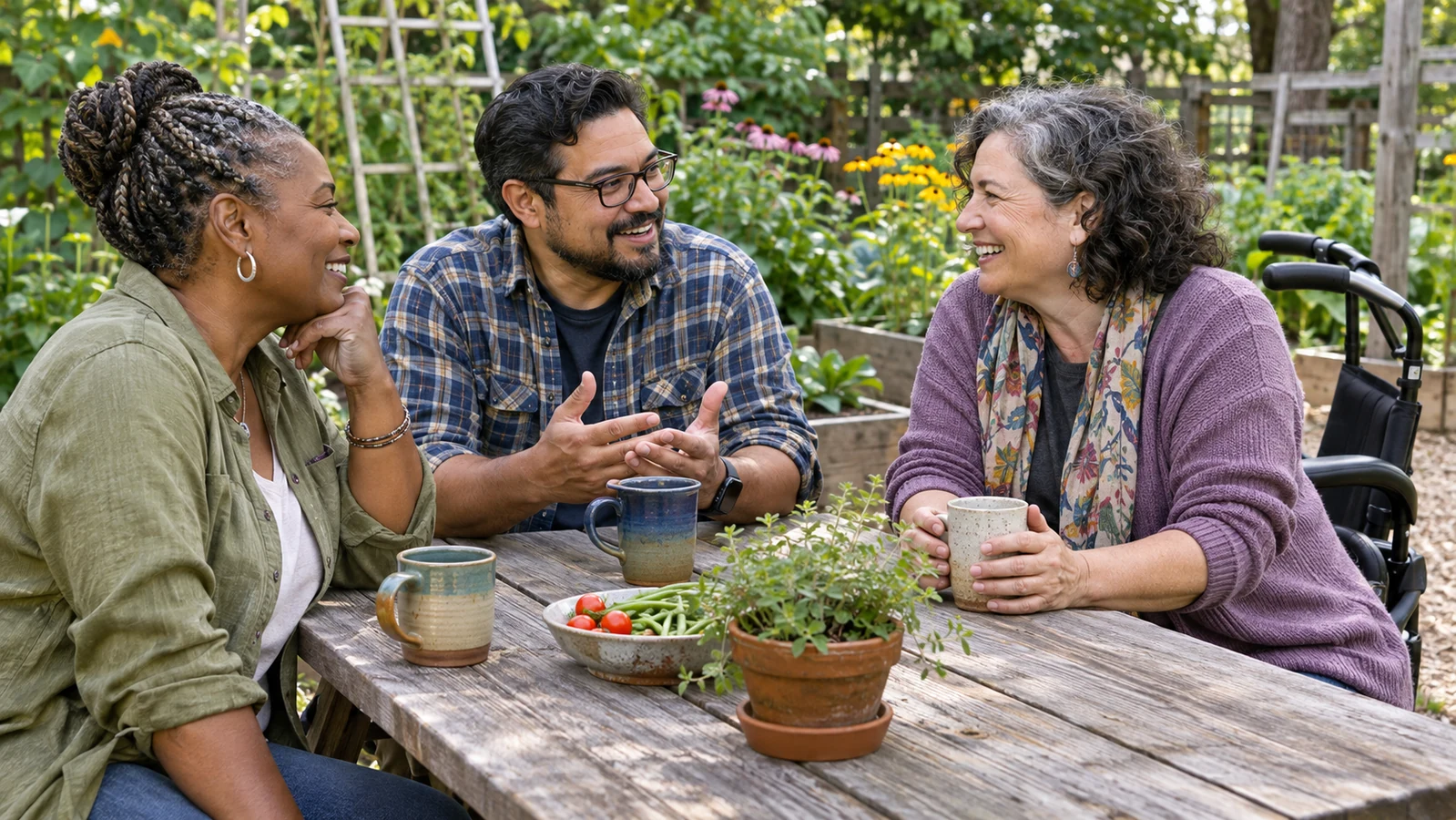
Health conversations often focus on food, movement, sleep, and medical care. Human connection belongs in the picture too: being able to talk, share an activity, ask for help, or feel part of a community can support wellbeing. The World Health Organization’s 2025 Commission report describes social connection as involving the structure, function, and quality of relationships. It is not one prescribed number of friends, calls, or group events. This guide translates public-health resources into flexible ideas for adults. It is not a diagnosis, a treatment plan, or a promise that a particular social activity will prevent illness.
Loneliness and social isolation are not the same thing
Loneliness and social isolation describe related but distinct experiences. The U.S. Centers for Disease Control and Prevention (CDC) describes loneliness as a subjective feeling of being alone or disconnected, while social isolation refers more to limited relationships, contact, or social support. A person can feel lonely while surrounded by people, and someone with few contacts may not feel lonely. The mismatch between the connection a person wants and what they experience matters. That is why counting contacts alone can miss the point. If worry or low mood is part of the picture, an existing Overthrowing Anxiety page may be read as a commercial resource about emotional calm—not as evidence about social connection or a treatment for loneliness.
Health research describes risk, not a personal forecast
Public-health reports link social isolation and loneliness with mental and physical health risks, but those findings describe patterns across populations. They do not predict what will happen to one individual or show that any single person’s illness was caused by a lack of connection. Health is influenced by many factors, including income, discrimination, disability access, work, caregiving, transportation, housing, and medical conditions. The WHO report emphasizes both personal relationships and wider social environments. A useful article should not turn an association into blame or a medical promise. Connection is valuable in its own right; it should not be sold as a substitute for clinical care or as a guaranteed way to change a diagnosis.
A meaningful connection is not a popularity contest
More contacts are not automatically better. A brief conversation that feels safe and reciprocal may be more meaningful than several interactions that feel obligatory. Some people want a wide circle; others prefer a few close relationships or occasional company around a shared activity. The CDC notes that meaningful connections can be supported by checking in, making time for people who care about you, and finding shared interests. Those are examples, not official clinical guidelines or a test of whether a life is healthy enough. You do not have to become extroverted, disclose private information, or attend a large event to count as connected.
Begin with a person you already know
A gentle starting point may be someone already in your life: a friend, relative, former colleague, neighbor, classmate, or community member. A message can be simple and specific—“I thought of you when I saw this,” “Would you like a short call this week?” or “I’m going to the market Saturday; would you like to join?” The invitation can leave room for no: people have different schedules, energy, finances, and responsibilities. If a person does not reply, it is not proof that you are unwanted. Try another time or another person if that feels right, while respecting their boundaries and your own.
Small routines can make reaching out easier
Routines reduce the effort of deciding from scratch. A regular check-in, shared lunch, walking conversation, hobby session, or short weekly call can create a predictable opening for contact. Keep the plan small enough to repeat: ten minutes may be more workable than a full evening. Choose a time and format that fit the people involved, and revisit the plan if it stops working. A schedule is an invitation, not an attendance rule. If sleep routines or winding down are also on your mind, The Insomnia Program is an existing commercial sleep resource; it is not a loneliness program, a clinical service, or evidence for this article’s claims.
Shared interests offer another way to meet people
Shared interests can make conversation feel less forced. A library event, community garden, language exchange, faith or cultural gathering, sports group, class, volunteer shift, or online forum may offer a common subject and repeated contact. The CDC lists joining a group with shared interests, getting involved locally, spending time outdoors with others, and volunteering among possible ideas. The activity itself need not be strenuous or expensive. It can be quiet, seated, creative, spiritual, practical, or brief. Ask about the group’s purpose and expectations before committing. If an event does not feel welcoming, accessible, or safe, you are free to leave or look for a different setting.
Make connection accessible and realistic
A realistic plan accounts for barriers rather than assuming motivation is the only issue. Chronic illness, pain, fatigue, disability, hearing or vision changes, caregiving, shift work, transport, cost, language, and discrimination can all affect participation. Consider asking a group about step-free access, seating, breaks, captions, quieter spaces, online attendance, or a lower-cost option before going. The CDC notes that community resources such as parks, libraries, public transportation, and programs can shape opportunities for connection. If access is missing, the answer is not always to try harder; it may be to ask for an accommodation, invite someone to a familiar place, or find a different format.
Online contact can help, but it need not carry everything
Digital communication can be a practical bridge, especially when distance, mobility, weather, or schedules make meeting in person difficult. A phone call, voice note, accessible video visit, group chat, or moderated interest group may help someone stay in touch. Online contact is not automatically shallow, and in-person contact is not automatically supportive. Privacy and safety still matter: choose what to share, check who can see a post, and be cautious about anyone asking for money, passwords, intimate images, or sensitive health details. If online interaction leaves you distressed or pressured, step away and seek help from a trusted person or the platform’s safety tools.
Giving and receiving support can both matter
Connection can involve offering support as well as receiving it. The CDC suggests checking on others, expressing gratitude, and finding ways to be responsive; it also encourages people to ask for help when needed. A balanced relationship does not require each person to give the same thing at the same time. Listening, sharing information, lending a hand, or asking for company can all be meaningful, depending on the relationship. Avoid taking on more than you can safely manage, and do not assume that another person wants advice when they have not asked for it. A simple question—“Would listening or practical help be more useful?”—can prevent well-meant support from feeling intrusive.
Boundaries and safety belong in the plan
Healthy connection includes choice and boundaries. You can decline a gathering, keep some topics private, or ask to change the time or format. If a relationship involves coercion, threats, stalking, or abuse, do not treat “reaching out more” as the solution; prioritize safety and contact a trusted person or local support organization using a method that feels safe. In any group, check how personal information is handled and whether there are clear conduct expectations. A person who is grieving, ill, or under pressure may need quiet company rather than an organized activity. Consent, respect, and the option to leave are part of supportive contact.
Community conditions shape who can participate
Opportunities are shaped by more than individual effort. Reliable transport, safe public spaces, flexible work, affordable activities, language access, disability inclusion, and welcoming community settings influence who can participate. WHO’s Commission report and the U.S. Surgeon General’s advisory discuss action at individual, relationship, community, and societal levels. That broader view matters: loneliness is not a personal failure, and someone should not be blamed for structural barriers. If you coordinate a group or service, consider asking participants what makes attendance easier, provide clear practical details, and offer more than one way to take part. Small individual habits help, but communities and institutions also have a role.
When disconnection feels persistent or painful
If feeling lonely, disconnected, or unsupported is persistent, painful, or affecting daily life, talking with a qualified health or mental-health professional can be a reasonable next step. You do not need to arrive with a diagnosis or a perfect explanation; describe what has changed and what support you hope to find. Grief, depression, anxiety, illness, and life transitions can overlap, and a general article cannot sort out an individual situation. If you may harm yourself or someone else, cannot stay safe, or face immediate danger, contact local emergency services or an appropriate crisis service now. Do not delay urgent help to try an activity, a website, or a commercial program.
A modest seven-day experiment
Try a short experiment, not a self-improvement challenge. Over the next week, choose one action: send one message, accept one low-pressure invitation, ask a neighbor a practical question, or look up an accessible local group. Decide what would make it comfortable—how long to stay, what transport is available, whether you want someone to accompany you, and how you will leave if it is not a good fit. Afterward, notice how it felt without scoring your performance. If the action was too demanding, scale it down or choose another route. If it felt good, you might repeat it. Either outcome provides information, not a verdict about your worth.
Optional programs are separate from public-health evidence
Blue Heron has existing commercial pages for Overthrowing Anxiety, The Insomnia Program, and Brain Booster. They address adjacent consumer-wellness topics—emotional calm, sleep, and cognitive wellness—and are not social-connection interventions, clinical evidence, or substitutes for care. This article does not endorse their claims or suggest that they treat loneliness. Readers who choose to explore them should assess their scope independently and keep them separate from medical decisions. The health information here is based on the public sources listed below, not on a program page or product claim.
The takeaway: connection can be cultivated without pressure
There is no single correct social life and no daily quota for connection. A small message, a recurring activity, a support group, a welcoming online space, or a safer community environment may each matter to different people. Make room for accessibility, boundaries, and the realities of health, time, money, and culture. If disconnection is distressing, ask for support rather than blaming yourself. This is general health education, not diagnosis, individualized mental-health advice, or treatment. AI assistance was used to draft and organize the article. Mr.Hotsia’s editorial review was limited to source checking and clarity; it was not clinical review and does not imply medical credentials.
Sources and further reading
Medical information was checked against these public health sources on November 12, 2026.
- World Health Organization — Social connection: Questions and answers (June 30, 2025) ↗
- World Health Organization — From loneliness to social connection: Report of the WHO Commission on Social Connection (2025) ↗
- CDC — Improving Social Connectedness ↗
- CDC — Health Effects of Social Isolation and Loneliness ↗
- U.S. Department of Health and Human Services — Social Connection: Surgeon General’s Advisory and resources ↗
This article is general health education, not a diagnosis or personal medical advice. Do not change treatment or supplements based on this article. Discuss individual results with a qualified healthcare professional.