Sexual health · Appointments, screening, and preventive care
Sexual Health Care and Disability: Access, Communication, and Choice
A respectful, practical guide for adults with disabilities on requesting accessible sexual-health care, communicating preferences, and keeping personal choice at the center.
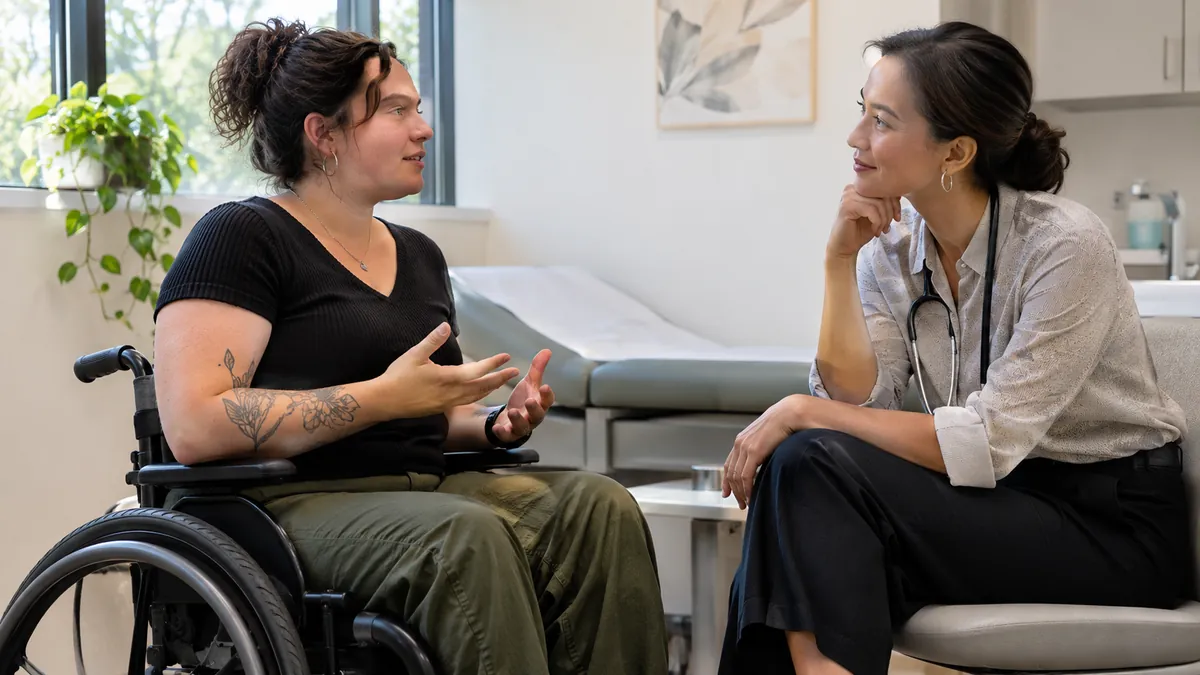
Sexual health belongs in disability-inclusive care
Sexual health is part of health and wellbeing, not a subject reserved for people without disabilities. The World Health Organization and UNFPA note that people with disabilities have the same sexual and reproductive health needs as other people, while often encountering barriers to information and services. WHO’s broader overview includes access to information, safe relationships, and services as part of sexual and reproductive health. The purpose of this article is narrow: to help adults think through access and communication when they choose to seek care. It does not assume that every reader is sexually active, wants a relationship, or needs a particular examination or service.
Disability is not one experience
Disability can relate to mobility, hearing, vision, communication, learning, mental health, chronic illness, or more than one part of daily life. Needs also change with the setting and the individual. A person may want step-free entry but not help transferring; another may need written information, a sign-language interpreter, additional time, or a quiet room. No single list fits everyone. Asking what would make care usable is more respectful than guessing from a diagnosis, appearance, device, or another person’s account. People-first language is one starting point, but preferences vary; the person is the best source on how they want to be described.
Barriers are often built into the service
Barriers are not necessarily caused by a person’s body. The CDC describes inaccessible facilities or equipment, communication barriers, transportation, and gaps in provider knowledge as factors that can affect access to care for people with disabilities. WHO and UNFPA likewise identify barriers to sexual-health information and services. A missed appointment or an uncompleted test should not automatically be read as lack of interest or responsibility; the booking system, transport, cost, inaccessible materials, or prior disrespect may be part of the picture. This guide cannot assess a particular service, but it can help readers name practical needs and ask what options a clinic can provide.
Access starts before the appointment
If making a call, online booking, or entering a clinic is difficult, ask whether the service offers another contact method, a remote first conversation, an accessible entrance, or help planning arrival. Describe the access need in the amount of detail you choose. For example: ‘I want to discuss sexual health. Before booking, can you tell me whether the exam room and equipment are accessible to a wheelchair user?’ A service may need to ask a follow-up question to understand what is needed, but you can ask why information is requested and how it will be used. Local services differ; confirm details directly instead of relying on an old directory listing.
Ask about the room and equipment
Physical access can involve more than the front door. The CDC specifically mentions usable examination tables, scales, and chairs as examples of equipment that can matter, and recommends planning enough time when needed. A person might ask what equipment is available, whether staff can explain transfer procedures before the visit, whether an accessible restroom is present, or whether the appointment can be scheduled when the right room is free. You do not have to agree to a transfer or procedure that has not been explained. The service should discuss what it can safely accommodate and what alternatives may exist; this article cannot determine which equipment or examination is appropriate for anyone.
Communication should fit the person
Communication access is just as important as physical access. Someone may prefer an interpreter, captions, plain-language explanations, large print, a screen-reader-friendly document, extra response time, or the chance to answer in writing. Tell the service what works for you, if you wish, and ask whether the clinician will speak directly to you rather than directing every question to a companion. The CDC encourages clear, direct communication and suggests finding another way to provide information when a patient does not understand a question or instruction. These ideas support a more usable conversation; they are not a promise that every service has every resource on site.
Support people are a choice, not an assumption
A support person can be helpful, but their presence should reflect the patient’s preference and the service’s local procedures—not an assumption that a disabled adult cannot make decisions. You may want someone to help remember questions, interpret a communication preference, or provide emotional support. You may also prefer to speak privately for part of a visit. If a companion is coming, ask whether the clinician can first explain how the appointment works and how private conversation is handled. In the United States, federal disability-access rules may apply to covered services; laws elsewhere differ. Ask the clinic about its process, and use a local disability-rights or patient-advocacy organization if you need jurisdiction-specific information.
Privacy can be discussed explicitly
Privacy can require extra planning when a person relies on a caregiver, interpreter, shared device, transportation helper, or family member. Before discussing intimate details, you can ask who will be in the room, who can see the visit record, how appointment reminders are sent, and whether some questions can be answered privately. A clinic’s privacy rules and exceptions depend on location and service. If a caregiver assists with scheduling or communication, decide what information you want them to receive. A staff member may be able to help arrange a private conversation or explain confidentiality boundaries in plain language before sensitive details are shared.
Sexual-health questions are ordinary health questions
Sexual-health concerns do not have to be dramatic to be worth asking about. A person might want general information, discuss relationships or wellbeing, ask what services are available, or raise a change that matters to them. Disability does not tell a clinician whether someone is sexually active, partnered, interested in sex, or in need of a particular service. If a question is relevant, a professional can explain why it is being asked and how it informs the visit. If it feels unclear or intrusive, you can ask for its purpose, request different wording, or say you would rather return to it later. You are allowed to set the pace of a conversation.
Consent applies to every part of care
Consent and choice matter during healthcare as well as in relationships. If an examination, test, or physical assistance is proposed, ask what it involves, why it is being considered, what alternatives exist, and whether you can pause. A clinician should explain before touching or moving equipment and check that communication is working. You may request that a support person be present if available, or ask for privacy. Rules and service policies vary, but a general article cannot authorize or require a specific procedure. If you do not understand what is being proposed, it is reasonable to ask for a plain-language explanation before deciding whether to continue.
Screening and examinations are individual decisions
Sexual-health services may offer different conversations, tests, or examinations depending on the person’s question and local guidance. The CDC notes that access for people with disabilities can require usable facilities, equipment, and effective communication; it does not set an individual screening schedule in the page cited here. Do not infer from disability alone which tests someone needs, or that every test is necessary. Ask the professional what a proposed test is intended to check, what it involves, and how access arrangements will work. Decisions about screening or examination should be made with a qualified provider who can consider personal circumstances and the applicable local guidance.
Plan for follow-up in an accessible way
Follow-up is part of accessible care. Ask how results, referrals, or instructions will be delivered and in what format. You might need a phone call rather than a portal message, accessible electronic text rather than a scanned image, an interpreter for a follow-up conversation, or enough notice to arrange transportation. Confirm the safest contact method, especially if a device or account is shared. If you do not receive expected follow-up, ask whom to contact and whether another communication route is available. This is general planning information—not a way to interpret a result or decide that follow-up can be skipped.
If the first service cannot meet an access need
If a service cannot meet an access need, you can ask whether it can make an adjustment, refer you to another location, or suggest a local organization that can help. Be specific about the barrier and the outcome you need, rather than feeling obliged to explain your entire medical history. You may write down the name of the person you spoke with and what was agreed. If you are treated dismissively, consider contacting a patient advocate or disability-rights organization in your area. Legal rights, complaint routes, costs, and available services vary by country; this article is not legal advice and cannot decide whether a particular action violates local law.
A short script can make a request easier
A prepared sentence can reduce the work of starting a conversation. You could try: ‘I want to talk about sexual health, and I need information in a format I can use’; ‘Please speak to me directly and give me extra time to answer’; or ‘Before an exam, explain each step and ask me before proceeding.’ Adapt the words to your own preferences, or use a communication device or written note. You do not owe a stranger a personal story to request an accessible interaction. It is also fine to ask the clinic to repeat a plan, show it in writing, or identify one person to contact if arrangements change.
Keep commercial wellness pages in perspective
Three existing Blue Heron program pages discuss separate sexual-wellness topics: erectile function, menopause, and prostate health. They are commercial wellness resources, not accessible-care services, clinical advice, or evidence for the information in this article. Their presence here does not mean they address disability or provide medical accommodations. Readers who want to review their stated scope can open the pages, but a sales page should not replace a qualified healthcare professional, a public-health service, or local accessibility information. No program is being recommended for a diagnosis or treatment, and these links do not determine what care an individual may need.
A practical close—and editorial disclosure
If you face an urgent health concern, immediate danger, or an appointment-related safety issue, contact an appropriate local urgent-care, emergency, or support service rather than waiting for a routine visit or relying on this article. If a service feels unsafe, you may ask for another staff member or a private conversation when possible. People with disabilities deserve respectful, accessible information and the freedom to make their own choices. This is general adult health education, not diagnosis, legal guidance, personal medical advice, or a treatment plan. AI tools assisted with drafting and organization. Mr.Hotsia reviewed sourcing and clarity only; he is not a healthcare professional, and no clinical review or medical credentials are implied.
Sources and further reading
Medical information was checked against these public health sources on November 11, 2026.
- WHO and UNFPA — Promoting sexual and reproductive health for persons with disabilities ↗
- WHO — Sexual and reproductive health and rights ↗
- U.S. CDC — Disability and Health Information for Healthcare Providers ↗
- U.S. CDC — Disability Inclusion Strategies ↗
- U.S. CDC — Communicating With and About People with Disabilities ↗
This article is general health education, not a diagnosis or personal medical advice. Do not change treatment or supplements based on this article. Discuss individual results with a qualified healthcare professional.