Bone health · Exercise after midlife
Exercise for Stronger Bones After Midlife: Weight-Bearing, Strength, Balance, and Safety
Walking, resistance work, and balance practice serve different purposes for bone and fall prevention. Here is what the evidence-based guidance says—and why fracture history, symptoms, and starting fitness should shape any plan.
Bone health is more than a scan result
A bone-density result can make exercise feel either urgent or risky. In reality, movement is one part of bone health, not a substitute for assessment or treatment. This guide looks at how weight-bearing activity, muscle-strengthening work, balance, and posture fit together after midlife. It is intended for adults seeking general information, including people thinking about osteoporosis prevention. It is not a personal exercise plan. A person’s fracture history, pain, balance, medical conditions, and current ability can change which activities are appropriate, so a clinician or physical therapist can help tailor the next step.
Three goals are related but not identical
The Bone Health & Osteoporosis Foundation (BHOF) describes weight-bearing and muscle-strengthening exercise as two important types for bone density. Balance work has another useful role: supporting steadiness and reducing falls. These categories overlap in daily life—climbing stairs challenges muscles and keeps you upright, for example—but they are not interchangeable. A short walk may support general activity and bone loading, while resistance training progressively challenges muscles. A balance drill may help coordination without providing the same loading. The purpose of separating them is to make a routine more complete, not to prescribe a fixed set of exercises for everyone. Optional resource: explore the existing Bone Density Solution page as a consumer program, not as medical evidence.
Weight-bearing activity uses gravity while you are upright
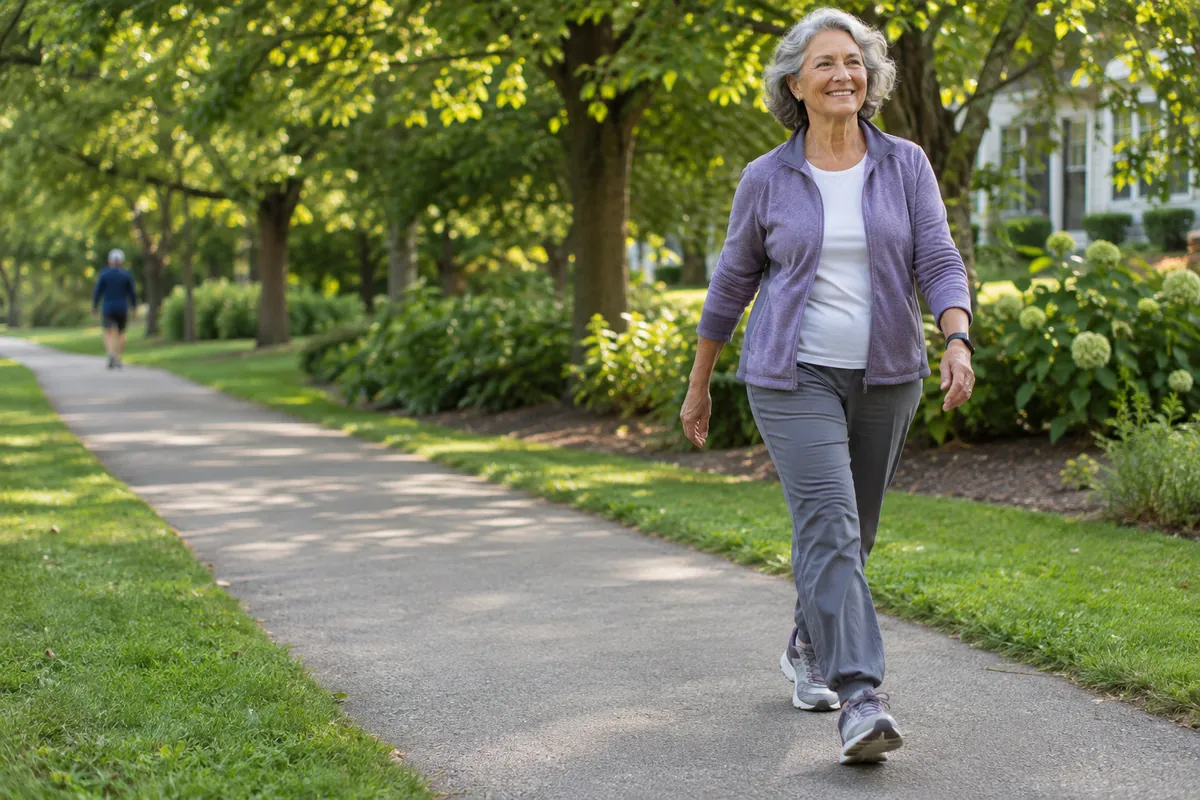
Weight-bearing activity means moving against gravity while upright. The BHOF lists walking, low-impact aerobics, stair-step machines, dancing, hiking, jogging, and tennis as examples across different impact levels. Everyday walking is accessible for many people, but its loading is not identical to running or jumping. Swimming and cycling can support cardiovascular fitness and strength, yet because body weight is supported, they may provide less of the specific weight-bearing stimulus than upright activity. This does not make them useless; a clinician may recommend them for other reasons or as a starting point. Choose activity based on function, comfort, and safety rather than assuming one exercise is best for all bones.
Resistance exercise asks muscles to work
Resistance exercise makes muscles work against a load, such as body weight, an elastic band, a machine, or free weights. As muscles contract, they pull on bones; progressive strengthening also supports everyday tasks like standing from a chair, carrying groceries, or climbing steps. BHOF guidance gives examples such as lifting weights, using bands, and functional movements. You do not need a gym for every form of resistance, but technique and gradual progression matter. A person new to strength work can ask for instruction, particularly if balance is limited, pain is present, or a previous fracture affects movement. Stop and seek advice if an activity causes pain rather than ordinary effort.
Balance and posture support safer movement
Balance and posture work may not be the first thing people associate with bone density, but falls are one route to fractures. A stable stance, coordinated steps, and back extensor strength can support confidence in moving around. Balance exercises can include supported standing activities, but someone who is unsteady should not practice a one-leg stance without a stable support or a qualified guide. Yoga and Pilates may improve strength and flexibility, yet some positions involve deep forward bending or spinal flexion; BHOF cautions that certain movements may not be suitable for people at fracture risk. Ask a physiotherapist how to modify a familiar activity instead of assuming every class is safe.
Choose impact according to your starting point
Impact is not a simple safe-versus-dangerous switch. The Royal Osteoporosis Society describes lower-impact activities such as walking and stair climbing, moderate impact such as small hops, jogging or dance, and higher impact such as jumps. It notes that high-impact exercise is not required to support bone strength and that there is not enough evidence that it adds benefit for everyone. Someone already active and comfortable may have a different starting point from someone who is unsteady or returning after years away. If you have osteoporosis, a spinal fracture, multiple broken bones, or a recent fracture, get individualized advice before adding impact. Avoid testing your limits from an online list.
Strength training can be gradual and practical
Progressive strength work is often more practical than dramatic intensity. Start with a movement or resistance that feels manageable, learn a comfortable range, and build difficulty gradually if it remains safe. The Royal Osteoporosis Society emphasizes technique over how much weight a person lifts and suggests lowering the load if strain is felt in the back. A trainer qualified to work with older adults or a physical therapist can demonstrate form and adapt a movement to mobility or joint symptoms. Muscular effort is expected; sharp pain, new back pain, or worsening symptoms are not a cue to push through. The right amount varies, so generic rep counts are not a personalized prescription.
Be thoughtful about spinal movement
If a person has osteoporosis, movement that rounds or twists the spine under load may deserve special attention. BHOF advises people with spinal fractures to be particularly careful with reaching down, forward bending, rapid twisting, heavy lifting, and activities that increase fall risk. The Royal Osteoporosis Society notes that some movements such as sit-ups or toe-touching may put pressure on the spine and describes adapting a bend through the hips with the back straighter. This does not mean normal bending is forbidden or that everyone with low bone density must avoid all flexibility work. The safest modifications depend on the person’s fracture history and should be explained by a qualified professional.
A diagnosis does not mean exercise is off limits
An osteoporosis diagnosis does not automatically mean avoiding exercise. The Royal Osteoporosis Society says most people with osteoporosis can exercise safely, choosing activity and intensity that fit them. It recommends talking with a doctor or physiotherapist first when there have been many fractures, spinal fractures, recovery from a broken bone, or concerns about a personal situation. A physical therapist can assess movement and help adapt a plan. This distinction matters: broad advice to stay active should not become pressure to do a particular class, impact level, or home workout. A cautious, supported start is a real form of progress, especially when fear of injury has led to inactivity.
After a fracture, timing and supervision matter
After a fracture, timing is not one-size-fits-all. Bone healing, pain, the location of the injury, mobility, and treatment plan all affect when a person can add load or return to a favorite activity. BHOF recommends professional guidance before a new program for people at high fracture risk and suggests physical-therapy support to develop a safe plan. The Royal Osteoporosis Society says to wait until a broken bone has healed before building up strength exercises and to discuss exercise after broken bones with a doctor or physiotherapist. Do not use this article to decide that an injury has healed. Follow the care team’s instructions and ask when and how to resume movement.
Consistency matters more than a perfect routine
A useful routine is one a person can repeat and adjust. BHOF’s general exercise information describes weight-bearing activity on most days and muscle-strengthening activity two or three days weekly, but those guideposts are not a requirement for every individual. Sessions may be divided into shorter periods; the amount that is realistic depends on health and capacity. For some, a walk with a companion is a manageable start. Others may begin with seated movement or supervised strength work. Building gradually can help make exercise less intimidating. The goal is not to earn a perfect score; it is to find sustainable movement that serves function and fits professional advice where needed.
Build an activity plan around real life
Consider the practical setting as part of the plan. Supportive shoes, enough room, good lighting, and removing loose rugs or cords can reduce trip hazards. A stable chair or railing can add support during beginner balance work. If weather, transport, caregiving, cost, or pain make a formal class difficult, ask about community or home-based options. The Royal Osteoporosis Society advises warming up, cooling down, starting slowly, and increasing activity gradually. For anyone with significant health conditions or a long period of inactivity, BHOF suggests checking with a healthcare provider before beginning a new exercise program. These are planning considerations, not a guarantee against injury.
Exercise supports care; it does not replace it
Exercise is one component of osteoporosis care. The Royal Osteoporosis Society explicitly says exercise is not a replacement for osteoporosis medicine. People with a high chance of fracture may need medication alongside healthy habits, and the decision depends on assessment rather than exercise alone. A walk, a resistance band, or a balance class cannot tell you whether a medicine is needed, whether a fracture is healing, or whether bone density has changed. Do not start, stop, or change prescribed treatment because a program promises to build bone. If recommendations feel confusing, ask a clinician to explain how movement, nutrition, bone-density testing, and medication fit your own goals.
Know when to pause and ask for help
Stop exercising and seek advice if you experience new pain, dizziness, lightheadedness, nausea, severe shortness of breath, clamminess, or chest tightness. The Royal Osteoporosis Society lists these as reasons to stop during exercise. Sudden severe symptoms, chest pain, fainting, or breathing difficulty may require urgent local medical care. New persistent back pain, a change in posture or height, or pain after a fall should also be discussed with a qualified healthcare professional rather than managed by adding exercises. This is not a complete emergency checklist. If symptoms seem severe or rapidly worsening, seek local urgent help instead of relying on an online article.
Questions to bring to a healthcare professional
A short appointment can be more useful when it starts with concrete questions: ‘Does my fracture history change which exercise is safe?’ ‘Would physical therapy help me learn balance or strength movements?’ ‘Should I avoid particular spinal positions?’ ‘How should I restart after a break or injury?’ ‘Could my pain, dizziness, heart condition, arthritis, or medicines affect activity?’ Bring a list of current activities, past fractures, and recent symptoms. If you have a bone-density result, ask what it means for overall risk; a T-score alone is not an exercise prescription. A clinician can help connect the test result with function, history, and treatment options.
The practical takeaway
The takeaway is to think in complementary categories: upright weight-bearing activity, muscle strengthening, and balance or posture practice each contribute differently. Walking may be a reasonable activity for some, but exercise choices should reflect fracture history, stability, pain, and health conditions. Start gradually, use support where needed, and ask for personalized guidance if you have osteoporosis, a recent fracture, repeated falls, or uncertainty about safe movement. Exercise can support strength and bone health, but it cannot diagnose osteoporosis or replace prescribed care. This article is general health education, not diagnosis or individualized medical advice. Mr.Hotsia reviewed sourcing and clarity only; no clinical review or medical credentials are implied.
Sources and further reading
Medical information was checked against these public health sources on November 8, 2026.
- Bone Health & Osteoporosis Foundation — Weight-Bearing and Muscle-Strengthening Exercises ↗
- Bone Health & Osteoporosis Foundation — Starting a New Exercise Program ↗
- Bone Health & Osteoporosis Foundation — How Much Exercise Do You Need? ↗
- Royal Osteoporosis Society — How to Exercise Safely for Bones ↗
- Royal Osteoporosis Society — Exercise for Bones ↗
This article is general health education, not a diagnosis or personal medical advice. Do not change treatment or supplements based on this article. Discuss individual results with a qualified healthcare professional.