General health · Food labels and everyday nutrition
How to Read a Nutrition Facts Label: Serving Size, Sodium, and Smarter Comparisons
A practical, evidence-checked guide to reading serving information, sodium milligrams, and percent Daily Value—without treating a package label as a personal prescription.
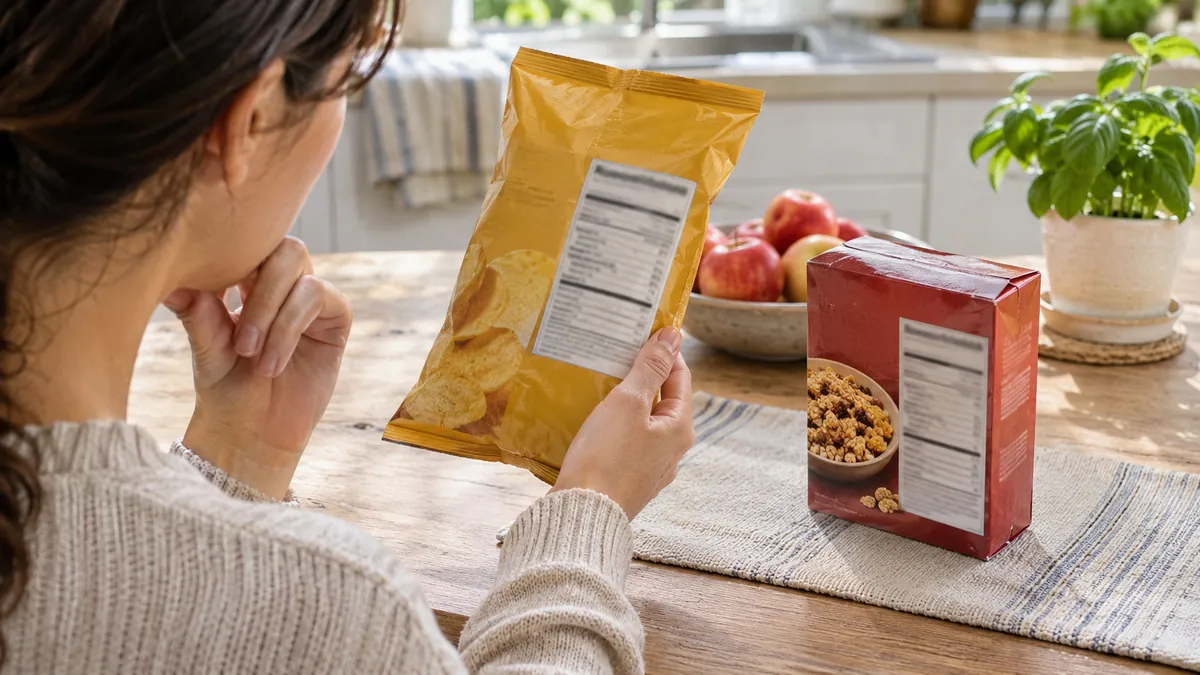
A label is a comparison tool, not a report card
Food packages can make two similar products look easy to compare, yet the numbers only make sense when you know what they describe. On the U.S. Nutrition Facts label, most nutrient amounts are listed for one serving, not necessarily the whole package. A useful routine is to check servings first, then sodium per serving, and finally the percent Daily Value. These details can help you compare options in a store. They cannot diagnose a condition, reveal everything about a meal, or decide what an individual should eat. The goal is informed comparison, not perfect shopping.
Start with servings per container
The Nutrition Facts panel is a standardized source of information about a packaged food. The FDA explains that it lists serving information, calories, and nutrients; the format also includes a Daily Value footnote. Sodium appears in milligrams (mg), while % Daily Value (%DV) gives a quick sense of how much one serving contributes to a reference daily diet. Some labels also offer a two-column view for one serving and the entire package. This is different from front-of-package marketing language. Use the panel as a factual starting point, then consider preferences, access, budget, and any professional guidance that applies to you.
Serving size describes a typical amount, not a recommendation
At the top of the panel, locate “servings per container” and “serving size.” FDA notes that nutrition information is usually based on one serving, although some packages show per-package figures too. If a container lists two servings and you eat the entire package, the nutrient amounts for one serving would not describe the amount consumed. As a simple arithmetic example, two servings contain twice the sodium shown per serving, assuming the package figures are stated that way. Always check whether a dual-column label already gives a whole-package figure to avoid multiplying twice.
Find sodium in milligrams and percent Daily Value
Serving size is often displayed in a familiar household measure—such as cups or pieces—alongside a metric amount in grams or milliliters. It provides a consistent reference for the label. FDA emphasizes that serving sizes are based on amounts people typically eat or drink, and are not a recommendation of how much a person should consume. Real portions differ: a bowl may hold more or less than the listed cup measure, and a package can contain more than one serving. The practical question is simply: does the serving shown resemble the amount I want to compare?
Use %DV as a quick comparison aid
Once the serving reference is clear, find the sodium line. The milligram amount is the quantity of sodium in that serving. Beside it, %DV offers another way to compare. FDA’s general label guide uses 5% Daily Value or less as low and 20% or more as high for a nutrient per serving. Those guideposts help interpret a label; they do not set an individual’s daily target, establish a medical diagnosis, or mean that every person should choose the same product. If your portion differs from the serving size, the listed amount may not match what you eat.
Compare like with like
For two similar products, compare the sodium amounts on a consistent basis. First compare each product’s stated serving size and units. If they differ, either use a per-serving comparison only when the servings are meaningfully similar, or use the package information to calculate an equivalent amount. For example, a snack with 180 mg per 30 g and another with 250 mg per 50 g cannot be fairly ranked by the raw serving totals alone. You can calculate per gram or compare the amount you realistically plan to eat. This is a math aid, not a reason to ignore taste, affordability, or the rest of the meal.
Do not let front-of-package language do all the work
A front label may say “reduced sodium,” “light,” or “no salt added.” These phrases have defined meanings under U.S. food-label rules, but they describe the product relative to a reference or production method—not a complete assessment of the food or your needs. A product with a claim can still contribute sodium, and a product without a prominent claim may fit your preferences. If a claim matters to your decision, check the Nutrition Facts panel and ingredient list. Marketing terms are useful clues, not substitutes for the numerical information.
Sodium can appear in foods that do not taste salty
Taste is not a reliable sodium meter. Sodium can be present in ingredients used for preserving, baking, texture, moisture, or flavor. FDA notes that additives such as monosodium glutamate, sodium bicarbonate, sodium nitrite, and sodium benzoate also contribute to the sodium total listed on the panel. Some foods that do not taste particularly salty still contain sodium, while amounts vary among similar products. Rather than trying to infer a number from flavor, compare the panel. You do not need to memorize every additive; the total sodium line is designed to include the product’s sodium amount.
Ingredient lists add context, but the panel gives the amount
The ingredient list can help explain what is in a product, but it usually does not replace the Nutrition Facts panel for quantifying sodium. Ingredient lists are ordered by weight under U.S. labeling rules, while the panel reports nutrient amounts per serving. An ingredient with “salt” in its name is not the only possible sodium source, and ingredient presence alone does not tell you how much a serving contains. If you have an allergy or another reason to inspect ingredients, use both parts of the package for their distinct purposes and follow advice from your care team.
Packaged, prepared, and restaurant foods are not identical
The label routine is most straightforward for packaged foods with a Nutrition Facts panel. Restaurant meals, deli counters, bakery items, and prepared foods may provide information in different formats or no panel at all. FDA and CDC note that many sodium sources come from prepared and packaged foods, but the exact amount in a particular serving can vary. If a restaurant publishes nutrition data, check whether numbers refer to a standard portion and whether customizations change them. When information is unavailable, you can ask staff if they can share it; estimates are not exact measurements.
A quick grocery-aisle comparison routine
A simple comparison can take less than a minute: (1) check servings per package and serving size; (2) find sodium in milligrams; (3) note the %DV; (4) compare similar products using the same amount; and (5) consider how the item fits with the rest of the meal and your priorities. If one package has a lower milligram amount only because its serving is smaller, the lower number may not mean the whole package is lower. You might compare per 100 g when labels and product types make that practical, or compare the portions you normally use. Keep the method simple enough to repeat.
What labels cannot tell you about an individual diet
A label cannot tell whether a food is appropriate for one particular person. It does not include every factor involved in a dietary pattern, such as preparation, portion, other foods eaten, health history, or medicines. It also cannot predict how an individual’s blood pressure or laboratory results will respond to one item. CDC describes the Nutrition Facts label as a tool for making food choices, not as a diagnostic test. If numbers prompt worry or you feel pressured to restrict foods, step back and seek individualized guidance rather than making a major change based on a single package.
Kidney conditions and other needs call for individualized advice
People managing kidney disease may receive nutrition guidance that depends on kidney function, laboratory results, medicines, and other health factors. NIDDK explains that people with chronic kidney disease may need to adjust sodium and other nutrients, and encourages them to work with a dietitian or health professional. A label can support that conversation, but it does not provide a personal sodium allowance. Do not start a restrictive diet, salt substitute, or supplement regimen based on this article. If you have been given a care plan, use the thresholds your clinician or renal dietitian provided and ask how to interpret unfamiliar products.
Make a small record without turning meals into a test
Some readers find it useful to save a photo of a label or note the product name, serving size, and sodium amount before discussing it with a dietitian or clinician. A short list of products you buy often can make the appointment more concrete. The purpose is not to monitor every bite or judge a meal. It is to bring a specific question—such as how to compare two frequently purchased items—to someone who understands your health needs. If tracking creates distress or interferes with eating, stop and ask for support that is appropriate to your situation.
When to bring a question to a professional
Ask a qualified health professional for personal guidance if you have a condition that affects nutrition, have been told to follow a particular diet, or are considering a substantial change. A registered dietitian can help translate a care plan into shopping and meal questions; a clinician or pharmacist can also address how a prescribed medicine relates to your overall plan. Bring the package or a clear photograph of its panel. If your instructions conflict with a general label tip, follow the individualized plan and clarify it with the professional who knows your case.
Use the label as one helpful piece of context
A nutrition label is most useful when read calmly and in context: serving size first, sodium amount second, %DV as a comparison cue, and claims as secondary information. Compare products that are alike, and remember that serving amounts on packages do not dictate how much anyone should eat. People with kidney disease or other health needs may require individualized advice. The three optional Blue Heron program pages linked below are commercial resources and are not evidence for this article or a substitute for professional care. Mr.Hotsia’s editorial review is limited to sourcing and clarity; no clinical review or medical credentials are implied. This is general health education, not diagnosis, personal medical advice, or a treatment plan. Do not change prescribed treatment based on this article.
Sources and further reading
Medical information was checked against these public health sources on November 11, 2026.
This article is general health education, not a diagnosis or personal medical advice. Do not change treatment or supplements based on this article. Discuss individual results with a qualified healthcare professional.