Musculoskeletal health · Hand osteoarthritis
Hand Osteoarthritis: Thumb-Base Pain, Everyday Tasks, and When to Get Help
Pain while opening jars, turning keys, or pinching can make thumb-base osteoarthritis disruptive. Here is what evidence-based sources say about assessment, activity changes, exercise, splints, medication safety, and when symptoms need professional review.
When a small joint changes a big routine
A stiff or painful thumb can turn ordinary tasks—opening a container, fastening a button, writing, or turning a key—into a frustrating effort. Osteoarthritis in the hand is common, but symptoms have other possible causes, and an article cannot identify what is happening in one person's joints. This guide focuses on hand and thumb-base osteoarthritis: what patterns public health sources describe, what a clinical assessment may involve, and how people can discuss practical options. The aim is to help readers prepare informed questions, not to diagnose themselves or recommend an individual treatment plan.
Where hand osteoarthritis commonly appears
The NHS describes three common hand locations for osteoarthritis: the base of the thumb, the joints nearest the fingertips, and the middle finger joints. Stiffness, pain, swelling, and bony-looking bumps may occur. At the thumb base, where the thumb joins the wrist, pain can make manual tasks such as writing, opening jars, or turning keys harder. Symptoms vary; a person's hand need not match every feature on an information page. An optional commercial resource, The Arthritis Strategy, is linked here as a separate consumer guide—not as medical evidence or a substitute for assessment.
Why the thumb base matters for grip
The thumb's base joint contributes to pinching and gripping, so discomfort there can affect tasks that require force between the thumb and fingers. NHS physiotherapy information notes that thumb-base pain may be more noticeable with gripping or pinching, along with stiffness after rest, swelling, reduced movement, or less grip strength. These features are useful to describe, not proof of osteoarthritis. Tendon problems, injury, inflammatory arthritis, gout, and other conditions can produce hand symptoms too. A clinician can weigh the location, timing, examination, health history, and any unusual features rather than relying on one symptom or a photo.
Patterns are clues, not a self-diagnosis
A pattern that changes with activity or stiffness after rest can be worth noting. NICE describes a clinical diagnostic pattern for osteoarthritis in people aged 45 or older who have activity-related joint pain and no morning stiffness or stiffness lasting no longer than 30 minutes. That guideline is not a home checklist: age, symptoms, examination, and possible alternatives all matter, and not everyone fits the same pattern. Persistent pain, reduced hand function, or uncertainty is a reason to ask a qualified healthcare professional for an assessment. Do not conclude that a painful thumb is “just arthritis” because the pattern seems familiar.
What an appointment may include
An appointment may begin with questions about which joints hurt, when symptoms started, what makes them better or worse, how long morning stiffness lasts, and which activities are affected. A clinician may examine movement, tenderness, swelling, grip, and the thumb's function, and consider other causes based on the history and findings. Mention recent injury, warmth or redness, rapid change, prolonged stiffness, numbness, other joint symptoms, and any health conditions or medicines. A short list of examples—such as opening a jar or using a phone—can make the effect on daily life easier to explain than a general rating of pain alone.
Do X-rays always have to come first?
Imaging is not automatically required for every person with a typical osteoarthritis presentation. NICE recommends clinical diagnosis without imaging for the age-and-symptom pattern it describes, and advises against routine imaging unless there are atypical features or signs of another or additional diagnosis. An X-ray can show bone and joint changes, but an image does not by itself explain how a hand functions or establish the cause of every symptom. A clinician may use imaging when the presentation is unusual, after an injury, or when the result could affect decisions. Ask what question a proposed test is meant to answer and how the result may change next steps.
Keep useful movement in the plan
Movement and strengthening are part of evidence-based osteoarthritis care, but exercise should be suitable to the person and the affected joint. NICE recommends tailored therapeutic exercise for osteoarthritis and says some discomfort can occur when starting; regular, consistent activity can be beneficial over time. The American College of Rheumatology and Arthritis Foundation guideline strongly recommends exercise for hand osteoarthritis, while noting that evidence is less extensive than for knee and hip exercise. A hand therapist or other qualified professional can suggest a starting level and adapt activity. This is different from pushing through severe pain or following a generic online routine regardless of symptoms.
Adjust the task, not every goal
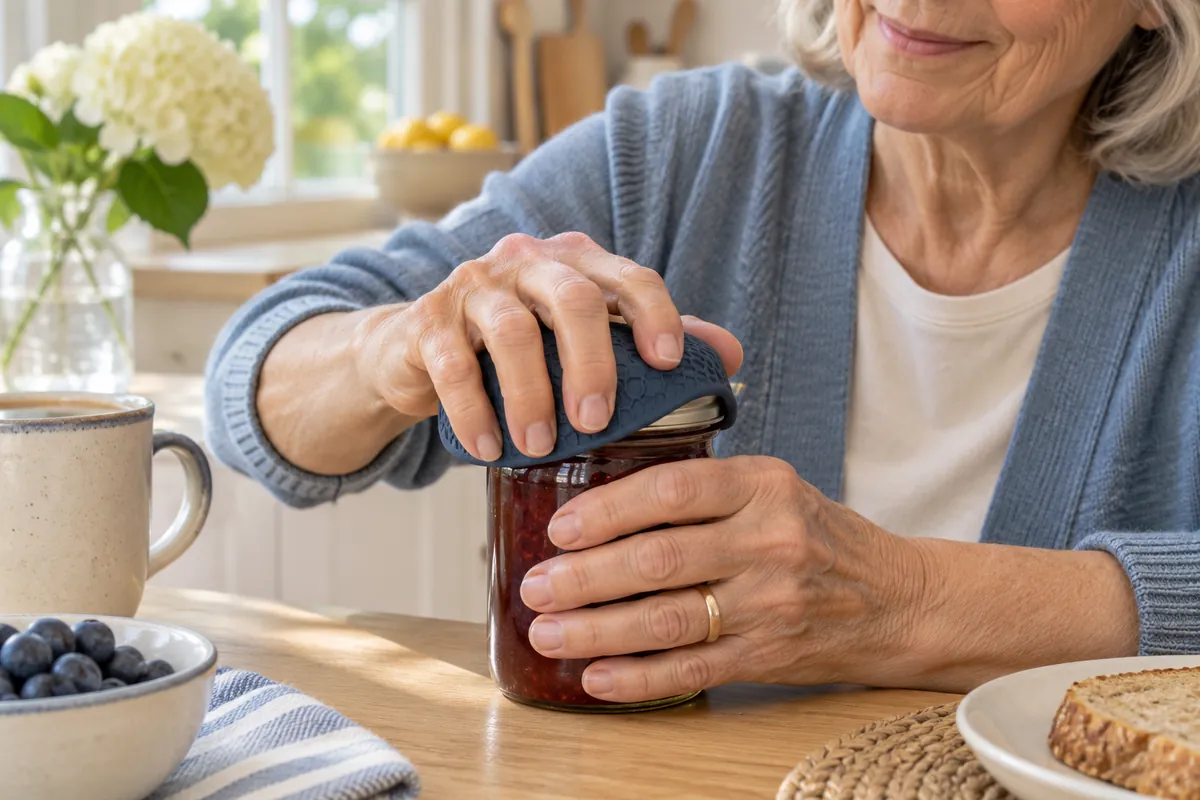
Small changes can reduce the force a painful thumb has to manage without requiring someone to stop every valued activity. Berkshire Healthcare NHS suggests taking regular breaks, dividing tasks into smaller parts, changing how the hand grips or pinches, and using aids such as a jar opener. A larger handle, two hands for a heavier object, or asking for help with a particularly difficult task may be practical experiments. These adjustments do not repair a joint or guarantee less pain; they may make a task easier to manage. Keep activities that matter in the conversation and ask a therapist about adaptations if daily function remains limited.
Splints and supports: fit and purpose matter
A thumb-spica splint can support the thumb during some aggravating activities, but a brace is not automatically necessary or suitable for everyone. The American College of Rheumatology and Arthritis Foundation guideline strongly recommends a hand orthosis for osteoarthritis at the first carpometacarpal (thumb-base) joint; NICE takes a more conditional approach to splints and supports, advising against routine use unless an aid is likely to improve movement and function in a particular situation. A clinician or hand therapist can advise on fit, wear, skin checks, and intended tasks. A splint that causes rubbing, numbness, color change, or increasing pain should be reviewed rather than simply worn tighter.
Heat, cold, and comfort measures
Some people find warmth or cold soothing, and NHS physiotherapy material describes either as an option for thumb discomfort. These comfort measures do not establish a diagnosis or change the underlying condition. Avoid direct contact with very hot or very cold surfaces, and use particular caution if sensation or circulation is reduced; ask a professional if you are unsure whether a temperature treatment is safe for you. A towel-wrapped cool pack or gentle warmth may be easier to control than an extreme temperature. Stop if the skin becomes painful, unusually red, pale, or numb, and do not use heat or cold to delay assessment of a hot, swollen joint or injury.
Medication choices need a safety check
Medication decisions depend on the person, not only the joint. NICE says medicines, if needed, should support non-drug care and be used at the lowest effective dose for the shortest possible time. It considers topical NSAIDs for osteoarthritis in joints other than the knee, but the evidence and suitability vary. Oral NSAIDs can carry gastrointestinal, kidney, liver, and cardiovascular risks; age, pregnancy, other medicines, and health conditions can matter. Ask a clinician or pharmacist before using an anti-inflammatory product, including a gel, particularly if you take other medicines or have chronic conditions. Do not start, stop, combine, or change prescribed medicines based on this article.
When a flare or unusual symptom needs review
A suddenly hot, red, markedly swollen joint, rapidly worsening symptoms, a recent significant injury, or symptoms that seem out of proportion should not be assumed to be ordinary osteoarthritis. NICE lists a hot swollen joint, recent trauma, prolonged morning stiffness, and rapid worsening or deformity among atypical features that may suggest another or additional diagnosis. Fever or feeling very unwell alongside a hot joint also warrants prompt medical advice. This article cannot determine urgency or provide a complete warning-sign list. If pain is severe, a hand is suddenly weak or numb, or symptoms are rapidly worsening, contact local urgent medical services rather than waiting for an online explanation.
What persistent limitation can mean
If non-surgical care does not adequately address pain or function, there may be additional options to discuss. NHS patient information describes splints, exercises, pain relief, activity changes, and—in selected situations—further specialist options. The right next step depends on the joint, examination, duration and impact of symptoms, and personal health considerations. Referral to a hand therapist or specialist can help clarify whether a different support, a tailored exercise plan, or another treatment is appropriate. Surgery is not the inevitable result of hand osteoarthritis, and treatment pages cannot predict an individual's outcome. Ask what benefit is expected, what the limitations and risks are, and what alternatives remain.
Prepare a clear, practical care conversation
Before an appointment, note the painful joints, when the symptoms began, what activities are difficult, whether stiffness follows rest, and what has already been tried. Bring a current medication and supplement list, describe prior injuries, and mention any other joints or systemic symptoms. Useful questions include: “What else could cause this pattern?” “Would an X-ray change the plan?” “Could a hand therapist help with grip or a splint?” “Which movements should I modify?” and “How should I check whether a medicine is safe with my conditions?” If advice is not clear, ask for it in writing or demonstrate the task that is hardest. The goal is a shared plan that reflects function and safety.
Separate commercial material from medical evidence
The Arthritis Strategy is a commercial lifestyle guide listed as a related resource on this site. Its page is not a clinical authority, and its claims should not be treated as proof that a diet, exercise sequence, or supplement treats hand osteoarthritis. Compare any commercial statement with independent evidence and discuss treatment questions with a qualified healthcare professional. Be wary of promises to reverse joint changes, avoid all medical care, or replace prescribed treatment. No commercial program can examine a hand, rule out fracture or inflammatory disease, fit a splint, or assess medication interactions. Readers can choose whether to view the existing program review without making it part of medical decision-making.
The takeaway: function is the goal
Hand osteoarthritis may affect the thumb base, finger joints, or both, and its impact can be felt in small everyday tasks. A symptom pattern can guide a useful clinical conversation but cannot confirm the cause by itself. Tailored movement, task adaptations, and selectively used supports are among the approaches discussed in public guidance; medicines require attention to individual risks. Seek professional assessment for persistent limitation, unusual or rapidly changing symptoms, or uncertainty about safe activity. This article is general health education, not diagnosis or personal medical advice. Mr.Hotsia’s editorial review is limited to sourcing and clarity; it is not a clinical review and implies no medical credentials.
Sources and further reading
Medical information was checked against these public health sources on November 9, 2026.
- NHS — Symptoms of osteoarthritis, including hand and thumb-base symptoms ↗
- NICE — Osteoarthritis in over 16s: diagnosis and management (NG226) ↗
- American College of Rheumatology / Arthritis Foundation — 2019 Guideline for Hand, Hip, and Knee Osteoarthritis ↗
- Berkshire Healthcare NHS Foundation Trust — Physiotherapy advice for osteoarthritis of the thumb ↗
- Royal Orthopaedic Hospital NHS Foundation Trust — Osteoarthritis at the base of the thumb ↗
This article is general health education, not a diagnosis or personal medical advice. Do not change treatment or supplements based on this article. Discuss individual results with a qualified healthcare professional.