Nutrition · Affordable, flexible meal planning
Healthy Eating on a Budget: Fresh, Frozen, and Canned Foods Can All Fit
A practical guide to planning around your budget, comparing the cost of food you will actually use, and building flexible meals from fresh produce, freezer staples, pantry basics, and leftovers.
AI assisted with drafting. Mr.Hotsia reviewed sourcing and clarity only; no clinical review or medical credentials are claimed.
A realistic food plan starts with your constraints
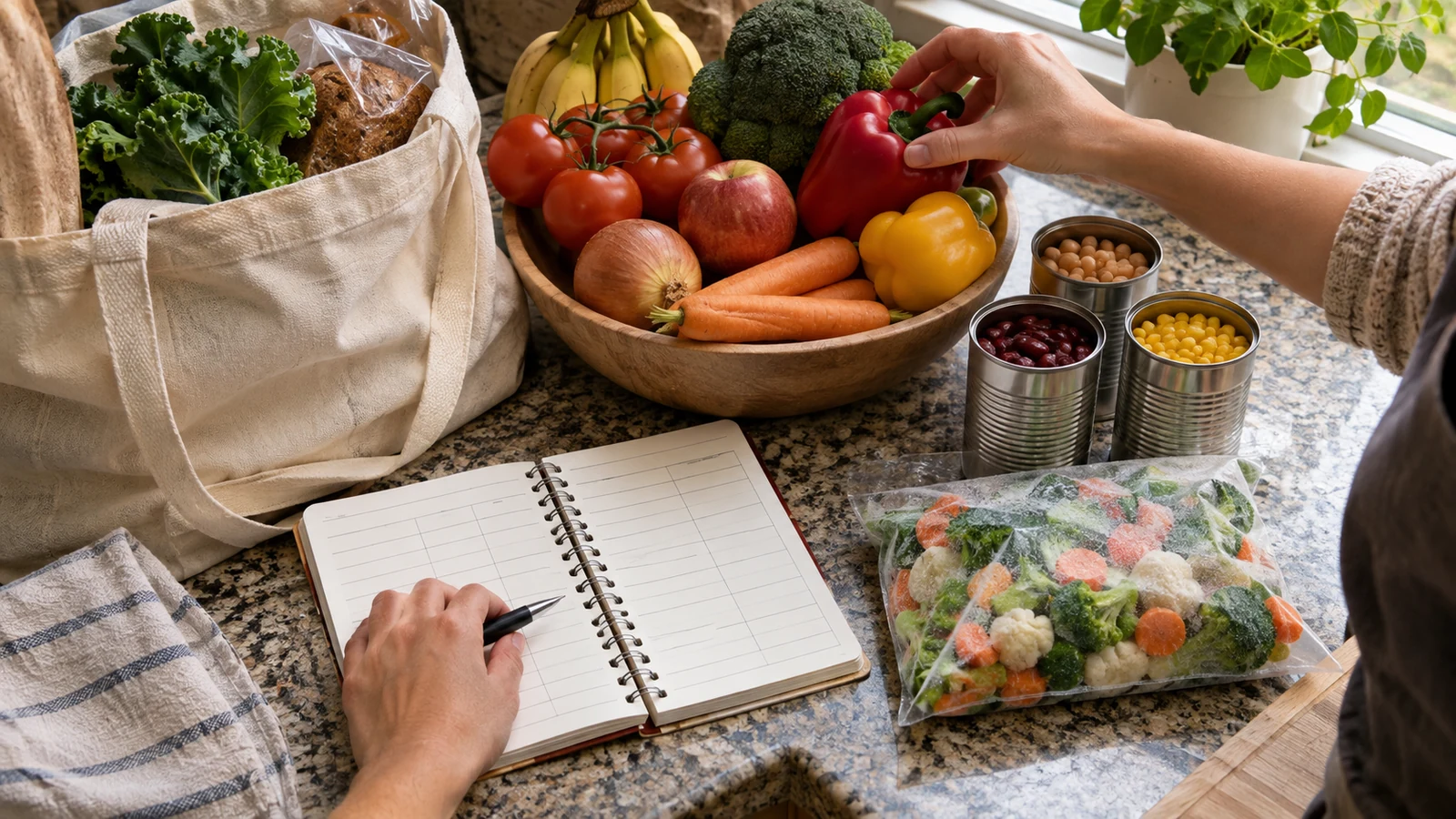
Eating well on a limited budget is not a test of willpower. Prices, food access, time, kitchen equipment, transportation, household size, culture, and storage space all affect what is practical. A useful plan starts with the foods you enjoy and can obtain, then looks for small ways to reduce waste and make meals easier. It does not require expensive “superfoods,” rigid rules, or a perfect cart. USDA MyPlate guidance recommends planning around a budget, writing a shopping list, and buying only what is likely to be used. These are flexible tools, not a prescription for a particular person.
Compare what food costs—not only the shelf price
The lowest sticker price is not always the lowest cost for a meal. Compare similar items using unit price when stores display it, but also consider package size, edible portions, preparation time, and whether the food will be eaten before it spoils. A large bag can be a bargain only if there is enough storage and the household will use it. USDA Economic Research Service researchers compared fresh and processed produce using edible cup equivalents and found that neither fresh nor processed forms were consistently cheapest; results varied by item. Their price estimates use 2022 U.S. retail data, so local prices and current costs may differ.
Fresh is one option, not the only nutritious option
Fresh fruit and vegetables can be appealing, but they are not the only way to include produce. Frozen, canned, dried, and fresh options may all fit depending on availability, price, cooking needs, and preference. USDA MyPlate materials describe frozen and canned produce as practical budget options and offer ways to mix forms across meals. USDA ERS analysis likewise found examples where frozen or canned spinach cost less per edible cup than fresh spinach, while fresh carrots were less expensive than some processed versions. That is a reminder to compare the particular foods in front of you rather than assuming one form is always better.
Buy foods you can use in more than one meal
A useful shopping list can revolve around a few ingredients that have more than one job. Oats might become breakfast porridge or a savory bowl; beans can go into soup, a grain bowl, or a filling for wraps; frozen vegetables can be added to eggs, noodles, or a casserole. Choose combinations that match your tastes and cooking setup. MyPlate’s savings resources suggest using staples such as rice, pasta, beans, vegetables, fruit, herbs, and spices in different combinations. Reusing an ingredient is not monotonous if the seasoning, texture, or format changes. It also reduces the chance that a one-recipe purchase sits unused.
Make a short plan before you shop
Before shopping, take a quick look in the refrigerator, freezer, and pantry. Write down what needs using soon, then choose a few meals that share ingredients. A plan might include one grain, one or two protein foods, and vegetables or fruit that work in several dishes. Keep it short enough to adjust if a sale appears or an item is unavailable. USDA MyPlate advises planning meals for the week based on the food budget, making a list, comparing similar products, buying sale items, and avoiding overbuying foods that may be thrown out. A plan is a guide, not a contract; leave room for changing prices and appetite.
A flexible pantry can turn small ingredients into meals
Pantry foods can make meals possible on days when shopping or cooking is difficult. Rice, pasta, oats, dried herbs, canned beans, shelf-stable milk or alternatives, and canned fish are examples featured in USDA MyPlate savings materials. The best pantry depends on personal preferences and dietary needs; no one list suits everyone. Combining a familiar staple with a vegetable and a protein food can create a meal without requiring a new recipe each time. If budget permits, buy one or two versatile basics at a time instead of stocking up on a large quantity that strains storage or cash. Use recipes as inspiration, not rules.
Use the freezer to protect food from waste
Frozen produce can be useful when fresh items are expensive, unavailable, or likely to spoil before they are used. It can be portioned as needed, and many vegetables can go straight into soups, sauces, or casseroles according to package directions. For a household that cooks for one or two, single portions can reduce leftovers; for a larger household, a bigger package may be more economical if there is freezer space. USDA MyPlate encourages balancing fresh food with frozen and pantry options and freezing fresh produce before it spoils. The most useful choice is the one that works with the freezer, schedule, and meals you actually make.
Canned choices can be convenient and adaptable
Canned beans, tomatoes, fish, fruit, and vegetables can be convenient because they are shelf-stable until opened and often require little preparation. Compare the can size with how much the household uses and whether leftovers can be stored safely. When available, choose products whose ingredient list and nutrition label fit your preferences; canned items vary, so broad assumptions about all products are unhelpful. For fruit, MyPlate resources suggest options such as fruit packed in juice or water, while FDA label guidance can help compare added sugars or sodium where relevant. Canned foods are a practical option, not inherently a lesser or better choice than fresh.
Read labels when a comparison would help
Labels can support a comparison, but do not need to turn shopping into a long calculation. FDA explains that serving size on the Nutrition Facts label is a standardized amount used for comparison, not a recommendation of how much a person should eat. Nutrient values refer to that listed serving, so check the number of servings in the package. The percent Daily Value can help identify whether a serving is relatively low or high in a listed nutrient, and comparing similar products at the same serving basis is more useful than comparing unrelated foods. If a clinician has given you specific food-related instructions, those take priority over generic label tips.
Leftovers work best when they are part of the plan
Leftovers can reduce both cooking time and wasted food when they are planned. Cook a base ingredient once, then use it in another form: roasted vegetables might become a soup; cooked grains may be paired with beans one day and vegetables another. MyPlate’s planning materials suggest saving leftovers for future meals and snacks and using a few staples in different combinations. Keep portions realistic. A refrigerator full of food that no one wants to eat is not a successful savings strategy. If a dish will not be eaten soon, food-safety guidance can help decide whether to refrigerate, freeze, or discard it; do not rely on smell alone to judge safety.
Budgeting should account for time and equipment
A fair budget comparison includes the time and resources needed to prepare food. Pre-cut produce or a ready-to-eat option may cost more per package but be more usable for someone with limited time, mobility, or equipment. Dried beans may be economical, but canned beans may suit a schedule better. A microwave, stove, refrigerator, and freezer change what is feasible. There is no single correct trade-off. Pick one practical comparison—for example, cost per portion plus expected waste—rather than judging a food only by price per pound. The aim is to support meals that are accessible and repeatable, not to maximize cooking labor.
Use local supports and culturally familiar foods
Food budgets are also shaped by where someone lives and what stores, transport, benefits, or community resources are available. MyPlate and USDA materials are written for a U.S. context; price data and program eligibility do not transfer directly to every country. Local food banks, community kitchens, nutrition-assistance programs, cooperative buying, or culturally specific markets may offer options that a generic article cannot map. If you use a food benefit, check local program rules and retailer participation. A plan should respect familiar foods and household traditions. Substituting an unfamiliar ingredient simply because an article calls it “healthy” may make a plan less sustainable.
Keep food safety in the routine
Planning ahead should not mean taking food-safety shortcuts. Wash hands and surfaces, rinse fresh produce under running water, keep raw animal foods separate from foods eaten uncooked, and follow package instructions. FoodSafety.gov advises refrigerating perishable foods within two hours—or within one hour when temperatures are above 90°F/32°C—and keeping a refrigerator at 40°F/4°C or below. It also recommends using safe storage-time guidance for leftovers. These steps apply whether a meal was inexpensive or costly. If food has been left warm too long or storage history is uncertain, use official food-safety guidance rather than taste or smell as a test.
When a general plan needs individual guidance
General budget-planning ideas may need adaptation for people with food allergies, swallowing difficulties, pregnancy, immune compromise, kidney disease, diabetes, heart failure, or other nutrition-related needs. Food choices can interact with clinical goals and medicines, and needs can differ substantially from one person to another. This article does not provide a diet plan or tell anyone to start, stop, or restrict a food. If you have specific instructions from a registered dietitian or qualified healthcare professional, ask them how to apply budget substitutions safely. If you cannot afford enough food, consider contacting local social services or community nutrition support; that is a practical access issue, not a personal failure.
A simple one-week experiment
Try a small one-week experiment rather than changing everything at once. Choose two meals that can share one or two ingredients, compare fresh and frozen versions of a vegetable you already enjoy, and note what was actually used. Keep the receipt if that is helpful, but do not track every detail if it adds stress. At the end of the week, ask: Which item spoiled? Which meal was easiest? Did package size fit? Was there enough variety for my household? This simple review can guide the next list. The information is descriptive, not a score of how healthy you are, and it may not be useful for everyone.
The takeaway: useful, flexible, and good enough
A budget-conscious way of eating is built from workable choices, not a perfect set of ingredients. Fresh, frozen, canned, and dried foods can all play a role; the least expensive option changes by product, location, season, and household needs. Plan around foods already at home, compare similar items, choose package sizes that will be used, make leftovers intentional, and keep storage safe. Existing Blue Heron program pages linked below are optional commercial wellness resources, not evidence for this article and not personalized nutrition services. Mr.Hotsia’s editorial contribution is limited to checking sources and clarity; it is not clinical review and does not imply medical credentials. This article is general health education, not diagnosis, individualized nutrition advice, or treatment guidance.
Sources and further reading
Medical information was checked against these public health sources on November 12, 2026.
- USDA MyPlate — Eat Healthy on a Budget ↗
- USDA Economic Research Service — Satisfying Fruit and Vegetable Recommendations Possible for Under $3 a Day, Data Analysis Shows ↗
- USDA MyPlate — Planning for Savings: Leftovers Edition ↗
- U.S. Food and Drug Administration — How to Understand and Use the Nutrition Facts Label ↗
- FoodSafety.gov — 4 Steps to Food Safety ↗
This article is general health education, not a diagnosis or personal medical advice. Do not change treatment or supplements based on this article. Discuss individual results with a qualified healthcare professional.