Health literacy · Family health history and prevention
Family Health History: What to Ask, What to Record, and What It Can—and Can’t—Tell You
A practical guide to gathering relatives’ health information, understanding uncertainty, and bringing useful questions to a healthcare professional—without treating family history as a diagnosis.
AI assistance was used to draft and organize this article. Mr.Hotsia’s editorial contribution was limited to sourcing and clarity; no clinician reviewed this article.
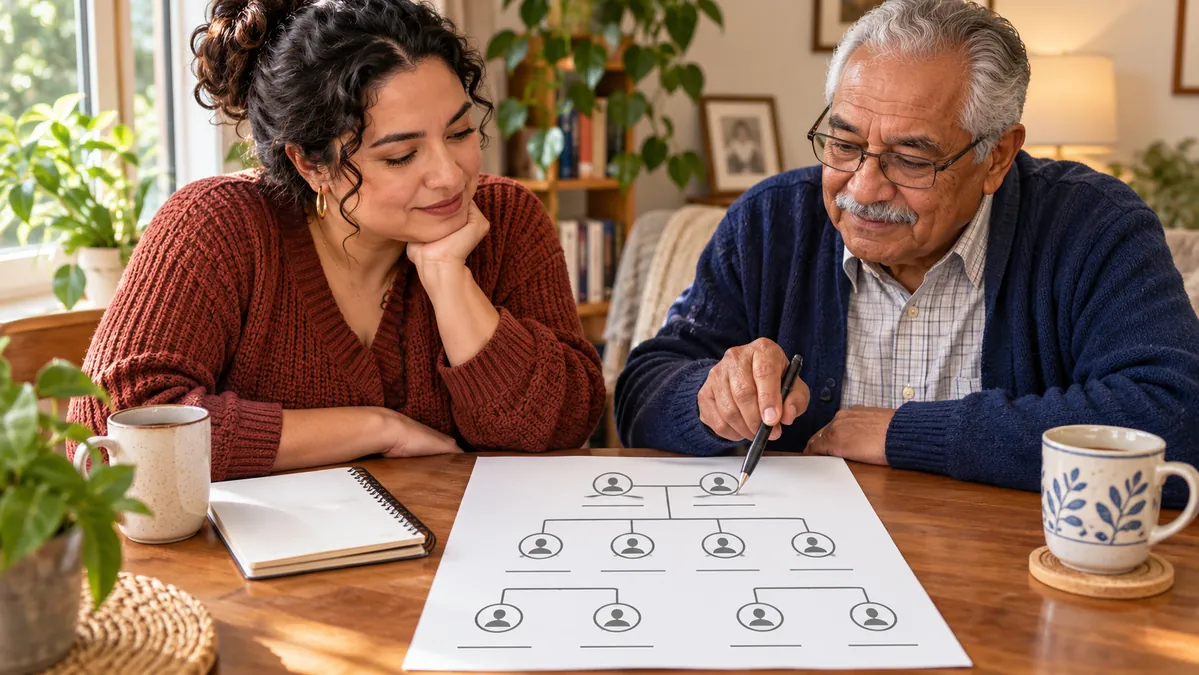
A family story is context, not a forecast
A relative’s diagnosis can prompt questions about your own health, but it is not a prediction. Family health history is a record of health conditions and related details among biological relatives. It can help a healthcare professional understand context and decide whether a conversation about prevention or screening is useful. It cannot establish that you have a condition, tell you exactly what will happen, or replace an individual assessment. The goal is to collect a few accurate details and share them—not to become the family diagnostician or to worry over every illness in a family tree.
Why clinicians may ask about relatives
Relatives may share genes, everyday habits, and environments. The Centers for Disease Control and Prevention (CDC) describes family history as information about health conditions, genes, and factors such as shared behaviors and surroundings. That mix is one reason a condition appearing in a family can be informative but not conclusive. A clinician may use the information alongside your own history, age, health, preferences, and local guidance. A family pattern can open a question; it does not settle the answer. If you are unsure what a detail means, it is reasonable to bring the uncertainty along with the facts.
Which relatives and details are useful
Begin with close biological relatives: parents, siblings, and children. If you know the information, add grandparents, aunts and uncles, nieces and nephews, and half-siblings. For each person, record the relationship and the specific condition rather than a broad phrase such as “heart problems.” Note the age when it was diagnosed, or an approximate age if the exact year is unknown. If someone has died, the age and known cause of death can provide context. CDC and MedlinePlus recommend collecting these kinds of details; a complete record is helpful, but an incomplete one can still be worth sharing.
Start with what you already know
You do not need a perfect chart to begin. Write down what you know, mark what is uncertain, and distinguish a confirmed diagnosis from a family recollection or a suspected condition. Include which side of the family the information comes from. A useful entry might say, “maternal aunt—type 2 diabetes, diagnosed in her late 50s; confirmed by family conversation,” rather than leaving yourself to remember the story later. Avoid adding sensitive details that are not relevant or that the relative has not agreed to share. The record is a practical note, not a permanent medical record or a verdict about anyone’s future.
How to ask without making it an interrogation
A short, respectful conversation is often more productive than a long questionnaire. You might explain that a healthcare professional asked whether certain conditions run in the family and that you are trying to write down accurate basics. Ask what condition the person was told they had, about how old they were at diagnosis, and whether they know which side of the family it came from. If they do not know or prefer not to talk, accept that. Family members can have different memories, and people may reasonably keep health information private. You can record “unknown” instead of pressing for details or treating silence as evidence.
When records can help—and when they cannot
Some families have discharge summaries, clinic letters, or death certificates that clarify a diagnosis or age, but you should ask permission before looking at another person’s records. You generally do not need to gather documents to start a conversation with your own clinician. A family member’s medical record is private; do not access it without authorization. If a relative is comfortable sharing a detail, record the source and how certain it is. If it cannot be confirmed, say so. Clinicians can interpret a family report with appropriate caution and tell you whether additional information would change a decision.
Patterns matter more than a single label
Several close relatives with the same or related condition may be more informative than one relative with a common condition. A diagnosis at an unusually young age can also be a detail worth mentioning, although the significance depends on the condition and the rest of the family pattern. The National Cancer Institute notes that not every cluster of cancer is caused by an inherited cancer syndrome; shared exposures, chance, and other factors can contribute. These examples do not create a checklist for self-diagnosis. If you notice a pattern, describe who was affected and when, then ask a professional whether it matters for you.
What family history cannot tell you
Family history is not a genetic test, a diagnosis, or a personal risk score. Even when a condition is present in several relatives, a person may never develop it; conversely, a person with no known family history can still develop health problems. Some relatives may have been undiagnosed, records may be incomplete, and families can be small or have limited contact. A clinician may be unable to make a precise estimate from the information available. Try not to infer that a condition is absent simply because no one recalls it, or that it is inevitable because someone close to you had it.
Genes, shared environments, and chance
Genes are only one part of the picture. People in a family may share food traditions, work exposures, housing, stressors, access to care, or other circumstances. NCI explains that families with multiple cancer diagnoses may share environmental or behavioral exposures, and some clusters occur by chance. This does not mean that anyone caused an illness through a lifestyle choice. It means that family history is best understood as context within a broader conversation. A professional can help separate what is known from what remains uncertain and discuss practical steps without blaming a relative or promising that a particular action will prevent disease.
What to do when information is incomplete
If you are adopted, estranged, donor-conceived, or simply do not know much about biological relatives, you can still receive healthcare. Tell the professional that family information is unavailable rather than feeling obliged to guess. If you have access to records or a family contact and want to seek more information, you can decide whether that feels appropriate and safe. Do not delay routine care while trying to complete a family tree. MedlinePlus notes that a healthcare professional can work with the information available and explain whether a particular missing detail is important for a decision.
Take the notes to a healthcare professional
Bring your notes to a regular healthcare appointment or ask how to share them through the clinic’s usual process. Helpful questions include: “Does this pattern change what you recommend for me?”, “Is there a screening discussion I should have now?”, and “Would more detail about a relative help?” The answer may be that no change is needed, that routine recommendations remain appropriate, or that a more focused discussion makes sense. Ask what any proposed test is intended to answer, its possible benefits and limitations, and whether the result would change your care. Do not order tests or change medicines solely because an online family-history chart suggests a risk.
Screening decisions are not one-size-fits-all
Screening is not automatically earlier or more frequent for every person who reports a family diagnosis. Recommendations vary by condition, age, personal history, country, and current evidence. A professional can apply relevant local guidance and discuss benefits, harms, and your preferences. Avoid copying a relative’s screening schedule or following a generic age cutoff from another country. If you have symptoms, discuss them on their own merits rather than waiting for a screening interval. This article does not provide a screening schedule or determine whether any specific test is right for you.
Genetic counseling is for specific questions
Some family patterns raise questions about inherited conditions, and a qualified professional may suggest genetic counseling for a particular reason. Counseling is a conversation about personal and family history, what testing can and cannot show, possible outcomes, and implications for relatives. It is not the same as taking a consumer ancestry test or interpreting raw data on your own. Not every family cluster needs genetic testing; the decision depends on the condition and the pattern. If testing is discussed, ask who will explain the results, how uncertain findings are handled, and what choices you have before deciding.
Respect privacy and family boundaries
Health information belongs to the people it describes. Before sharing a relative’s name or records beyond a clinical conversation, ask what information is necessary and how it will be handled. You can keep your own working notes in a secure place and avoid posting identifiable diagnoses in a family group chat or public document. Relatives may disagree about a diagnosis or not want to disclose details; that boundary does not prevent you from sharing what you personally know with your own healthcare professional. Keep the record factual, minimal, and respectful rather than using it to pressure relatives into testing or disclosure.
A simple, sustainable plan for updating your record
A manageable routine is better than trying to build a complete family archive at once. Start with the relatives you know, add the condition and approximate age at diagnosis, and flag unknowns. If you use a digital file or a family-history tool, choose a method that is private and easy to update; check how the service stores information before entering identifiable details. Revisit the note when a relative shares a new diagnosis or when your clinician asks. CDC provides educational family-history resources, including a link to a family-history tool. You can use a simple paper list instead if that better fits your preferences.
The takeaway: use history to start a conversation
Family health history can help make a healthcare conversation more informed, but it is one piece of a much larger picture. Gather a few specific details, label uncertainty honestly, respect relatives’ privacy, and share the notes with a qualified professional. Let that professional interpret whether the pattern changes any recommendation for you. Do not treat family history as proof of disease or a reason to start, stop, or buy a treatment. The optional program links below lead to existing consumer-review pages; they are not clinical services, evidence for the claims in this article, or substitutes for care. This article is general education, not diagnosis or personal medical advice.
Sources and further reading
Medical information was checked against these public health sources on November 11, 2026.
This article is general health education, not a diagnosis or personal medical advice. Do not change treatment or supplements based on this article. Discuss individual results with a qualified healthcare professional.