Nutrition & digestion · Fiber in everyday meals
Fiber in Everyday Meals: Small, Flexible Changes for More Variety
A practical, evidence-checked guide to finding fiber in ordinary foods, comparing labels, and making gradual changes without treating one number as a personal prescription.
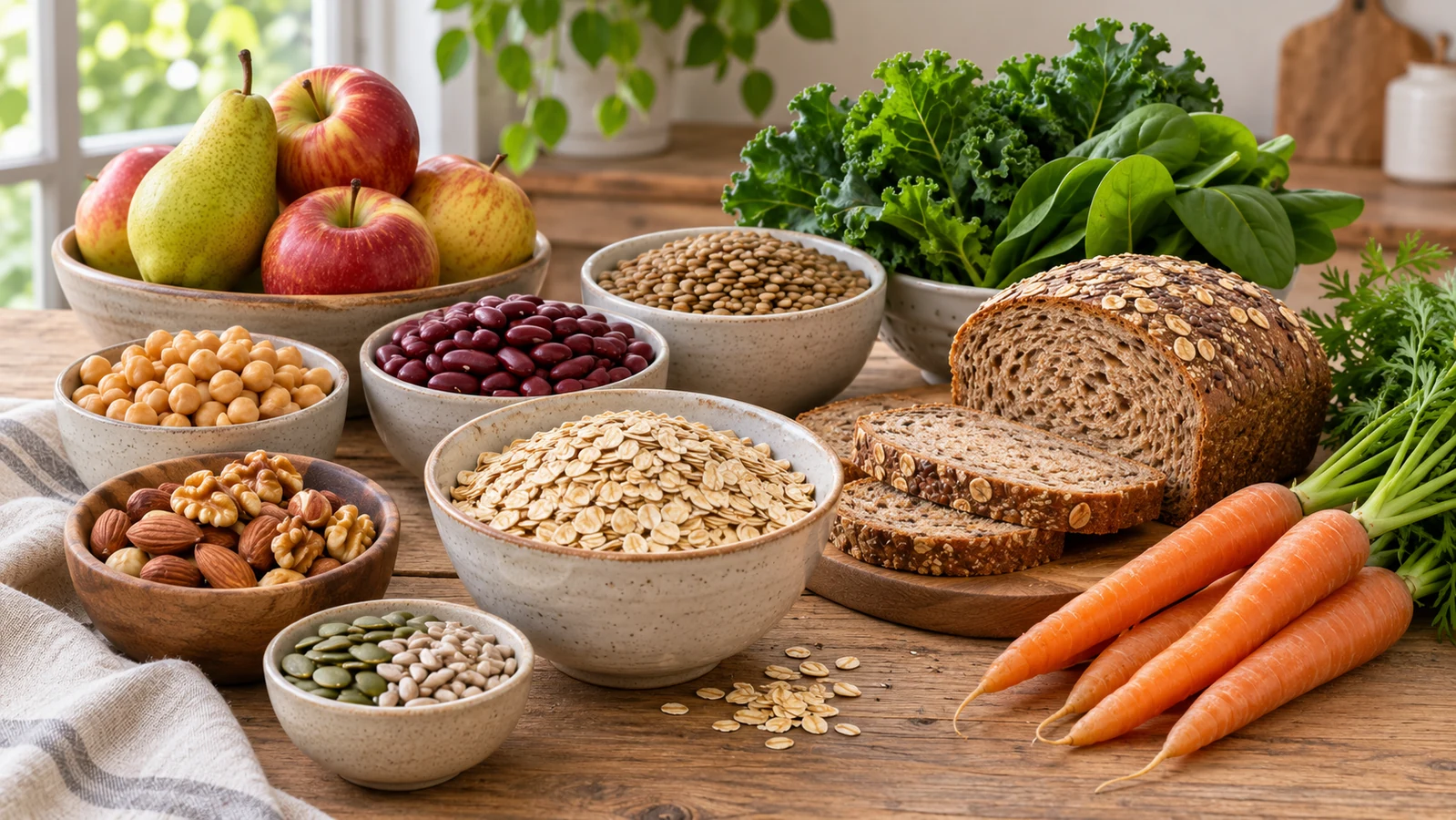
Fiber is a food-pattern topic, not a quick fix
Fiber is often discussed as a single daily number, but the everyday question is more useful: which ordinary foods can fit into meals you already enjoy? Public-health guidance connects fiber with a balanced eating pattern and identifies whole grains, beans and lentils, fruit, vegetables, nuts, and seeds as common sources. That is a broad menu, not a demand to eat every item or to overhaul your diet overnight. This article is about general food literacy, not a treatment for constipation or another digestive condition. People’s needs and tolerances differ, and a number printed in a guideline is not automatically an individual target.
Start with foods you already recognize
A manageable starting point is to notice what you already eat. If breakfast includes toast, could a higher-fiber bread be an option you like? If soup or a stew is already on the menu, might beans or lentils fit? If fruit is convenient, could it appear at a meal or snack? The NHS lists oats, wholegrain breads and grains, potatoes with skins, pulses, vegetables, fruit, nuts, and seeds among ways to add variety. The aim is not to label familiar foods as bad; it is to identify an addition or substitution that is affordable, accessible, and appealing. Optional resource: The Acid Reflux Strategy program page is a commercial page, not evidence for this article or personal medical advice.
Build a breakfast from familiar ingredients
Oats, wholegrain cereal, or wholemeal toast can be familiar breakfast options, while fruit may be included if it suits your preference and circumstances. The NHS provides illustrative meal examples, but it also notes that the fiber content depends on the food, preparation, and amount eaten. A bowl of oats does not need to be transformed into a complicated recipe to count as a meaningful choice. People can choose plain foods, use ingredients already at home, and adjust portions to appetite. If an ingredient is unfamiliar, there is no need to force it. A repeatable breakfast you enjoy is generally more practical than a supposedly perfect one you will not want to eat.
Make lunch additions that fit the meal
Lunch can offer small opportunities for variety: choose a wholegrain version of a staple when available, add vegetables to a sandwich or soup, or include beans in a salad or stew. These are examples drawn from NHS and NIDDK food lists, not rules that every meal must follow. Canned or frozen foods may be convenient; compare their labels and preparation needs rather than assuming that only fresh ingredients count. If you eat in a cafeteria or rely on meals prepared by someone else, the options may be limited. A food choice is shaped by time, price, transport, equipment, and culture. A realistic change can be one ingredient on some days, not a new menu every day.
Use dinner as another opportunity for variety
At dinner, familiar dishes can often accommodate a little more variety without becoming a different cuisine. Beans or lentils may fit in a curry, soup, or stew; vegetables may be added as a side or mixed into a sauce; wholegrain rice or pasta can be considered if it is available and enjoyable. The NHS suggests these kinds of examples, but personal preference remains important. If a substitution changes the taste or texture in a way you dislike, another source may work better. Foods are not interchangeable in every recipe, and there is no need to hide or disguise ingredients. A meal should remain culturally meaningful, satisfying, and practical for the people sharing it.
Choose snacks that are practical for you
For a snack, fruit, vegetable sticks, nuts, seeds, oatcakes, or crackers with hummus are examples named by the NHS. They are options, not a required snack list. Some people need portable foods; others may not snack at all. Allergies, dental needs, swallowing difficulties, cost, and storage can influence what is appropriate. Dried fruit can be convenient, but the NHS notes that its stickiness may contribute to tooth decay and suggests having it as part of a meal rather than as a between-meal snack. That is one specific consideration, not a reason to avoid fruit generally. Choose what works for your circumstances, and ask a qualified professional if an eating limitation makes planning difficult.
Read labels as comparisons, not judgments
Packaged-food labels can help compare similar products. The NHS page says a food is considered high in fiber when it contains at least 6 grams per 100 grams, while also warning that the amount you actually eat matters. That threshold is a labeling guide, not a score of overall health and not a guarantee that a product suits everyone. Compare like with like—such as two breads or two cereals—and look at serving size as well as fiber per 100 grams. Ingredients, price, taste, sodium, added sugar, and other needs may also matter. No single front-of-pack claim should decide an entire diet. If labels are confusing, a dietitian or other qualified professional can help interpret them in context.
Increase gradually instead of changing everything
If your current meals contain little fiber-rich food, adding several large portions at once may feel uncomfortable for some people. NIDDK advises increasing fiber a little at a time so the body can adjust. That supports a gradual approach: consider one modest addition, notice how it fits your routine, then decide whether to continue or try something different. There is no universal pace in the sources, and this article cannot prescribe one for you. If a change brings persistent or concerning symptoms, pause assumptions and seek individualized advice. A gradual plan is not a challenge to push through discomfort; it is simply a way to make food changes less abrupt and easier to evaluate.
Fluids and fiber belong in the same conversation
NIDDK explains that liquids help fiber work better, but an individual’s fluid needs can depend on factors such as health, activity, body size, and where they live. Therefore, generic advice to drink a fixed amount is not appropriate for everyone. Some people have clinician-directed fluid limits or other reasons to ask before changing intake. The useful takeaway is to consider fluids alongside a dietary change and to follow any personal guidance you have received. If you are unsure whether a change in fluid intake is safe for you, ask a qualified healthcare professional rather than using a general article as a prescription. This is especially important when a health condition or medication affects fluid balance.
Variety matters more than a single perfect food
There is no need to rely on one celebrated ingredient. NHS and NIDDK lists overlap across whole grains, pulses, fruits, vegetables, and nuts, illustrating that fiber can come from different foods. Variety may make meals more enjoyable and can help avoid dependence on a single product or supplement. It also allows substitutions when one food is unavailable, disliked, or unsuitable. The guidance is about food patterns, not a guarantee that a particular food will prevent or cure disease. A diverse plate does not need to be expensive or elaborate: different beans, seasonal vegetables, oats, or a wholegrain staple may be enough to create options across the week. Use the foods you can obtain and enjoy.
Access, culture, budget, and preference count
A food plan that works on paper may not work in a person’s kitchen. Budget, local availability, religious or cultural practices, cooking fuel, refrigeration, work schedules, disability, and caregiving all shape meals. Fiber is present in foods used across many cuisines; the examples in US or UK guidance are not the only legitimate choices. You can look for locally familiar grains, pulses, produce, nuts, or seeds instead of copying a foreign menu. If shopping or preparation is difficult, a family member, community food program, or dietitian may help identify practical options. There is no moral value attached to eating a particular food, and access barriers should not be mistaken for lack of effort.
When a general target may not fit your situation
Guideline values differ by country and organization, and NIDDK notes that adult recommendations can vary by age and sex. The NHS describes a UK adult population target of 30 grams daily. These figures are useful for understanding public guidance, but neither should be treated as an individualized prescription. A clinician or registered dietitian may recommend a different approach based on a person’s medical history, symptoms, medications, or nutritional needs. Children and adolescents also have different age-related guidance. People with a prescribed diet, a digestive condition, a history of bowel surgery, trouble swallowing, or significant dietary restrictions should not infer a personal target from this article. Ask a qualified professional before making a substantial change when individual care is relevant.
Digestive symptoms deserve context, not assumptions
Bowel habits and digestive symptoms can have many causes. This article does not diagnose constipation, explain a personal symptom, or establish that fiber is the right response. New, persistent, severe, or worsening symptoms deserve appropriate professional assessment, particularly if they affect eating, hydration, daily activity, or overall wellbeing. Seek urgent local medical help for severe pain, substantial bleeding, fainting, or other emergency symptoms. People should not delay assessment because a food change is being tried, and they should not stop prescribed medicines or start supplements based on this page. A qualified clinician can consider the whole context, including medicines and medical history. Optional resource: Hemorrhoids Healing Protocol is a commercial program page and is not an evidence source, diagnosis, or substitute for care.
A simple way to plan the next week
A low-pressure planning exercise can make the ideas concrete. Write down a few meals you already eat, then mark one place where a source from the public-health lists might fit. Consider cost, preparation time, texture, storage, allergies, cultural fit, and any personal dietary instructions. Choose a small change you are comfortable trying, not a long list of rules. You might compare two breads, add a pulse to one existing dish, or place fruit with breakfast if that is suitable for you. Afterward, decide whether the change was enjoyable and practical. This is a planning aid, not a health test or a requirement to track grams. The best next step may also be making no change until you have individualized advice.
Optional commercial resources are not evidence
Some readers may encounter commercial wellness programs while looking for nutrition information. Existing Blue Heron pages such as The Fatty Liver Solution are program descriptions, not independent medical references and not personal recommendations. A sales page should not be used to infer a diagnosis, stop a prescribed plan, or expect a guaranteed result. The three optional links in this article point only to existing program pages and are kept separate from the public-health sources. Their presence does not endorse their claims or mean that a reader needs to purchase anything. For medical questions, use the cited public-health information as general education and discuss personal needs with a qualified healthcare professional.
A flexible takeaway and editorial disclosure
The practical summary is simple: look for familiar sources, favor variety over a single magic food, and make changes gradually if you choose to make them. Compare labels as one part of a wider decision, and treat fluid guidance as individual rather than fixed. Food choices should fit a person’s culture, budget, access, health circumstances, and preferences. People with symptoms or a prescribed diet should get tailored advice instead of assuming that a general fiber target applies to them. This article is general health education, not diagnosis, personal medical advice, or a treatment plan. AI tools assisted with drafting and organization. Mr.Hotsia reviewed sourcing and clarity only; he is not a healthcare professional, and no clinical review or medical credentials are implied.
Sources and further reading
Medical information was checked against these public health sources on November 11, 2026.
This article is general health education, not a diagnosis or personal medical advice. Do not change treatment or supplements based on this article. Discuss individual results with a qualified healthcare professional.