Sleep health · Alcohol and sleep quality
Alcohol and Sleep: Why Feeling Sleepy Isn’t the Same as Restful Sleep
Alcohol may make some people feel drowsy sooner, but controlled studies find changes in sleep architecture and continuity. Learn what the evidence can show, what it cannot, and how to raise persistent sleep or alcohol concerns safely.
AI assistance was used to draft and organize this article. Mr.Hotsia reviewed sourcing and clarity only; no clinician reviewed this article.
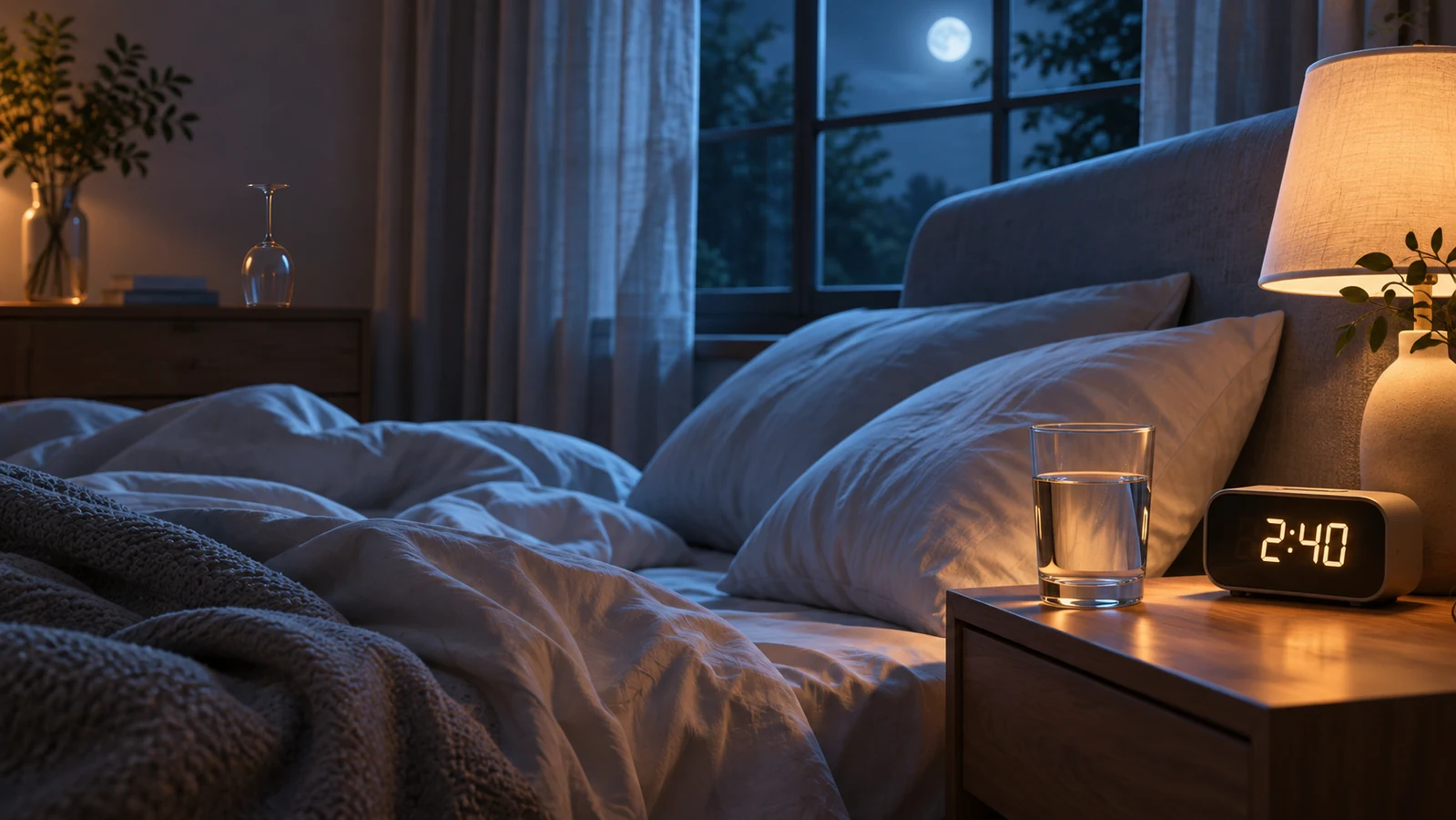
Sleepiness is not the same as restorative sleep
A drink may make a person feel relaxed or sleepy, which can look like a shortcut to sleep. But the feeling of nodding off is not a measure of how restorative the night will be. Alcohol affects the brain and body in ways that can change the pattern of sleep after bedtime. People may differ in how strongly they notice this, and a single night cannot explain a persistent sleep problem. This article summarizes population-level research for adults; it cannot tell an individual whether alcohol caused a symptom or what amount, if any, is appropriate for them.
What research says about alcohol and a night’s rest
A 2025 systematic review and meta-analysis in Sleep Medicine Reviews pooled 27 studies of alcohol and subsequent sleep in healthy adults. The researchers found that alcohol delayed the first rapid-eye-movement (REM) period and reduced REM sleep, with greater disruption as dose increased. They found that a low dose—defined in the review as up to about two standard drinks—was already associated with reduced REM sleep. That is a study-level estimate, not a safe-use threshold or a target. The authors also reported substantial uncertainty for several other sleep measures, including total sleep time and wakefulness after sleep onset.
Why the first half and second half can feel different
Alcohol can shorten the time it takes to fall asleep, particularly at higher doses, but this does not mean that sleep is better overall. The NIAAA explains that people may fall asleep faster after drinking while their sleep becomes fragmented and they wake earlier. NHLBI’s insomnia guidance likewise notes that alcohol close to bedtime can make sleep lighter and increase the likelihood of waking during the night. These are broad descriptions; the response varies with the person, the timing and amount of alcohol, other substances, health conditions, and the sleep environment.
REM sleep is one piece—not a score for the whole night
REM sleep is one of several stages that recur across a night. The systematic review’s clearest finding concerned delayed REM onset and reduced REM duration; it did not establish that a consumer can infer their REM sleep from how they feel on waking. A wearable estimate is not a diagnosis, and a single stage metric does not capture every meaningful aspect of sleep. If a device’s numbers increase worry, it is reasonable to set them aside. Researchers use specialized methods and group comparisons; those results cannot be translated directly into an individual’s precise sleep pattern without appropriate assessment.
A systematic review helps, but it has limits
A systematic review is useful because it brings together multiple studies, but the included experiments were not identical. Dose, timing, participant characteristics, measurement methods, and study settings can differ. The authors noted uncertainty for many outcomes and called for further work on personal and environmental factors. The findings support a careful conclusion about REM disruption, not a claim that every person will experience the same number of awakenings or the same next-day effect. They also do not establish a universal waiting period between drinking and bedtime or prove that any particular beverage is a sleep aid.
Alcohol can interact with breathing during sleep
Alcohol may also matter for breathing during sleep. NHLBI lists drinking alcohol among habits that can raise the risk of obstructive sleep apnea and explains that alcohol can relax muscles in the mouth and throat, potentially contributing to upper-airway blockage. This does not mean that snoring proves apnea or that alcohol alone explains breathing symptoms. Loud frequent snoring, witnessed pauses, gasping, or notable daytime sleepiness are reasons to discuss the pattern with a healthcare professional. An online article cannot identify a sleep disorder, assess severity, or decide whether testing is appropriate.
The next morning may reflect more than lost hours
A rough morning after drinking may include tiredness, headache, thirst, nausea, or difficulty concentrating. NIAAA describes disrupted sleep as one contributor to hangover symptoms: people may fall asleep faster, yet sleep can be fragmented and end earlier. Alcohol-related effects are not limited to sleep, so next-day symptoms cannot be attributed to one mechanism from an article. A person may also have had less time available for sleep, a later bedtime, dehydration, or another factor. Avoid driving or operating machinery when impaired or drowsy; fatigue is not a reliable way to judge whether it is safe.
A personal diary can show patterns, not prove cause
If the pattern is concerning, a brief record may be more useful than trying to interpret a sleep score. Note bedtime and wake time, awakenings you remember, how rested you feel, and when alcohol or medicines were taken if you already track that information. You might also note shift work, stress, travel, caffeine, or snoring reported by someone else. Keep estimates approximate and do not turn the record into a test of your willpower. A diary can help you describe a pattern to a professional; it cannot prove that alcohol caused it or identify a diagnosis.
Do not use alcohol as an insomnia treatment
Alcohol should not be treated as a remedy for insomnia. The fact that it can make someone feel sleepy does not make it a reliable or evidence-based insomnia treatment. NHLBI recommends avoiding alcohol close to bedtime and notes that sleep may become lighter, with more waking. Long-lasting insomnia can have many contributors, and a professional can help consider the full picture. Established care options are outside the scope of this article. Do not start, stop, or substitute alcohol for a prescribed sleep medicine based on this information; ask the prescriber or pharmacist about safe next steps.
Medicines and other sedating substances deserve caution
Combining alcohol with medicines or other substances that cause drowsiness can be dangerous. The exact interaction depends on the product, dose, timing, and person. Do not assume that spacing substances by a few hours makes a combination safe. Check the label and ask a pharmacist or prescriber before combining alcohol with a prescription, over-the-counter sleep aid, pain reliever, anxiety medicine, or other sedating product. Never change a prescribed dose to compensate for drinking without professional advice. If a person is difficult to wake, breathing abnormally, or otherwise in immediate danger, contact local emergency services.
A lower-risk experiment should not become a prescription
Some adults may choose to observe whether a non-alcoholic evening changes their own experience, but this should not be framed as a prescribed treatment or a controlled self-experiment for everyone. People who drink heavily or have developed dependence can experience dangerous withdrawal if they suddenly stop. If you are concerned about your level of use, have had withdrawal symptoms, or feel unable to reduce despite wanting to, seek medical or addiction-support advice before making abrupt changes. There is no need to share private details publicly or follow an online challenge. A qualified professional can help identify safer, confidential support.
Know when sleepiness creates an immediate safety issue
Sleepiness can create a safety problem even before its cause is understood. If you feel drowsy, do not drive, cycle in traffic, operate machinery, work at height, or perform another task where reduced attention could cause harm. Arrange a safer way home or pause the activity. Coffee, a cold shower, an open window, or loud music cannot reliably make an impaired person safe to drive. NIAAA notes that hangovers can affect attention, decision-making, and coordination. If unusual sleepiness is persistent, severe, or occurs without an obvious short night, discuss it with a healthcare professional.
When to discuss sleep or alcohol with a professional
Consider arranging a conversation if trouble falling or staying asleep persists, daytime sleepiness interferes with ordinary activities, or alcohol seems to be part of a repeating pattern. Mention snoring or gasping noticed by another person, medicine use, the schedule you keep, and any attempt to change drinking. Seek urgent care for an acute emergency such as abnormal breathing, inability to wake, or severe new symptoms. This article cannot determine urgency in a particular case; use local emergency guidance when someone is in immediate danger. Asking for help is appropriate even if the cause is uncertain.
Questions that can make a conversation more useful
A few neutral questions can keep the discussion focused: “Could alcohol be one of several factors affecting my sleep?” “What information would help distinguish a schedule problem from a sleep or health condition?” “Could any of my medicines interact with alcohol or affect alertness?” If reducing alcohol feels difficult, you can ask what confidential options are available. If a clinician suggests testing, ask what question it is meant to answer and how results would be interpreted. These prompts do not assume a diagnosis or prescribe a specific plan; they make space for advice based on personal history and safety.
If changing alcohol use feels difficult, support is available
People deserve support without blame. If alcohol is causing concern, a healthcare professional can discuss options and help assess whether withdrawal risk or another health issue needs attention. NIAAA provides information about alcohol-related health issues and support resources; local public-health or addiction services may offer confidential help as well. If someone has been drinking heavily for a long time, they should not rely on this article to plan abrupt cessation. The safest next step depends on the person and may require professional support. Friends and family can offer practical encouragement while respecting privacy and autonomy.
The takeaway: drowsy is not the same as rested
Alcohol can make some people feel sleepy sooner, while controlled research shows changes in REM sleep and other sources describe fragmented sleep and earlier waking. The evidence is meaningful but does not predict one person’s exact night or set a universally safe amount or bedtime rule. Notice patterns without self-diagnosing, do not combine alcohol with sedating medicines without checking, and treat drowsy driving as unsafe. Persistent sleep concerns or difficulty changing alcohol use warrant a respectful conversation with a qualified professional. Mr.Hotsia reviewed sourcing and clarity only; there was no clinical review or medical-credential claim. This is general health information, not diagnosis or personal medical advice.
Sources and further reading
Medical information was checked against these public health sources on November 13, 2026.
- Gardiner et al. — The effect of alcohol on subsequent sleep in healthy adults: systematic review and meta-analysis (Sleep Medicine Reviews, 2025) ↗
- NHLBI/NIH — Insomnia Treatment: healthy sleep habits ↗
- NIAAA — Hangovers: disrupted sleep and next-day effects ↗
- NHLBI/NIH — Sleep Apnea Causes and Risk Factors ↗
- NIAAA — Alcohol Use Disorder and Common Co-occurring Conditions: sleep disorders ↗
This article is general health education, not a diagnosis or personal medical advice. Do not change treatment or supplements based on this article. Discuss individual results with a qualified healthcare professional.