Psoriasis · Scalp and hair care
Scalp Psoriasis and Hair Care: Gentle Routines, Less Irritation, and When to Ask for Help
Scalp psoriasis can be hard to see beneath hair and may resemble dandruff. Learn what gentle hair care can and cannot do, why picking scales can backfire, and what to discuss with a dermatologist.
AI tools assisted with drafting and organization. Mr.Hotsia’s editorial review is limited to source checking and clarity; this was not a clinical review and does not imply medical credentials.
Why scalp symptoms deserve more than a quick guess
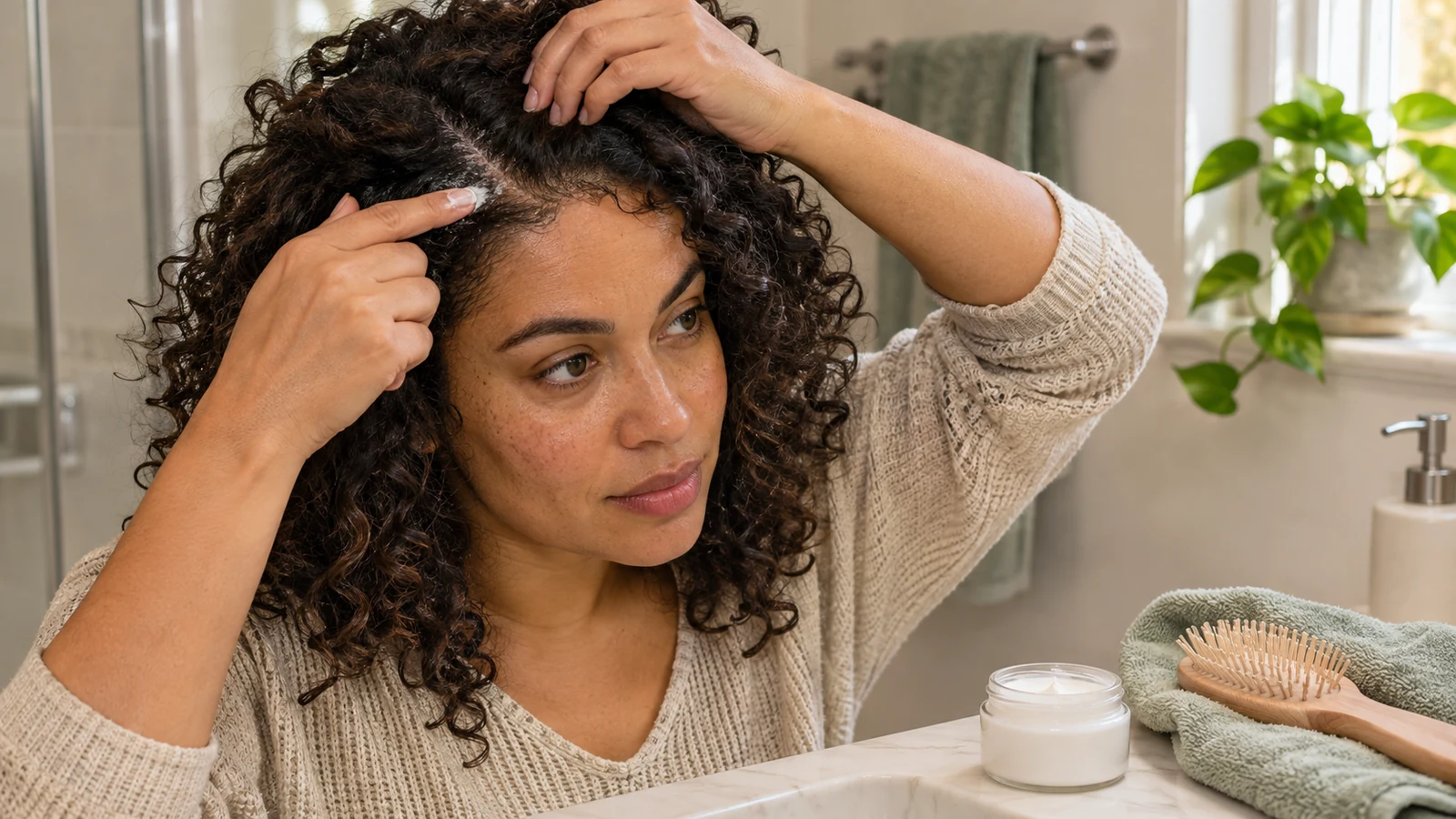
Flaking, itch, soreness, or a patch along the hairline can be uncomfortable in ways other people may not see. Hair can hide the affected area, and trying to look closely in a mirror does not reveal the cause. This guide focuses on scalp and hair care when psoriasis is already part of the conversation, while recognizing that a flaky scalp can have other explanations. The aim is to reduce avoidable irritation and prepare useful questions—not to diagnose a rash or choose a medicine from a symptom list.
Psoriasis can affect the scalp and hairline
Psoriasis is a long-lasting inflammatory skin disease involving an overactive immune response and faster-than-usual skin-cell turnover. It can affect the scalp, elbows, knees, nails, and other areas, and symptoms may cycle between flares and quieter periods. On the scalp, patches can be small and partly hidden by hair or cover a broader area. A person can have scalp symptoms even when other skin areas are quiet. Location and appearance are clues for an in-person assessment, not proof that one particular rash is psoriasis.
Flaking alone does not identify the cause
The American Academy of Dermatology describes scalp psoriasis as sometimes producing dry scale with a silvery appearance, itch, soreness, or areas that crack. It can look similar to dandruff, and the two are not interchangeable labels. Several scalp conditions can cause overlapping flaking or irritation. A photograph or online checklist may help someone describe what they notice, but it cannot reliably distinguish causes. If this is a new problem, the appearance is changing, or previous self-care has not helped, a clinician can examine the scalp and decide whether further assessment is needed.
Notice the pattern without self-diagnosing
Notice where the area appears, when it began, and whether itch, tenderness, cracking, or flaking changes over time. You might note whether patches extend beyond the hairline or appear behind the ears, as the AAD notes psoriasis can occur across the scalp and at its edges. These observations are not a home diagnostic test. Avoid comparing your scalp with dramatic photographs online or assuming that a particular scale color confirms a condition. Different skin tones, lighting, hair density, and camera settings can change how an area appears.
Gentle washing is about less friction, not a special cure
A gentle wash can keep hair and scalp comfortable, but it is not a cure for psoriasis. The AAD advises shampooing gently because hard rubbing, scrubbing, and scratching can worsen irritation. Use the amount of pressure that lets you clean without scraping at the skin, and rinse without forceful friction. If water temperature, fragrance, or a particular product seems uncomfortable, note that and ask a clinician or pharmacist about a suitable alternative. Do not add strong acids, essential oils, or concentrated home remedies just because a video describes them as natural.
Combs and brushes should not scrape the skin
Brushing and combing should move hair rather than lift scale from the scalp. The AAD warns that scraping with a brush or comb can provoke a flare, and forceful attempts to remove flakes can injure skin and contribute to temporary hair loss. Use a softer touch, pause if the skin is painful, and do not use fingernails or a fine-toothed tool to dig at plaques. If thick scale is difficult to manage, ask a dermatologist what approach is appropriate for your own diagnosis and hair routine instead of increasing pressure.
Tight styles and heat can add irritation
Hair styling can pull or heat the scalp as well as the hair shaft. AAD guidance recommends gentle brushing, avoiding tight styles that tug, and keeping hot tools from touching the scalp. These suggestions do not mean every person must stop a favorite style. The fit of a style, how often it is worn, scalp sensitivity, and hair texture all matter. If a braid, ponytail, roller, or heat tool causes discomfort or noticeable pulling, mention it during a visit and ask about lower-friction alternatives that fit your usual care.
Coloring and chemical treatments need individual context
Coloring, perming, relaxing, and other chemical services may irritate some scalps or coincide with a flare. The AAD suggests asking a dermatologist about these choices and avoiding them during an active flare. That is general guidance, not a rule that predicts how one person will respond. If you plan a service, tell the stylist about scalp sensitivity and any current flare, and do not apply a chemical product over broken or painful skin without professional advice. A patch test or a stylist’s reassurance cannot diagnose psoriasis or guarantee that irritation will not occur.
Hair loss can have more than one explanation
Hair shedding can be worrying, but it does not automatically mean permanent loss. AAD explains that scratching and forceful scale removal can cause temporary hair loss, and hair often grows back after scalp psoriasis clears. Other causes of shedding or breakage are possible, so persistent, patchy, sudden, or worsening hair loss deserves professional assessment rather than more vigorous scalp care. Avoid promises from products that claim to restore hair or cure psoriasis. A dermatologist can consider the scalp and hair together and explain what further evaluation, if any, makes sense.
Avoid picking and forceful scale removal
Picking or peeling flakes may seem like the fastest way to make the scalp look smoother. But injury and repeated scratching can worsen psoriasis, make skin bleed, and increase irritation. If itch is interfering with sleep or daily life, tell a clinician rather than treating the discomfort as a willpower problem. This article does not recommend a scale softener, medicated shampoo, steroid, or other treatment; these products have different ingredients and instructions. Use only products intended for you and follow the professional directions already given for your care.
Separate everyday care from treatment decisions
Everyday hair care and psoriasis treatment are separate questions. A dermatologist may discuss medicines or other options based on how much skin is involved, symptoms, prior treatments, health history, and personal circumstances. A general article cannot select a safe product, explain how long to use it, or tell you whether a prescription should change. Do not borrow another person’s scalp medicine, use an old prescription for a new rash, or stop a prescribed treatment because an online source recommends a different routine. Bring labels or a photo of product ingredients to an appointment.
Track useful details, not every possible trigger
A short note can be more useful than tracking every possible trigger. Record when symptoms began, what has changed, whether the area is itchy or sore, and which hair products or styling practices were in use. The National Psoriasis Foundation lists several factors people may discuss in relation to flares, but a factor noticed before symptoms does not prove it caused them. Avoid restrictive diets or major lifestyle changes based on a single observation. A small, realistic record can help a clinician understand the pattern without turning daily grooming into a stressful experiment.
The effect on comfort and confidence matters
Visible skin changes can affect confidence, social plans, sleep, and how comfortable someone feels at a salon or barber. These effects deserve to be taken seriously even when the affected area is small. If you feel embarrassed, you can ask a trusted professional to explain what they will do before examining the scalp, and request privacy or a pause if needed. Psoriasis is not a personal failure. Support from a healthcare professional or a reputable patient organization may help people find language for these concerns without treating a commercial program as a substitute for care.
Make an appointment easier with specific questions
Before an appointment, consider bringing a brief timeline, a list or photos of hair and scalp products, and any current treatment instructions. Questions might include: could more than one scalp condition explain this pattern; what signs should prompt follow-up; how should I care for my hair while this is assessed; and who should I contact if symptoms change? Mention hair loss, persistent soreness, bleeding, sleep disruption, or joint stiffness if present. The goal is a clearer conversation, not to ask a clinician to confirm a conclusion already made online.
When to ask for professional advice sooner
Arrange professional advice if scalp symptoms are persistent, worsening, painful, frequently bleeding, disrupting sleep, or accompanied by unexplained hair loss. A clinician can also assess a new rash rather than assuming it is psoriasis. NIAMS notes that people with psoriasis can develop psoriatic arthritis; new persistent joint pain, swelling, or stiffness is worth mentioning to a healthcare professional. This overview cannot judge urgency for an individual. Seek urgent local care for severe or rapidly worsening symptoms, signs of a serious infection, or any situation that feels unsafe; do not wait for a routine appointment if you are concerned.
A careful takeaway—and what this guide cannot do
The practical message is simple: handle hair and scalp gently, do not force scales off, and ask for help when symptoms persist or change. Scalp psoriasis can resemble other conditions, and a careful exam is more useful than a product claim or a mirror-based diagnosis. The optional Psoriasis Strategy links below go to an existing commercial program page; they are not medical evidence, a clinician recommendation, or treatment. AI tools assisted with drafting and organization. Mr.Hotsia’s editorial review is limited to checking sources and clarity; no clinician reviewed this article and no medical credentials are implied. This is general health education, not diagnosis or personal medical advice.
Sources and further reading
Medical information was checked against these public health sources on November 13, 2026.
- American Academy of Dermatology — Scalp psoriasis: Symptoms ↗
- American Academy of Dermatology — Scalp psoriasis: Tips for managing ↗
- American Academy of Dermatology — Hair styling tips that can reduce flares of scalp psoriasis ↗
- National Institute of Arthritis and Musculoskeletal and Skin Diseases — Psoriasis ↗
- National Psoriasis Foundation — Scalp Psoriasis: Symptoms, Causes & Treatment ↗
This article is general health education, not a diagnosis or personal medical advice. Do not change treatment or supplements based on this article. Discuss individual results with a qualified healthcare professional.