Everyday health · Food safety and leftover storage
Leftovers and Food Safety: A Practical Guide to Cooling, Storage, and Reheating
Simple, evidence-based steps for cooling cooked food promptly, storing it at the right temperature, using refrigerated leftovers in time, and reheating them evenly—without relying on smell or guesswork.
AI assistance was used to draft and organize this article. Mr.Hotsia reviewed sourcing and clarity only; no clinician reviewed this article, and no medical credentials are implied.
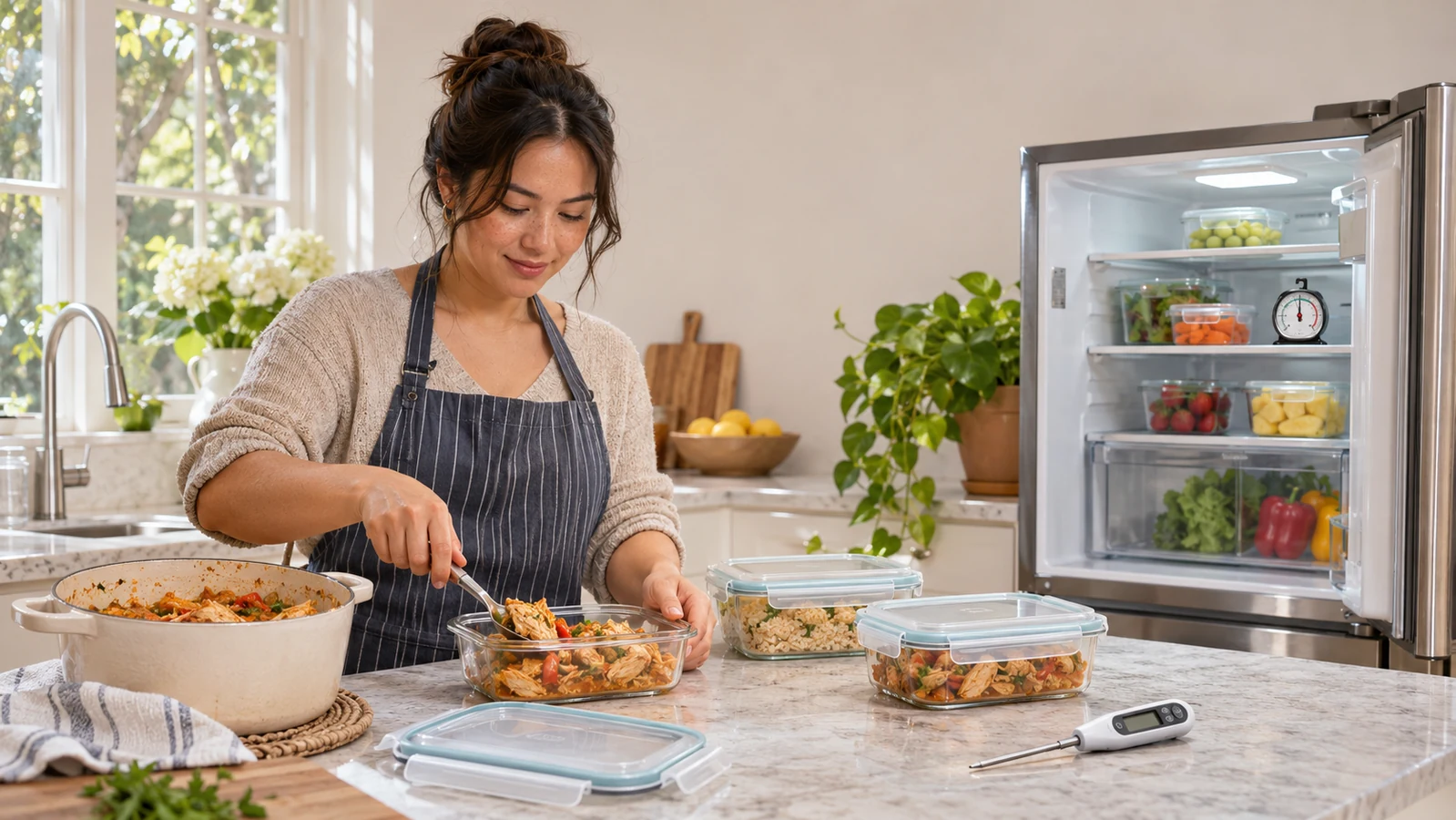
Leftovers are convenient when storage is part of the meal
Leftovers can make a busy week easier, stretch a meal, and reduce food waste. The safest routine is not complicated, but it does depend on a few details that are easy to overlook: how long food sat out, how quickly it cooled, how cold the refrigerator stays, and whether it is reheated evenly. U.S. food-safety guidance offers practical time and temperature benchmarks for home kitchens. These are general household steps, not a guarantee that every food is safe under every circumstance. When package directions or local food-safety advice are more specific, follow those instructions.
Use time and temperature rather than guesswork
For perishable foods, the U.S. two-hour rule is a useful anchor: refrigerate them within two hours after cooking or serving. If the surrounding temperature is above 90°F (32°C), such as at a hot outdoor gathering, the window is one hour. FoodSafety.gov describes the range between 40°F and 140°F (4°C and 60°C) as the temperature danger zone where bacteria can multiply quickly. Time at room temperature adds up during serving and cleanup; putting food away promptly is more dependable than trying to judge it by touch or smell.
Put food away promptly—even while it is still warm
There is no need to wait for a large pot or casserole to cool completely on the counter before refrigerating it. FoodSafety.gov advises placing leftovers in shallow containers and refrigerating them promptly to allow faster cooling. FDA also recommends refrigerating leftovers and takeout within two hours. Divide a large batch into smaller portions, cover them, and place them in the refrigerator rather than leaving a deep pot at room temperature for an extended cooling period. If you are unsure how a particular dish should be handled, check current guidance for that food rather than improvising.
Shallow containers help large portions cool
A wide, shallow container lets heat leave a large portion more readily than one deep container holding the entire batch. Smaller portions can also be easier to label, stack, freeze, and reheat evenly. Use clean food-grade containers with lids or sealed storage bags, and avoid overfilling them. FoodSafety.gov’s guidance specifically recommends shallow containers for leftovers. The purpose is practical cooling and storage—not a claim that any one container material makes food safe on its own. Use containers that are clean, intact, and appropriate for refrigeration or freezing, and follow the maker’s directions for microwave use.
Check the refrigerator instead of trusting its dial
Set the refrigerator to 40°F (4°C) or below and the freezer to 0°F (-18°C) or below. The appliance dial may not tell you the actual temperature, so an appliance thermometer can help you check. FDA notes that cold air needs room to circulate; packing the refrigerator tightly can interfere with that flow. Keep leftovers covered and separate from raw foods that could leak. If a refrigerator routinely runs warmer than the recommended setting, adjust it and use a thermometer to confirm the change rather than assuming the dial corresponds to a specific temperature.
Label containers so the date is easy to remember
A simple label can prevent the familiar mystery-container problem. Write the food name and the date it was cooked or stored on the lid or a removable label. Put newer items behind older ones and keep foods you plan to use soon where they are easy to see. The label does not extend the safe storage window, but it makes the timeline clearer. If several people share a refrigerator, a consistent labeling habit is more reliable than expecting everyone to remember when a dish was made. Remove old containers regularly and clean spills when they happen.
Use refrigerated leftovers within three to four days
FoodSafety.gov’s cold-storage chart lists three to four days for many cooked leftovers, including cooked meat or poultry; the exact chart entry depends on the food. Treat that as a maximum planning window for properly refrigerated leftovers, not an instruction to wait until the last day. If you will not use food in that time, freeze it sooner. A storage chart cannot account for mishandling before refrigeration, a warm refrigerator, or every ingredient in a mixed dish. When the history is uncertain or the food was left out too long, reheating does not reliably make the situation safe; discard it.
Freezing is useful, but it does not sterilize food
Freezing can help preserve food for later, but it does not destroy all harmful germs. FoodSafety.gov says freezing at 0°F (-18°C) keeps food safe while frozen, while the quality guidelines in its chart are time-limited. For mixed dishes, follow current storage information for the closest applicable food and remember that freezer time mainly affects quality when food remains continuously frozen. Freeze portions in suitable, covered containers, leave room for expansion when needed, and label them. Thaw perishable foods in the refrigerator or follow another government-recommended safe method—not on the counter.
Reheat leftovers to 165°F throughout
Reheat cooked leftovers to 165°F (74°C) throughout, checking the internal temperature with a food thermometer. FoodSafety.gov’s temperature chart lists 165°F for leftovers of any type. Stir or rotate food so there are no cool pockets, especially in a dense casserole or large portion. Bring soups, sauces, and gravies to a boil when reheating them, as USDA guidance advises. A dish can be steaming in one spot and still be cooler elsewhere, so appearance alone is not the same as a temperature check. Follow any package-specific reheating directions as well.
Microwaves need stirring, rotation, and a thermometer
Microwaves heat unevenly. Cover food when appropriate, stir or rotate it during heating, and let it stand for the time stated on the package so heat can spread. FoodSafety.gov recommends stirring in the middle of heating and following package directions, including standing time. Use a food thermometer in several spots, particularly in thicker portions, to check that the food has reached 165°F throughout. Some packaging is not designed for microwave use, so transfer the food to a microwave-safe dish when needed. Be careful with steam when removing a lid or cover.
Smell and appearance cannot confirm safety
A spoiled odor, visible mold, or an unusual texture is a reason to discard food—but a normal smell and appearance do not prove that food is safe. FDA explains that disease-causing bacteria may be present even when food does not look, smell, or taste spoiled. Do not taste food to decide whether it is safe. If a dish has exceeded the room-temperature limit, has an unclear storage history, or sat through an extended refrigerator problem, use authoritative food-safety advice or discard it. The cost of replacing a serving is preferable to using sensory guesswork as a safety test.
Keep raw food separate from ready-to-eat leftovers
Leftovers are ready-to-eat foods, so keep them away from raw meat, poultry, seafood, eggs, and their juices. Store raw animal foods in leakproof packaging or containers below cooked food, and use clean plates and utensils for cooked dishes. Wash hands, boards, utensils, and counters after handling raw ingredients. FoodSafety.gov’s four-step guidance groups these habits under clean, separate, cook, and chill. Keeping leftovers covered and promptly cleaning refrigerator spills helps reduce the chance that food or its storage container will be contaminated by drips or hands.
Takeout and outdoor meals need the same clock
The same storage clock applies to restaurant takeout, a picnic, a buffet, or food served at home. If perishable food is left out for more than two hours—or one hour when the temperature is above 90°F—refrigerate it no later than that limit or discard it. Pack leftovers into a cooler with ice or cold sources for travel when refrigeration is not available, and put them in a refrigerator promptly when you arrive. At a gathering, serve smaller portions and replenish them from the refrigerator rather than leaving the full batch out for the entire event.
Power outages and travel call for extra care
A power interruption can change the storage picture. FDA advises keeping refrigerator and freezer doors closed during an outage; it estimates an unopened refrigerator may keep food cold for about four hours. If the outage lasts longer, use an appliance thermometer or current FDA guidance to decide what to keep. Do not rely on whether a container still feels cool. For packed lunches, an insulated bag and cold source can help keep perishable food chilled until it is eaten. For longer trips, choose foods that can be kept safely under the actual travel conditions.
A practical leftover routine can reduce waste safely
A workable routine can be as short as: portion the meal, refrigerate it promptly, check the refrigerator temperature, add a date label, plan to eat or freeze it within the recommended window, and reheat only the portion you need to 165°F. This can be adapted to household size, kitchen equipment, and cultural food practices. It is not necessary to buy special containers or a connected appliance; clean, suitable containers and a simple thermometer are useful tools. The three optional program links in this article point to existing commercial nutrition and lifestyle resources, not food-safety instruction or evidence.
A short checklist, editorial note, and disclaimer
Before putting food away, ask: Was it refrigerated within the time limit? Is the refrigerator at or below 40°F? Is the container shallow, covered, and dated? Will it be used within three to four days or frozen? Has it been reheated to 165°F throughout? If a key answer is no or unknown, do not use smell or a second heating cycle to compensate for mishandling. This article was drafted with AI assistance. Mr.Hotsia’s editorial review was limited to sourcing and clarity; it was not clinical review and does not imply medical credentials. This is general food-safety education, not individualized medical advice. Follow current local guidance and package instructions; it cannot assess a specific dish or household situation.
Sources and further reading
Medical information was checked against these public health sources on November 14, 2026.
This article is general health education, not a diagnosis or personal medical advice. Do not change treatment or supplements based on this article. Discuss individual results with a qualified healthcare professional.