Everyday activity · Post-meal movement and walking
After-Meal Movement: What Short Walk Studies Can—and Cannot—Tell Us
A short walk after eating is often promoted as a simple health habit. Here is what small studies actually measured, what general activity guidance says, and how to keep movement optional, accessible, and safe.
AI assistance was used to draft and organize this article. Mr.Hotsia reviewed sourcing and clarity only; no clinician reviewed this article, and no medical credentials are implied.
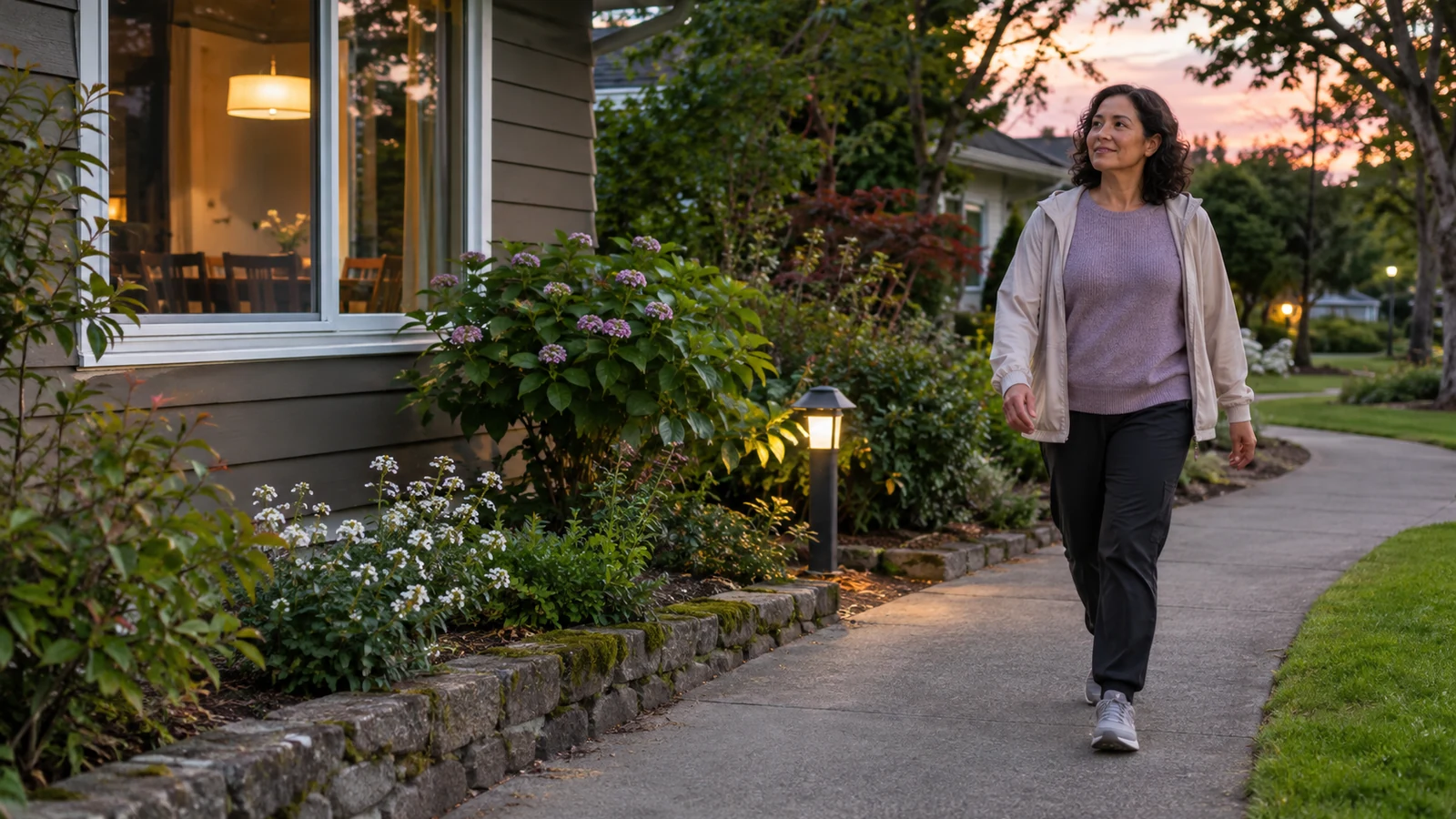
A walk after eating is an option, not a rule
After a meal, one person may head outside for a stroll while another needs to sit, rest, or get back to work. Online advice can make a post-meal walk sound like a rule for everyone. The evidence is narrower: researchers have tested short bouts of activity and measured glucose responses over hours, often in small laboratory studies. Those experiments can help explain a possible timing effect, but they do not establish that every adult should walk after eating or that one routine prevents disease. The useful question is what the studies measured—and what they did not.
What researchers mean by post-meal movement
Post-meal movement simply means being physically active after eating. In research, that phrase can describe a treadmill walk, a comfortable outdoor walk, or brief activity breaks; the duration, pace, meal, and participant group vary. Some experiments compare activity soon after a meal with the same activity before a meal or later in the day. Others compare walking with sitting. These are study designs, not personalized instructions. A protocol chosen to produce a measurable result in a trial may not match a person’s schedule, mobility, health history, or preference.
A small trial tested timing in adults with type 2 diabetes
One randomized crossover study enrolled 41 adults with type 2 diabetes. Participants tried two two-week approaches: advice to walk for 30 minutes once daily, or advice to walk for 10 minutes after each main meal. The investigators measured glucose with continuous monitoring. Average post-meal glucose exposure was lower during the after-meal pattern than during one daily walk, with the difference most apparent after the evening meal. This is a finding from that specific group and study period. It does not tell readers to adopt that schedule, alter medicine, or expect the same result in every setting.
The review found a signal—but also clear limits
A 2023 systematic review and meta-analysis pooled eight randomized crossover trials with 116 participants, including people with and without type 2 diabetes. The authors reported that activity after meals was associated with smaller short-term glucose excursions than activity before meals or no exercise in the included experiments. But the review also rated the trials as having a high risk of bias, and the sample was small. The outcome was an acute glucose response—not future diabetes, heart disease, body weight, or complications. The review offers a research signal, not proof of a universal prescription.
Studies in people without diabetes are small too
Other experiments have studied people without diabetes, but they have also often involved small, selected groups and a short observation window. For example, a randomized crossover study of ten apparently healthy, insufficiently active adults compared brief walks after meals with one longer walk and with no exercise. It measured glucose over the following two hours. A result from ten volunteers cannot predict what will happen for a diverse population with different ages, meals, work demands, or medical conditions. These trials are useful for forming questions; they are not a substitute for larger, longer studies.
Why muscles and timing may matter
Muscle contractions use energy and can affect how glucose is handled during and after activity. The American Diabetes Association explains that active muscles can take up glucose and that exercise may increase insulin sensitivity. This provides a plausible reason researchers study activity around meals. It does not mean a particular walk will produce a visible change on a home monitor, nor does it show that timing matters more than a person’s overall pattern of movement. A physiologic explanation helps interpret a study; it is not a promise of benefit for an individual.
A short-term glucose result is not a long-term outcome
A brief change in a glucose curve is not the same outcome as improved long-term health. A two-hour laboratory measurement cannot show whether a habit is sustainable, whether it changes A1C, or whether it reduces the chance of a future complication. Even a multiweek study may be too short to answer those questions. Meals differ, devices have measurement limits, and glucose also responds to sleep, stress, illness, medication, and many other factors. Do not treat one graph or reading as a verdict on a meal, a person’s effort, or their health.
There is no universal ten-minute prescription
Research protocols often use a defined interval or duration so investigators can compare conditions. That does not establish an ideal number of minutes or a narrow window that everyone must meet. The CDC’s adult activity guidance emphasizes that adults can spread activity across the week and that any amount of moderate or vigorous activity is better than none. That broad guidance is different from the limited question of a walk after a meal. If a short stroll feels comfortable and fits your life, it can be one option; missing it is not a failure.
Keep a practical routine gentle and flexible
If you want to experiment with a gentle walk, start with a route and pace that already feel comfortable rather than turning the meal into a fitness test. Keep the path familiar, allow time to digest if you prefer, and avoid rushing to meet an online timer. The walk can be a few minutes of easy movement, an errand on foot, or a relaxed conversation outside. It is reasonable to skip it when you feel unwell, are tired, have pain, or simply do not want to go. A health habit should be adaptable, not a source of guilt.
Walking is not the only way to break up sitting
Walking is only one form of movement. Depending on a person’s abilities and surroundings, standing to stretch, moving around the home, wheeling, or another comfortable activity may be more workable. These options are not proven to create the same glucose response as a specific walking protocol, and they should not be presented as equivalent treatments. They can, however, offer a way to spend less time sitting when that is accessible and welcome. People who use mobility aids or need assistance can ask a physical or occupational therapist about safe options for their own environment.
Medication-related low blood sugar needs individual guidance
Activity can lower blood glucose, and the ADA notes that low blood glucose is more likely during or after activity for people who use insulin or certain medicines that increase insulin release. This is a safety issue for individualized care, not a reason to adjust a dose based on an article. If you use glucose-lowering medicine, have a history of lows, or have been given an activity plan, ask your diabetes care team how a change in movement fits your plan. Do not skip a dose, change food or medication timing, or stop prescribed treatment to copy a study.
Pain, balance, and other conditions can change what is safe
Joint pain, recent surgery, balance problems, neuropathy, heart or lung conditions, pregnancy, and other health needs can affect how movement feels or what precautions apply. A general article cannot clear a person for activity or choose a safe pace. If walking is new, causes symptoms, or conflicts with advice you have already received, ask a qualified professional what form and level of activity are suitable. Make the setting safe: use a well-lit route, avoid uneven or slippery ground if it is a concern, and have a plan for support if you feel unsteady.
Do not let a glucose graph become a scorecard
Some people use a continuous glucose monitor or meter to observe patterns. If you already monitor for a clinical reason, follow the monitoring plan from your care team and interpret results in context. Do not add repeated checks just to prove that a walk worked. A single reading can be affected by timing, food, device accuracy, and ordinary variation; comparing one meal to another is not a controlled experiment. If a pattern concerns you, share it with the clinician who helps manage your health rather than changing treatment, restricting food, or exercising harder to chase a number.
Questions that can make a care conversation clearer
A brief conversation can focus on your own situation rather than a generic internet target. You might ask: Is this type of movement appropriate with my health history? Could my medicines make lows more likely? What symptoms mean I should pause? Would a different activity be safer if walking is uncomfortable? If I monitor glucose, what pattern should I share and how often should I check? A clinician, pharmacist, or diabetes educator can answer based on the medicines and care plan involved. These questions are especially useful when advice from a trial seems different from what you have been told.
When to stop and seek help
Stop activity if you develop chest discomfort, faintness, unusual shortness of breath, sudden weakness, confusion, or another severe or unexpected symptom. Do not assume a serious symptom is caused by a meal or a glucose change. Use local urgent or emergency services for symptoms that may be an emergency, and follow the personal instructions you have received from your healthcare team. If a walk repeatedly brings on pain, dizziness, breathlessness, or a low glucose episode, pause the experiment and seek individualized guidance instead of pushing through or modifying medication yourself.
The takeaway: choose movement that fits your day
The evidence suggests that the timing of movement may influence short-term glucose responses in some research settings, but the studies are small and do not prove that everyone needs to walk after a meal. Public-health activity guidance supports moving more and sitting less in ways that fit ability and circumstance. Choose a comfortable, accessible option if it suits your day; rest or another activity is also reasonable. Optional commercial pages such as Weight Loss Breeze, The Blood Pressure Program, and The Fatty Liver Solution have their own stated lifestyle scopes; they are not evidence for post-meal walking or diabetes treatment. AI assistance was used to draft and organize this article. Mr.Hotsia reviewed sourcing and clarity only; no clinician reviewed this article and no medical credentials are implied. This is general health education, not diagnosis, personal medical advice, or a treatment plan.
Sources and further reading
Medical information was checked against these public health sources on November 14, 2026.
- CDC — Adult Activity: An Overview ↗
- CDC — What Counts as Physical Activity for Adults ↗
- American Diabetes Association — Blood Glucose and Exercise ↗
- Reynolds et al. — Post-meal walking randomized crossover study (PubMed) ↗
- Engeroff et al. — Systematic review and meta-analysis (PubMed) ↗
- Gordon et al. — Accumulated or single-bout post-meal walking trial (PubMed) ↗
This article is general health education, not a diagnosis or personal medical advice. Do not change treatment or supplements based on this article. Discuss individual results with a qualified healthcare professional.