Sleep health · CPAP and practical travel planning
Traveling With CPAP: A Practical Packing and Trip-Planning Guide
A prescribed CPAP device can be part of an overnight trip. Use this general checklist to plan for transport, power, accommodation, and equipment care—while confirming airline, battery, and device-specific rules before departure.
AI tools assisted with drafting and organization. Mr.Hotsia’s editorial review is limited to source checking and clarity; no clinician reviewed this article, and no medical credentials are implied.
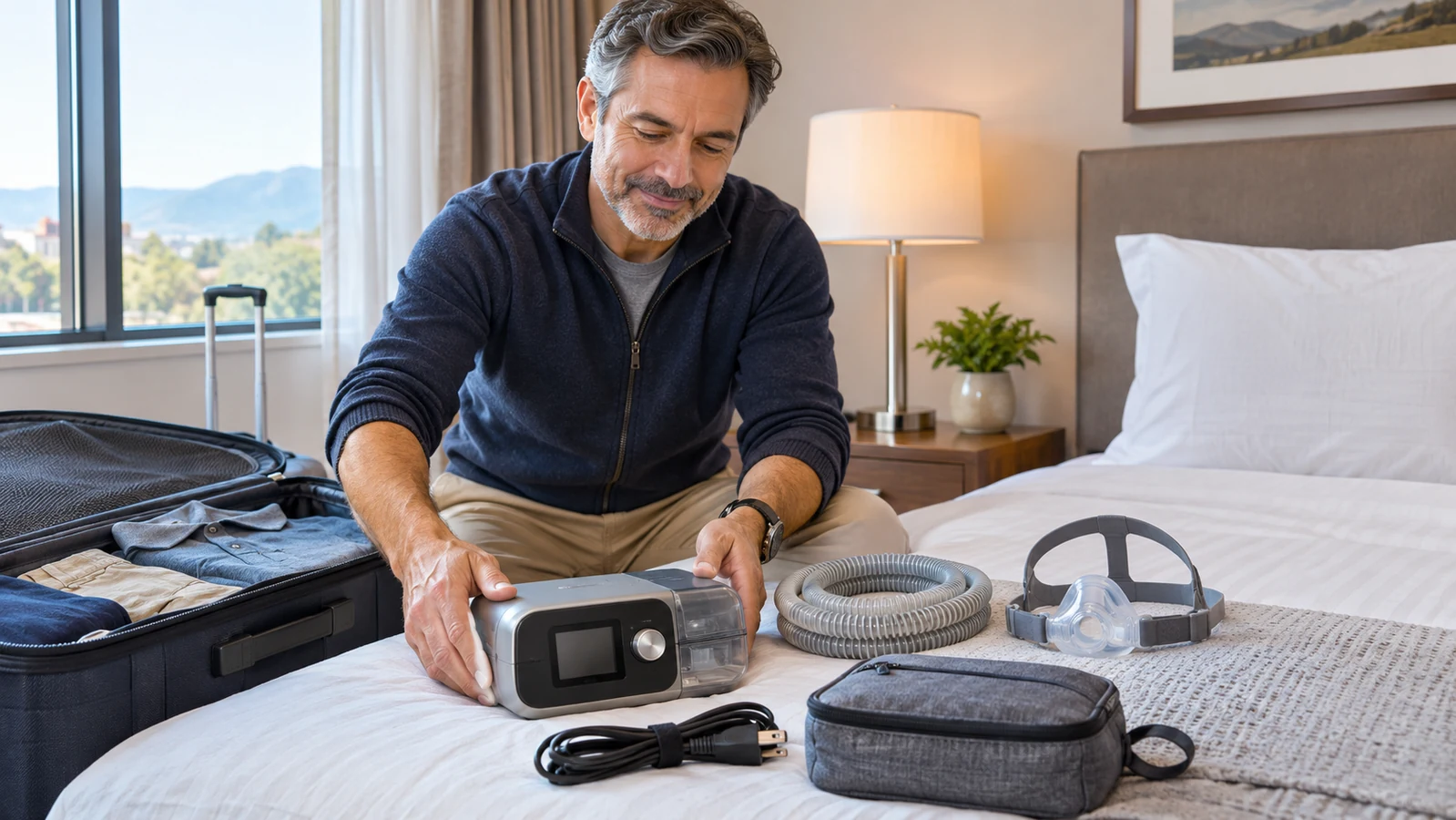
Plan the trip around your usual equipment routine
A trip can disrupt even a familiar bedtime routine. For someone already prescribed continuous positive airway pressure (CPAP), planning ahead can make it easier to bring the machine, mask, tubing, and power supply and to know what to check at the destination. This guide is practical travel information, not advice to start CPAP, change a pressure setting, or decide whether treatment is right for you. Follow your own care team’s instructions and the manual for your specific device.
Start with a simple inventory
Begin with the equipment you actually use at home. Make a list from your device manual or the supplier’s instructions: the machine, its prescribed mask, tubing, power supply, detachable humidifier parts if used, filters or other routine consumables, and a suitable protective bag. Check what belongs to your own model rather than relying on a generic internet packing list. If a component is damaged, missing, or overdue for replacement, contact the service that supplied the device before travelling instead of improvising a repair.
Ask your sleep service about travel documents
If you need proof that the device is medical equipment, ask your sleep clinic or equipment supplier whether it can provide a letter or other documentation. University Hospitals of North Midlands advises its patients to contact the service for a customs letter before going abroad; NHS England’s easy-read CPAP guide also says a traveller may need a letter or prescription and suggests asking healthcare staff. Requirements are not universal, so ask the airline, border or security authority, and destination provider what they accept, and allow time to resolve questions.
Check airline rules before packing
Policies for medical equipment and cabin baggage differ by airline and route. Contact the airline well before the flight and ask specifically how a CPAP device is counted, whether advance notice or documentation is needed, how it must be packed, and whether it may be used during the flight. Do not assume that an airline will allow use in flight or provide a compatible power outlet. The NHS hospital guidance recommends checking the airline’s own arrangements; its rules, not another carrier’s policy, apply to your booking.
Keep the device protected and accessible
Several NHS patient guides recommend carrying a CPAP machine with you rather than placing it in checked baggage, to help protect it from loss or damage. Check the current policy for your airline and security authority, because local rules may differ. Keep the unit in a protective case, avoid placing heavy objects on it, and make sure the mask and hose cannot be crushed or sharply bent. Put your name and a contact method on the bag if appropriate, and keep the equipment somewhere you can monitor during transfers.
Plan for power at your destination
Before leaving, check the device label and manufacturer’s manual for electrical input requirements and approved power accessories. Ask the accommodation whether an accessible outlet is near where you will sleep; one NHS sleep service notes hotel sockets may not be close to the bed and suggests considering an extension lead. Use only a suitable, undamaged lead approved for your equipment. For another country, verify plug shape and electrical compatibility using the manufacturer’s information rather than assuming every model works everywhere.
Think through batteries before you buy or pack one
An optional battery needs extra planning. Battery rules can depend on chemistry, watt-hour rating, installation, and airline policy. The US Federal Aviation Administration says spare lithium batteries must be carried in the cabin, with size limits and carrier-specific restrictions; other countries and carriers may use different rules. Check the rating printed on the battery and confirm your route’s requirements with the airline and relevant aviation authority before purchase or packing. Ask the CPAP supplier which battery, if any, is compatible with your exact device. Do not guess or modify connections.
Contact hotels, ships, or campsites early
For hotels, cruises, campsites, or other stays, ask early whether the room has a usable outlet and whether you need to bring a suitable adapter or extension lead. If electricity may be limited, speak with the equipment provider or care team in advance about safe options for your specific device. Do not rely on a vehicle socket, generator, or third-party battery unless the manufacturer confirms the connection is suitable and the location’s safety conditions are understood. Secure any cables to reduce trip hazards and keep equipment away from water.
Pack cleaning and backup essentials carefully
Pack cleaning supplies only as recommended in your device and mask instructions. A small clean bag can keep tubing and mask parts together; separate clean parts from items that are wet or soiled. Follow the manufacturer’s guidance on cleaning and drying, and do not use unapproved disinfectants, oils, or cleaning gadgets. If you use distilled water or other supplies as directed for your equipment, check what is available at your destination and what transport rules apply. This is about maintaining the device—not sterilizing it or preventing a specific illness.
Keep routine use separate from troubleshooting
A change of bed, time zone, or schedule may make sleep feel different. Keep to the CPAP routine provided by your clinician, and bring the same familiar mask and accessories rather than experimenting with new settings on the road. Do not turn off a prescribed feature, alter pressure, or stop therapy because of travel advice in an article. If you are unsure how to handle time-zone changes, a humidifier, or a missed night, ask your sleep service before departure. The NHS notes that CPAP is commonly used at home during sleep and encourages patients to discuss difficulty using it with a doctor.
Build a calm plan for delays or lost luggage
Travel can involve delays, a checked bag being diverted, or equipment being misplaced. Keep essential parts and documentation together, note the model and supplier contact details, and check whether your travel insurance covers loss or damage to the device. One NHS hospital service specifically advises patients to consider insurance that covers CPAP equipment. If the machine is lost or stops working, contact the supplier or care team for advice about your own prescription; do not borrow another person’s device or substitute unverified equipment.
Travel by car without creating a new safety risk
For a road trip, plan stops and keep the device safely stowed while the vehicle is moving. Do not operate or handle electrical equipment while driving. If you become sleepy at the wheel, stop driving as soon as it is safe and arrange another driver or a safe place to rest; do not push on to reach a hotel. Sleep apnea is only one possible contributor to sleepiness, and this article cannot assess driving fitness. Recurrent or severe daytime sleepiness should be discussed with a qualified health professional.
International trips need extra checks
International travel may involve different plugs, security procedures, languages, and equipment rules. Carry documentation in the form your airline or destination requests, and confirm whether the machine needs separate screening. Preserve the manufacturer’s labels and do not remove a battery or accessory unless the manual or airline directs you to do so. If a customs letter is useful, ask the clinic well in advance. Remember that information from a UK NHS service or US FAA page may not describe regulations in another country; check the authorities for each part of your itinerary.
Know when to ask your care team
Contact your sleep service or equipment supplier before departure if your device is new to you, has a fault, has a damaged cord, or you are considering battery operation. Seek individualized guidance if you have questions about prescribed settings, whether to travel with a particular component, or what to do if you cannot use the machine. If breathing problems or another urgent health concern arise, use local emergency services. Online checklists cannot examine equipment, review a prescription, or determine whether symptoms are safe to wait out.
A simple pre-departure checklist
Before departure, confirm: your airline’s medical-device and baggage policy; any letter or prescription required; the machine, mask, tubing, power supply, and case; destination outlet and plug compatibility; battery rules if relevant; accommodation power; supplier contact details; and insurance or replacement arrangements. Do a quick visual check for damage and pack the manual or access to it. A checklist reduces forgotten items, but it is not a substitute for confirming model-specific instructions with the supplier.
The bottom line: plan ahead, but do not change therapy alone
The most useful travel plan is one that fits your own prescribed equipment and the rules of your route. Check with the airline and relevant authorities, ask your accommodation about power, and contact your sleep service for questions about the device or therapy. Do not use this general article to adjust, stop, or replace prescribed treatment. Hotsia Health’s editorial review is limited to checking sources and clarity; no clinician reviewed this article, and no medical credentials are implied. This information is educational, not personal medical advice or diagnosis.
Sources and further reading
Medical information was checked against these public health sources on November 13, 2026.
- University Hospitals of North Midlands NHS Trust — Advice for Current CPAP Patients (travel, power, and airline use) ↗
- University Hospitals Birmingham NHS Foundation Trust — CPAP Treatment for OSAHS (travel, air travel, and outdoor holidays) ↗
- NHS England — A guide to your CPAP (easy read; travel and documentation) ↗
- US Federal Aviation Administration — Airline Passengers and Batteries (battery limits and carrier policies) ↗
- NHS — Sleep apnoea (CPAP overview and discussion with a doctor) ↗
This article is general health education, not a diagnosis or personal medical advice. Do not change treatment or supplements based on this article. Discuss individual results with a qualified healthcare professional.