Everyday health · Gardening and physical activity
Gardening for Everyday Activity: A Flexible Habit, Not a Fitness Test
Planting, watering, and yard work can add movement to an ordinary day—but the effort varies. Learn how to make gardening more accessible, pace tasks, and reduce common outdoor risks without treating it as a medical prescription.
AI assistance was used to draft and organize this article. Mr.Hotsia reviewed sourcing and clarity only; no clinician reviewed it, and no medical credentials are implied.
A garden is a setting, not a prescription
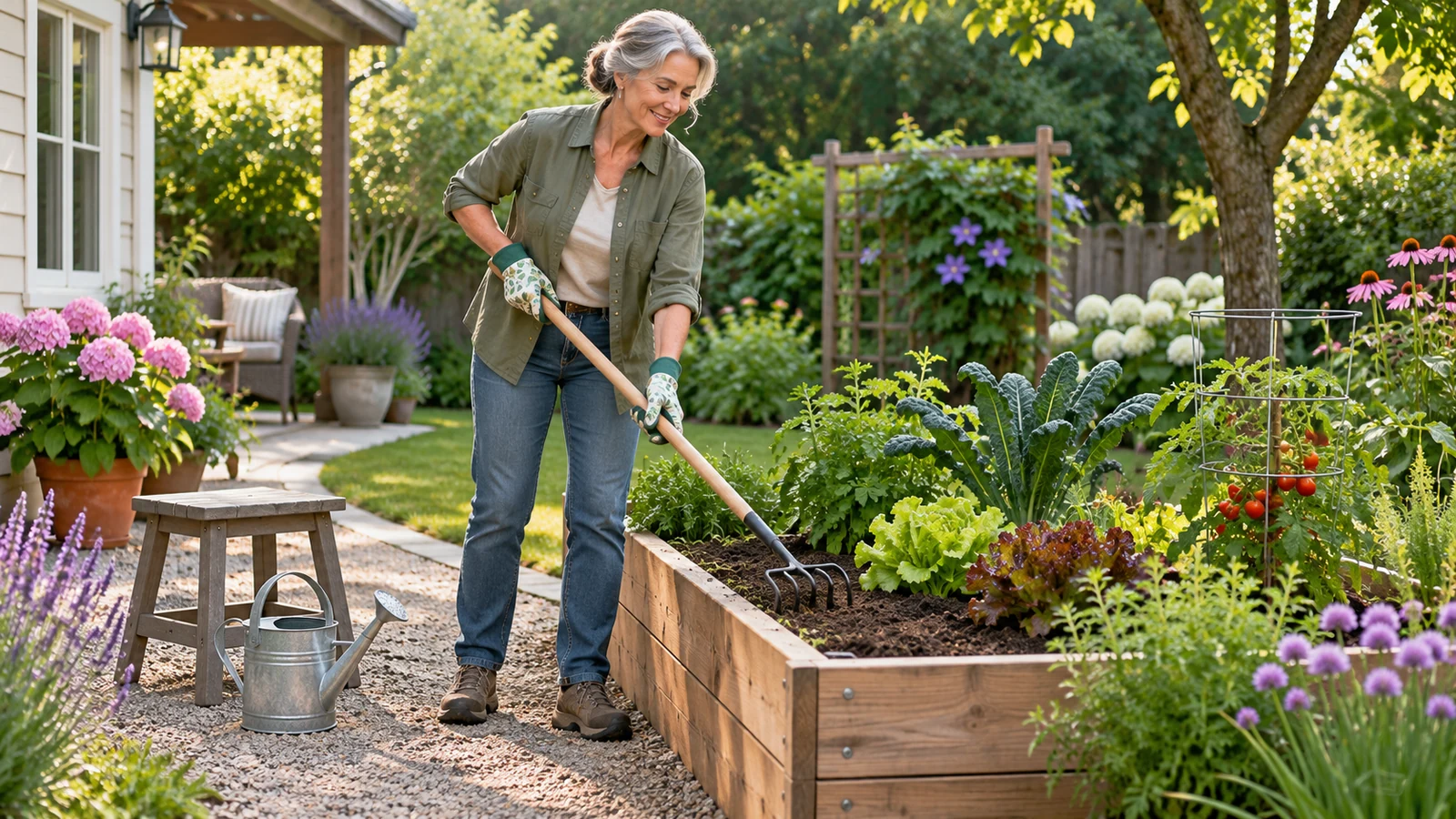
Gardening can mean anything from watering one pot to digging, lifting, pushing a mower, or carrying soil. That range matters: the word gardening does not tell us how hard a particular person is working, how long the effort lasts, or whether the activity is comfortable and safe for them. It may be a pleasant way to spend time outdoors and move during an ordinary day, but it is not a treatment for a health condition and it does not guarantee a fitness result. This guide looks at what activity recommendations mean, how to adapt a garden routine, and which basic precautions deserve attention.
Comfort and joint needs can shape the task
If arthritis, stiffness, or another joint concern changes how you garden, the task can be adjusted rather than treated as an all-or-nothing test. A lighter watering can, a long-handled tool, a raised container, or a seated task may feel more manageable for some people; another person may prefer a short standing task. These are practical possibilities, not a prescribed therapy, and equipment should be stable and comfortable to use. Pay attention to how a task feels during and afterward. If pain is new, severe, worsening, or interfering with ordinary function, do not use garden work to test or push through it; seek advice from a qualified professional. The optional Arthritis Strategy page is a separate commercial resource, not evidence or a care recommendation.
What public-health activity guidance actually says
U.S. public-health guidance encourages adults to accumulate at least 150 minutes of moderate-intensity aerobic activity each week, along with muscle-strengthening activities on two or more days. The guidance also emphasizes that some activity is better than none and that time can be divided into smaller bouts. It is a broad population recommendation—not a target that every reader should suddenly attempt. The CDC lists general yard work among examples of moderate-intensity activity and digging in a garden among examples of muscle-strengthening activity. That does not mean every gardening session or every person’s version of digging meets those descriptions. Effort, duration, ability, and the exact task all matter.
A garden chore does not always mean a workout
One practical way to think about aerobic effort is the talk test. The CDC describes moderate activity as work that makes breathing and heart rate noticeably faster while still allowing conversation, though singing would be difficult. General yard work can fall into this range; heavy digging or shoveling may be much more vigorous. A person should not assume that time spent outdoors automatically counts as moderate exercise. Slow watering, pruning a few stems, or sitting to pot plants may be light activity for one person, while carrying loads or working continuously may feel demanding to another. Estimates based on broad categories cannot measure an individual’s exertion or tell them what is medically appropriate.
Begin with a task that fits today
Start with a task that already has a clear stopping point: watering a few containers, checking seedlings, or tidying one small area. Notice whether the surface is stable, whether tools are within comfortable reach, and whether you can stop easily. It is reasonable to divide heavier work across different days rather than trying to finish the whole garden at once. If you have been inactive, are recovering from an injury, or have been given activity limits, do not take a general article as clearance to increase exertion. A gradual approach can make it easier to notice what is comfortable, but it cannot remove individual medical risk. Resting or choosing another activity is also a valid option.
Existing health conditions deserve individual context
A person who has a heart condition, high blood pressure, a chronic illness, recent surgery, or a medication that affects heat tolerance may need advice tailored to their own situation. CDC guidance says adults with chronic conditions or disabilities can be active, while advising consultation with a healthcare professional or physical-activity specialist about appropriate types and amounts. Ask what exertion is suitable, whether any restrictions apply, and what symptoms should prompt stopping. Do not change blood-pressure medicine, fluid instructions, or another treatment plan to make gardening easier. The Blood Pressure Program page is an optional commercial page and cannot determine activity limits or replace a professional review.
Set up the space to reduce unnecessary strain
The layout can make a task easier without changing its health purpose. Keep frequently used tools close to the work area, use a stable surface for pots, and avoid repeatedly carrying heavy containers when a smaller one or a hose would do. A raised bed or container may reduce how often someone needs to bend or kneel, though its height and stability should fit the person using it. A stool can be helpful only if it is steady and placed on level ground. Store tools so they are not hidden in a walkway, and avoid stretching from a ladder to reach branches. These are general accessibility ideas, not a guarantee against injury or a substitute for individualized adaptations.
Pacing can make the routine more sustainable
Gardening tasks can involve repeated gripping, reaching, kneeling, twisting, and carrying. Alternating tasks may change which muscles and joints are doing the work, while brief pauses can make it easier to notice fatigue before technique becomes awkward. Choose tools with handles that feel secure; use both hands for a load when that is comfortable; and keep a clear route between the garden and a place to sit. There is no universal work-to-rest ratio or perfect posture for every body. If a movement repeatedly causes pain, numbness, breathlessness, dizziness, or unusual weakness, stop rather than treating discomfort as proof that the task is effective. New or persistent symptoms merit personal guidance.
Plan for heat, shade, and fluids
Outdoor work can become more demanding in hot or humid weather. The CDC advises doing outdoor activities during cooler parts of the day when possible, taking breaks, using shade, and drinking fluids on hot days. Heat illness can affect anyone, and some people with chronic health conditions or certain medicines may need additional precautions. Do not stop or change a medicine because of an article; ask the prescriber or pharmacist if you are unsure how heat may affect your plan. Check local weather and heat alerts before a longer session. If you feel faint, confused, unusually weak, nauseated, or overheated, stop, move to a cooler place, and seek appropriate help; severe symptoms require urgent local care.
Prevent trips, cuts, and avoidable tool injuries
A clear path is as important outdoors as it is indoors. Move hoses, bags, and tools away from walking routes, check that the ground is not slippery or uneven, and use footwear that stays securely on the foot. Keep sharp tools pointed away from the body and put them away after use. Do not rush to retrieve an item from a high shelf or unstable ladder. People with balance concerns may prefer gardening near a stable seat or with another person nearby, but the safest arrangement depends on the individual. A fall, head injury, deep cut, or sudden severe symptom should not be managed by continuing the task; use local medical services appropriate to the situation.
Gardening is not a complete bone-strengthening plan
Gardening may involve digging and lifting, but it is not a complete or standardized strength program for every major muscle group. CDC guidance calls for muscle-strengthening activity on two or more days a week and describes digging as one example; the same page explains that such activity should work the major muscle groups. A short period of planting does not automatically meet that guidance. People concerned about osteoporosis or a prior fracture should not infer that gardening will prevent fractures or build bone sufficiently. Ask a clinician or physical therapist about suitable activities if bone health, balance, pain, or a recent injury affects your choices. The Bone Density Solution is an optional commercial page, not a medical source or a personalized bone-health plan.
Treat soil, compost, and wounds with care
Soil, compost, water, thorns, and plant sap can present hazards. The Royal Horticultural Society recommends gloves when handling soil, compost, or garden chemicals, and advises avoiding direct exposure to dusty compost; it also notes that contaminated wounds can matter. Wash hands after gardening and before eating, and keep cuts covered when handling soil. CDC says soil-contaminated or puncture wounds may require professional assessment, including consideration of tetanus vaccination based on wound and vaccination history. This article cannot determine whether a particular injury needs a booster or treatment. For a deep puncture, a wound containing dirt, or a wound that worries you, contact a healthcare professional rather than relying on a home remedy.
Use products and plants safely
Follow the label directions for any fertilizer or pesticide, use the protective equipment it specifies, and keep children and pets away as directed. Avoid mixing products or transferring them into unmarked containers. Some plants can irritate skin or cause a reaction, and dry compost can release dust. The RHS recommends gloves, covering arms when pruning plants known to irritate, and avoiding opening compost bags with your face directly over them. If you have asthma, an allergy, reduced immunity, or another concern that changes your exposure risk, consider asking a qualified professional what precautions make sense. Do not assume that a product labeled natural is harmless, and do not use a chemical in a way its label does not allow.
Enjoyment matters, but do not overstate the evidence
Many people choose gardening because it is satisfying, social, or connected to food and nature. Those reasons are meaningful even when a session is too light to count toward a moderate-activity target. Research on gardening and wellbeing includes varied activities, settings, and study designs, so a general article should not promise that gardening prevents depression, treats a disease, or produces the same result for everyone. If gardening feels enjoyable and fits your life, that can be enough reason to keep it as a hobby. If it feels stressful, inaccessible, or physically uncomfortable, another activity may suit you better. The goal is a realistic choice, not a claim that a particular hobby is medically superior.
A practical starting plan—and when to seek advice
A simple plan might be to choose one small task, prepare stable tools and a clear route, check the weather, and decide in advance when you will pause. Afterward, notice whether the activity felt manageable and whether any symptom deserves attention. People with a recent injury, major mobility limitation, significant chronic disease, activity restrictions, or symptoms during exertion should seek individualized advice before increasing strenuous work. Stop and get urgent help for severe chest discomfort, fainting, confusion, severe breathing trouble, or another emergency. Do not change prescribed treatment or ignore a concerning symptom because a garden task is described as healthy. This article is general health education, not diagnosis or personal medical advice. AI assistance was used to draft and organize it. Mr.Hotsia reviewed sourcing and clarity only; no clinical review or medical credentials are implied.
Sources and further reading
Medical information was checked against these public health sources on November 15, 2026.
- CDC — Adult Activity: An Overview ↗
- CDC — What Counts as Physical Activity for Adults ↗
- CDC — How to Measure Physical Activity Intensity ↗
- CDC — Chronic Conditions & Disabilities Activity ↗
- CDC — About Heat and Your Health ↗
- CDC — About Tetanus ↗
- Royal Horticultural Society — Minimising Health Risks in the Garden ↗
This article is general health education, not a diagnosis or personal medical advice. Do not change treatment or supplements based on this article. Discuss individual results with a qualified healthcare professional.