Sleep health · Bedroom comfort and thermal environment
Bedroom Temperature and Sleep: Why Comfort Matters More Than a Magic Number
Research links thermal conditions with sleep, but there is no proven room temperature that fits everyone. Learn how to think about comfort, bedding, hot-night safety, and when ongoing sleep problems merit professional advice.
AI tools assisted with outlining and drafting. Mr.Hotsia reviewed sourcing and clarity only. No clinician reviewed this article, and no medical credentials are implied.
The comfort question is more useful than a thermostat target
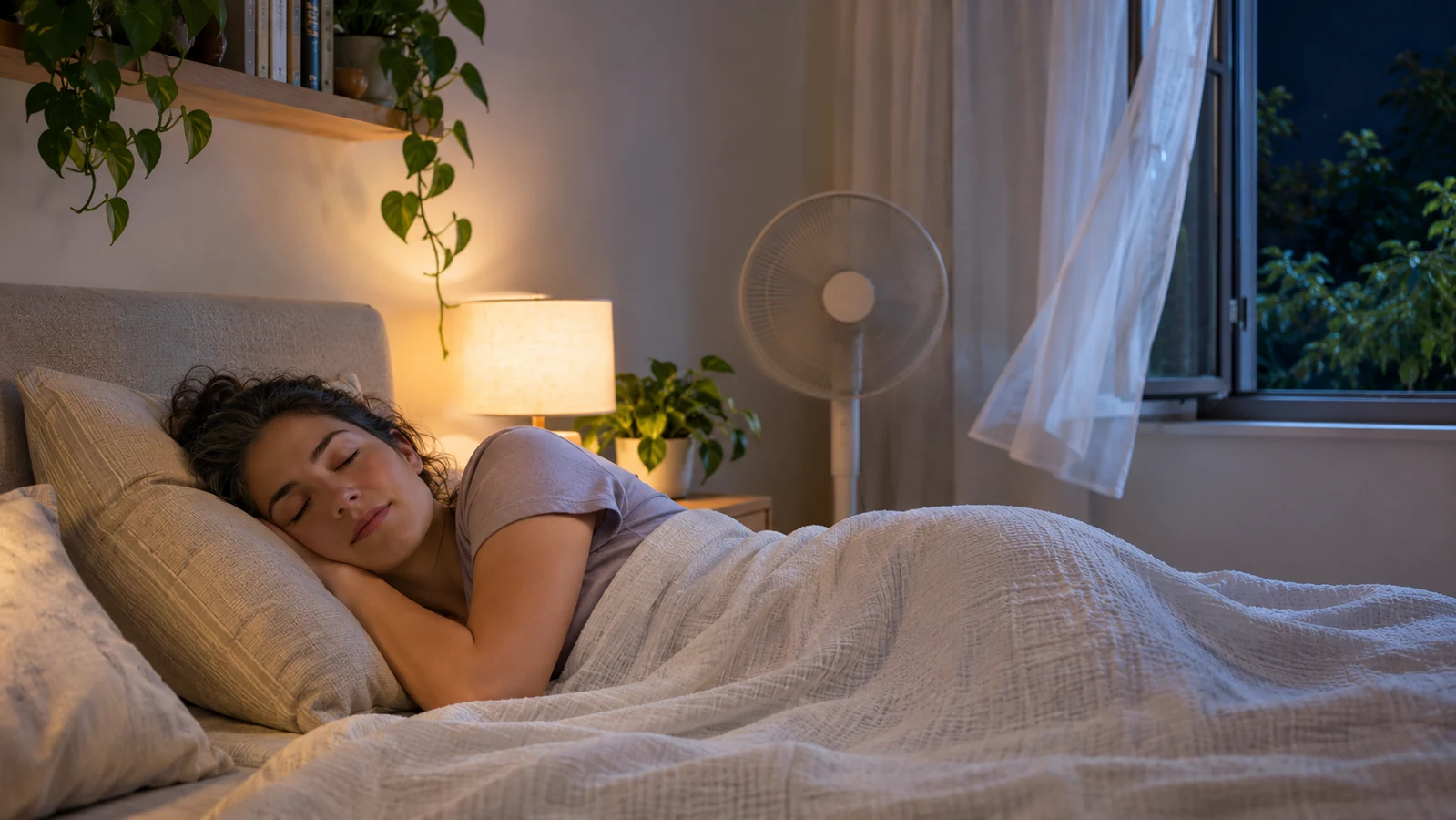
If a room feels stuffy, too warm, or uncomfortably cold, it can be harder to settle. That everyday observation has a scientific basis: heat transfer, bedding, clothing, humidity, and air movement all shape how the body experiences its sleep environment. But online advice often turns that complexity into a precise thermostat number. The evidence does not establish a single setting that guarantees good sleep for every person, home, season, or climate. A more useful goal is a bedroom that feels safe and comfortable to you, with sensible adjustments that do not create new risks or costs.
What public-health guidance actually says
The Centers for Disease Control and Prevention (CDC) lists a quiet, relaxing bedroom at a cool temperature among habits that may support sleep. The National Institute on Aging (NIA) similarly suggests making the room comfortable and avoiding conditions that are too hot or too cold. Neither source gives a universal nighttime temperature target. Those recommendations are intentionally broad: homes differ, people differ, and a temperature reading does not capture humidity, airflow, bedding, clothing, or whether someone feels chilled or overheated. The guidance supports comfort as a practical consideration—not a guarantee, diagnosis, or treatment for insomnia.
Why temperature can matter during sleep
During sleep, the body continues to regulate temperature while moving through changing sleep stages. A room that feels excessively warm or cold may increase discomfort and awakenings for some people. Research reviews describe relationships between thermal conditions and sleep physiology, but the studies use different participants, equipment, bedding, and laboratory or field settings. That makes simple comparisons difficult. A person might sleep comfortably with a light cover in one climate and need more insulation in another. It is reasonable to notice whether the room feels disruptive; it is not reasonable to assume temperature is the only explanation for a difficult night.
A study result is not a bedroom prescription
One observational study followed community-dwelling older adults and reported the most efficient and restful sleep in its sample when nighttime room temperature was between 20°C and 25°C. The researchers also found substantial variation between participants. This result is interesting, but it is not a clinical guideline: it describes an association in a particular group and setting. It cannot show that setting every bedroom to that range will improve sleep, or that a different temperature is harmful. Observational work can identify patterns, but it cannot by itself prove that changing a thermostat caused the observed sleep differences.
The room is only one part of the sleep environment
Temperature is one part of a wider environment. The CDC sleep guidance also points to quiet, relaxing surroundings and consistent routines. Light exposure, noise, a comfortable mattress, caregiving needs, pain, medicines, stress, breathing problems, and work schedules can matter too. Someone who wakes repeatedly may understandably focus on the thermostat, especially during a hot spell. Yet if the problem continues when the room feels comfortable, another factor may be involved. Environmental tweaks can be low-risk experiments, but they should not delay assessment of persistent sleep difficulty or symptoms that might reflect a sleep disorder.
Bedding and sleepwear change the feeling at the bed
The temperature displayed on a wall thermostat is not the same as the tiny warm or cool zone around the body under blankets. Pajamas, sheets, mattress materials, humidity, and air circulation all influence that bed-level experience. A person may be able to adjust a light layer or sleepwear more easily than changing the whole home's temperature. A sleep-environment review notes that bedding and sleepwear are important thermal factors. This does not mean a special fabric or expensive temperature-regulating product is necessary; it simply explains why two people in one room may feel differently.
A low-cost, gradual way to test comfort
If you want to explore whether room comfort is affecting your nights, keep the experiment simple. For several nights, note whether you felt too warm, too cold, or comfortable, along with obvious changes such as a heat wave, different bedding, or an open window. If it is safe and affordable, change one thing at a time—perhaps a lighter cover or a modest thermostat adjustment—rather than changing several habits at once. Look for a repeatable pattern, not a perfect score. A short note can help you decide whether an adjustment is worthwhile without making sleep another task to monitor obsessively.
Share a room without turning temperature into a contest
People sharing a bedroom can have different preferences because of age, health, clothing, bedding, or personal comfort. One person may want more airflow while another prefers additional covers. Practical compromises can include separate bedding layers, breathable sleepwear, a fan directed away from one sleeper, or slightly different covers on each side of a bed. No single arrangement works for everyone. If a compromise makes either person uncomfortably hot or cold, revisit it. The aim is not to prove whose preference is medically correct; it is to find a safe arrangement that makes the room reasonably comfortable for both.
Hot nights need a safety plan, not just a sleep hack
In very hot weather, the priority is preventing heat-related illness—not forcing a cold bedroom or chasing sleep. The CDC advises staying cool and hydrated during hot days and notes that people who are older or have certain chronic conditions can face greater heat risks. If you or someone nearby has concerning symptoms such as confusion, fainting, severe weakness, or other signs of heat illness, seek urgent local medical help. For specific heat-risk symptoms and instructions, follow your local health agency. This article cannot assess the severity of an individual's symptoms, and a bedroom temperature adjustment is not emergency care.
Older adults and people with health conditions may need extra support
Older adults may be more vulnerable to heat-related illness, and NIA guidance encourages comfortable rooms that are not too hot or too cold. Health conditions, medicines, mobility, housing, and access to cooling can affect what is feasible. If a person has a clinician-directed fluid limit, do not change fluid intake based on general heat guidance; ask their healthcare professional what to do during hot weather. Do not stop or alter medicines to make temperature management easier. A trusted family member, neighbor, or local service may help check on someone during a heat event, especially if that person lives alone or cannot easily reach a cooler place.
Fans and cooling strategies have limits
Fans and open windows can improve comfort in some situations, but they are not universal solutions. Outdoor air may be noisy, polluted, humid, unsafe, or warmer than indoor air. CDC heat information cautions that fans may not provide adequate cooling in very hot indoor conditions; local official advice should guide what to do during dangerous heat. Air conditioning can help cool a space, but not everyone has access or can afford to run it. If your home becomes dangerously hot, seek local cooling resources or emergency guidance rather than relying on a fan, a sleep gadget, or an online tip.
Do not make risky changes for a cooler room
Avoid trying to cool the room with unsafe appliances or improvised methods. Never use an outdoor fuel-burning generator, grill, or camp stove inside a home or enclosed space; carbon monoxide can be fatal. Follow the manufacturer's directions for electric fans, heaters, humidifiers, and cooling devices, keep them away from water and bedding where required, and do not leave unsafe equipment unattended. Avoid extreme temperature changes that cause shivering, overheating, dizziness, or discomfort. If your home has electrical, heating, or ventilation hazards, contact an appropriate local service. Comfort changes should never trade sleep for fire, electrical, or carbon-monoxide risk.
When sleep disruption deserves a conversation
Talk with a qualified healthcare professional if you regularly have trouble sleeping, often feel unrefreshed despite adequate opportunity for sleep, or notice symptoms such as loud snoring with breathing pauses or severe daytime sleepiness. The CDC recommends discussing regular sleep problems or signs of common sleep disorders with a healthcare provider. Temperature may be one useful detail, but a clinician can consider broader context. Seek urgent help for acute medical warning signs, not a routine sleep appointment. Do not diagnose sleep apnea, insomnia, or another condition from a temperature pattern, wearable score, or a checklist in an article.
What to bring to a healthcare appointment
A short sleep note can make a conversation more concrete. You might record bedtime and wake time, awakenings, naps, caffeine or alcohol, medicines, and whether the room felt too warm, too cold, or comfortable. CDC sleep guidance lists several of these details as useful diary items. Also note practical constraints: shared rooms, shift work, energy costs, caregiving, or no access to air conditioning. Ask what possibilities deserve evaluation and whether a change is safe for your health circumstances. Bring a medication list if relevant, but do not start, stop, or adjust a prescription based on an article or consumer program.
Optional program pages are separate from the evidence
The site's existing Insomnia Program, Stop Snoring and Sleep Apnea Program, and Overthrowing Anxiety pages are optional commercial resources. They are not the sources for the environmental research in this article, do not diagnose sleep conditions, and cannot replace assessment or prescribed care. Their inclusion is not an endorsement of medical effectiveness. Readers can use the public-health sources listed below without viewing or purchasing any program. Check the stated content, costs, and terms of a commercial resource independently, and be wary of claims that promise a guaranteed sleep outcome or encourage delaying professional evaluation.
The takeaway: comfort, safety, and realistic expectations
The practical message is modest: thermal comfort can matter, but no universal thermostat number is proven to solve sleep problems. Notice how your room and bedding feel, make only safe and manageable changes, and consider heat safety before sleep optimization during hot weather. If problems persist or symptoms raise concern, discuss them with a qualified professional. This evidence-aware overview is general health education, not a diagnosis or personal medical advice. Do not change treatment or medicines based on it. Mr.Hotsia's editorial role was limited to checking sourcing and clarity; no clinical review or medical credentials are implied.
Sources and further reading
Medical information was checked against these public health sources on November 14, 2026.
- CDC — About Sleep: healthy sleep habits and when to talk with a provider ↗
- National Institute on Aging — Sleep and Older Adults ↗
- Okamoto-Mizuno & Mizuno — Sleep environments and sleep physiology: a review (PubMed) ↗
- Skarha et al. — Nighttime ambient temperature and sleep in community-dwelling older adults (PubMed) ↗
- Aijazi et al. — Passive and low-energy strategies for sleep thermal comfort during heat waves and cold snaps (PMC) ↗
- CDC — Heat and Older Adults: staying safe on hot days ↗
This article is general health education, not a diagnosis or personal medical advice. Do not change treatment or supplements based on this article. Discuss individual results with a qualified healthcare professional.