Nail health · Salon safety and infection prevention
Nail Salon Safety: Clean Tools, Cuticle Care, and What Clients Can Ask
A manicure or pedicure should feel relaxing, not confusing. Learn the difference between clean and disinfected tools, why cuticles matter, what is reasonable to ask, and when a skin or nail concern should be checked before a service.
AI assistance was used to draft and organize this article. Mr.Hotsia’s editorial review is limited to sourcing and clarity; no clinician reviewed it, and no medical credentials are implied.
The short answer: pay attention to the process, not appearances alone
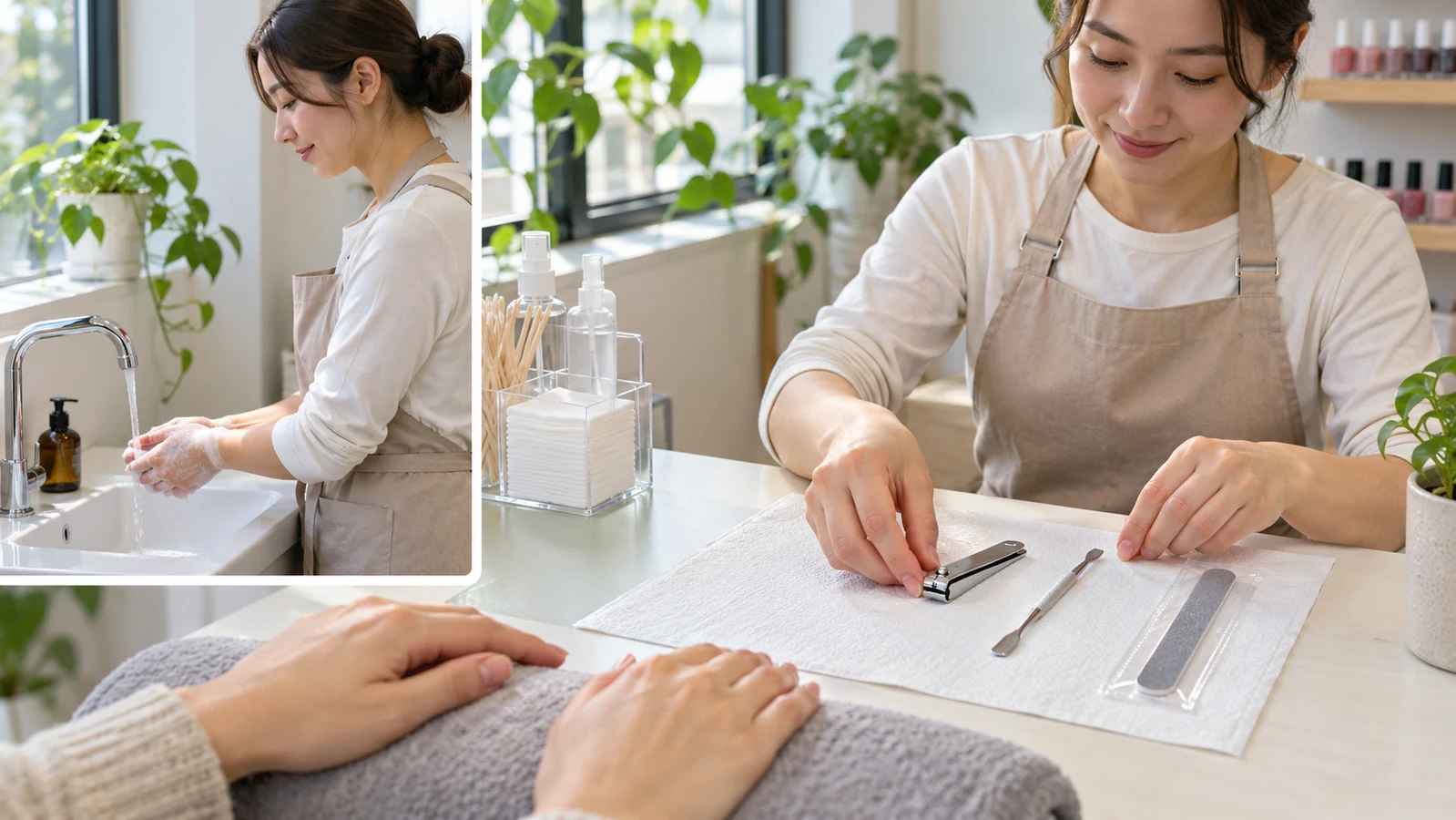
A tidy counter can be reassuring, but it cannot prove how every tool was cleaned. A more useful question is whether a salon follows the infection-prevention rules that apply where it operates and can explain its process in plain language. Shared nail tools and foot baths may need cleaning and disinfection between clients; some items should be discarded after one use. No customer can verify every step by sight, and this article is not a certification checklist. It offers general, practical questions for deciding whether you feel comfortable receiving a service and when a skin or nail concern belongs with a health professional.
Why shared tools and foot baths deserve a practical conversation
Manicure and pedicure tools come into contact with nails, surrounding skin, and sometimes small cuts. Public-health guidance notes that tools can become contaminated with bacteria, fungi, or blood. This does not mean every salon service transmits infection or that a client should be afraid of routine grooming. It does mean that hand hygiene, appropriate tool processing, and honest handling of skin problems matter. A foot spa also has surfaces and plumbing that may require a separate cleaning routine. Good infection prevention protects clients and workers alike; a salon should not need to make dramatic claims about being ‘100 percent risk-free.’
Cleaning, disinfection, and sterilization are not interchangeable words
Cleaning usually means removing visible soil and residue, often with soap, water, and scrubbing. Disinfection uses an appropriate product to reduce certain germs on a surface or instrument, following the product label and local regulations. Sterilization is a different process intended to destroy all forms of microbial life and is not a synonym for wiping or soaking. The terms and required steps depend on the item and jurisdiction. The U.S. Occupational Safety and Health Administration (OSHA) tells salon workers to clean and disinfect tools according to the relevant state cosmetology board rules. A consumer should not try to prescribe the salon’s exact procedure from an online article.
Reusable tools should be processed between clients
Reusable metal tools should be cleaned and processed between clients under the rules that apply locally. OSHA describes washing tools, using an appropriate registered disinfectant as directed, drying them, and storing processed tools in a clean covered area. That is worker-oriented U.S. guidance, not a universal instruction for every country or every tool. If you ask, a technician may be able to explain whether instruments are reusable, how they are processed, and how clean items are kept separate from used ones. A sealed pouch or a clean tray can show how a tool is presented, but its appearance alone cannot confirm the full procedure or the product’s contact time.
Some items are designed for one client only
Files, buffers, pumice stones, toe separators, and similar porous items may be intended for single-client use because they are difficult to clean reliably. Toronto Public Health, for example, tells local salons to use new files and pumice stones for each client and discard them afterward; requirements vary elsewhere. A fresh item can be opened or set out for you, then disposed of rather than returned to a shared drawer. It is reasonable to ask whether an item is single-use or reusable. Do not take a used disposable tool home for another person, and do not assume a product is safe to reuse simply because it looks clean.
Foot spas have their own cleaning routine
A pedicure foot bath is not the same as a hand tool. It may need cleaning and disinfection between clients and at the end of the day according to local rules and the equipment maker’s instructions. OSHA highlights foot-basin cleaning as a separate precaution. If you are unsure, ask when the basin was last cleaned or whether the salon follows a posted local procedure. You do not need to inspect inside plumbing or handle disinfectants yourself. Toronto Public Health also advises avoiding shaving the legs immediately before a pedicure with a foot bath, as a precaution against infection through small skin breaks. Check your own local public-health advice rather than treating one city’s rule as universal.
Cuticles form a natural barrier around the nail
The cuticle is the thin tissue around the base of the nail. CDC nail-hygiene guidance says not to cut cuticles because they help act as a barrier against infection. A person can ask for the cuticle to be left intact or for the service to be adjusted to their comfort. Pushing or trimming that tissue aggressively can cause pain or a break in the skin; a technician should stop if you feel discomfort. If the skin is already irritated, swollen, or broken, postponing the service may be more sensible than trying to cover the problem with polish. These are general hygiene points, not treatment for an existing nail-fold infection.
Calluses, razors, and aggressive trimming need care
Some services include filing thick skin or removing calluses. A sharp blade or forceful trimming can injure skin, and local laws may limit which tools a salon may use. Ask what a service involves before it starts, and say if you do not want a particular step. People with diabetes, reduced sensation, circulation problems, immune suppression, or a history of foot wounds may have special foot-care needs; a salon service may not be appropriate for every person. If you have been given individual foot-care instructions, follow those rather than a beauty-service routine. A podiatrist or qualified healthcare professional can clarify what care is suitable for your situation.
When a service should be postponed
Consider postponing a manicure or pedicure if the skin is bleeding, broken, blistered, painful, or looks infected, or if the nail has a new unexplained change. OSHA advises workers to avoid servicing areas with open wounds, sores, blisters, or visibly infected skin; Toronto’s public-health guidance likewise says salons should not diagnose or treat suspected fungal nail changes. This protects the client and worker while avoiding a beauty service standing in for clinical assessment. If you are not sure what a mark or swelling means, a dermatologist, primary-care clinician, or other qualified professional can assess it. A salon technician should not promise a diagnosis based on appearance alone.
Simple preparation can reduce avoidable irritation
Before an appointment, you can choose a salon whose licensing or inspection status is available through the local authority, if such a lookup exists. Check whether you have a cut or irritation where the service is planned, and mention allergies or a past reaction to a product. You do not need to shave your legs before a foot-bath service; some public-health authorities specifically advise against doing so immediately beforehand. If you feel unwell or have a new rash, it is okay to reschedule. Bring a preference list—such as ‘please do not cut the cuticles’ or ‘stop if I feel pain’—and remember that declining a step is allowed.
What a salon can and cannot tell you about a nail change
Discoloration, thickening, lifting, or ridges can have several causes, including injury and skin or nail conditions. This article cannot tell you whether a nail is infected. A technician can notice a change and suggest that you seek care, but should not diagnose fungus or recommend a medicine as though a cosmetic service were a medical examination. CDC guidance notes that nail problems can require physician care; public-health agencies also caution salons against treating suspected infection. If a nail change is new, painful, spreading, or accompanied by redness, swelling, or drainage, get advice from a qualified health professional. Do not let repeated salon visits delay that assessment.
Nail products can also irritate skin or trigger reactions
Polish, acrylics, adhesives, removers, and other nail products can cause irritation or allergic reactions in some people. FDA advises consumers to read labels, follow warnings, and use nail products with good ventilation. Tell the technician about a known allergy or previous reaction and ask which product is being applied. If burning, swelling, rash, or eye irritation begins, ask for the service to stop and move away from the product. Do not try to cover an active rash with more polish. Seek medical advice if a reaction is severe, spreading, or affecting breathing or the eyes. In the United States, FDA accepts reports of problems involving cosmetic products; elsewhere, use the appropriate local reporting route.
Local rules differ, and workers need protection too
Salon licensing, inspections, tool requirements, and complaint processes are set locally and can differ substantially. Toronto Public Health’s BodySafe program, for example, publishes inspection information and describes local expectations for tool reuse, foot baths, and single-use items. It is one city’s guidance, not a worldwide standard. In the United States, FDA regulates many nail-care products, while state and local authorities regulate salon operations and technician licensing; OSHA addresses worker safety. Technicians also deserve protection from exposure to blood, chemicals, and repetitive strain. A safe conversation should be respectful in both directions: clients can ask questions, and workers should have the training, equipment, and time to follow applicable procedures.
Questions that are reasonable to ask before you begin
A few calm questions are usually enough: ‘Are these tools reusable or single-use?’ ‘How are reusable instruments cleaned and disinfected between clients?’ ‘Is this item new for me?’ and ‘Could we leave the cuticles intact?’ You can also ask whether the shop is licensed or inspected under local rules and where to find that information. A salon may not be able to disclose every chemical detail for a professional-only product, but it should be able to respond to a safety concern respectfully. If answers are vague, the salon appears to reuse disposable items, or you feel pressured to continue despite pain, you can decline the service or leave.
An optional commercial resource—not a safety certification
The existing Overcoming Onychomycosis page is an optional commercial program review related to nail health. It was not used as evidence for salon infection-control guidance, does not certify a salon, and cannot diagnose or treat a nail change. The three links below lead only to that existing page. Consider the program’s stated scope, price, and terms independently; do not use a commercial resource in place of public-health rules or professional assessment. Readers can use the CDC, OSHA, FDA, and local public-health sources cited in this article without viewing or purchasing any program. No outcome or medical benefit is promised.
The takeaway: choose comfort, ask calmly, and get health concerns checked
A clean-looking room is only one part of a salon service. More useful signals are a willingness to explain local procedures, separation of used and processed tools, fresh single-use items where required, intact cuticle care, and respect when you ask to stop. Local standards differ, so check your health department or licensing authority when you need a definitive answer. If you have a wound, suspected infection, unexplained nail change, or a health condition that affects foot care, pause the cosmetic service and ask a qualified professional what is appropriate. This guide is general health education, not diagnosis or personal medical advice. Mr.Hotsia’s editorial review is limited to sourcing and clarity; no clinician reviewed it and no medical credentials are implied.
Sources and further reading
Medical information was checked against these public health sources on November 15, 2026.
This article is general health education, not a diagnosis or personal medical advice. Do not change treatment or supplements based on this article. Discuss individual results with a qualified healthcare professional.