Everyday medicine safety · Reading topical pain-relief labels
Topical Pain-Relief Products: How to Read the Label Before You Use Them
Creams, gels, sprays, and patches can contain different active ingredients and warnings. Learn what to check on a Drug Facts label, why heat and broken skin matter, and when a pharmacist can help.
AI-assisted drafting and editing were used; sources and factual claims were checked against the linked public references. Mr.Hotsia reviewed sourcing and clarity only, not clinical content or treatment decisions.
Why a quick label check matters
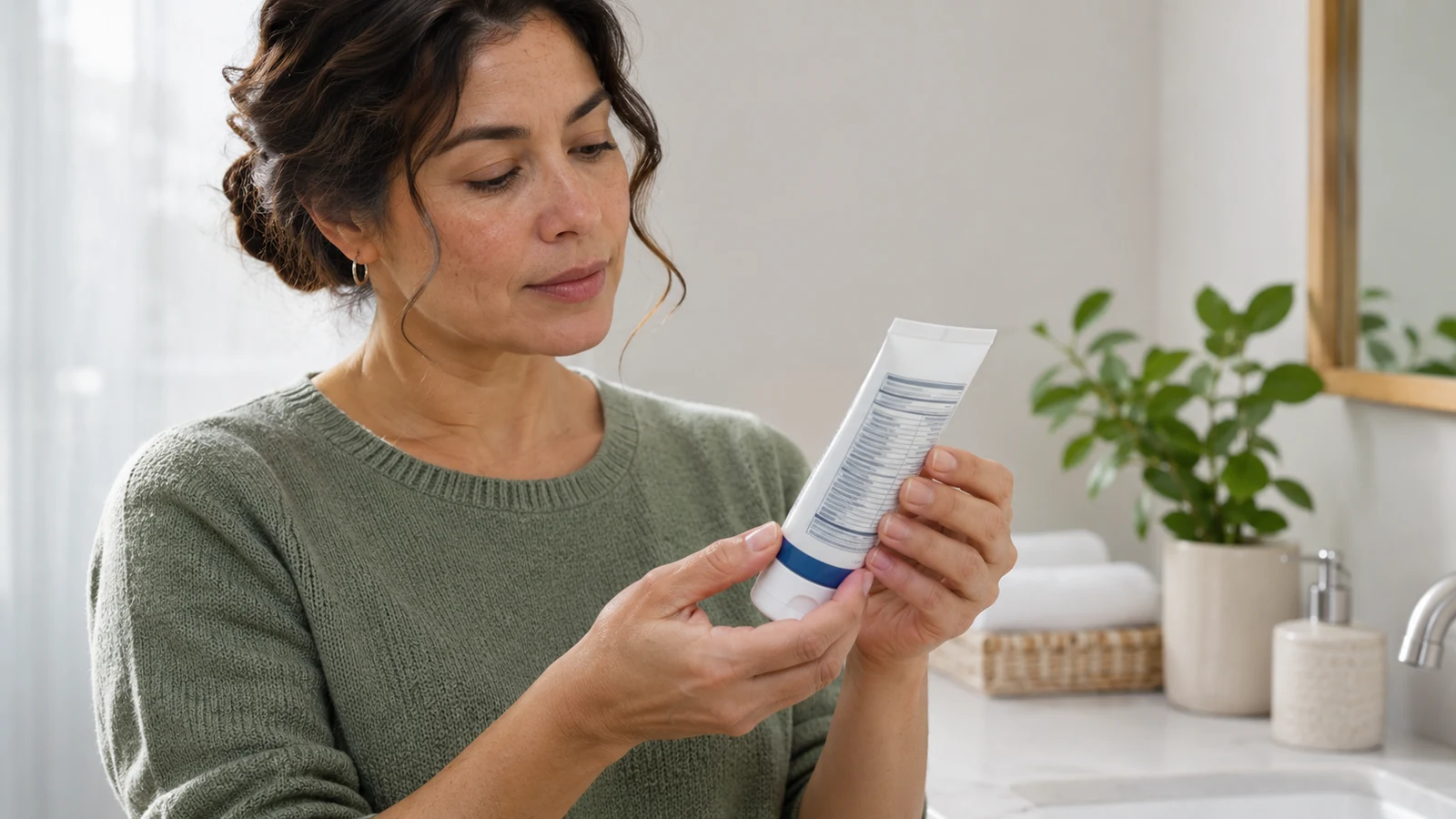
A tube called “muscle rub,” a cooling gel, a medicated patch, and a numbing cream may all sit in the same pharmacy aisle, but they are not the same medicine. Their active ingredients, concentrations, intended uses, and directions can differ. A quick check of the front label is not enough to know whether two products overlap or whether one has a warning that matters to you. The most useful habit is to turn the package over and read its Drug Facts panel before buying or applying it. This article explains the label, not which product any individual should use.
Start with the active ingredients
Find the “Active ingredient(s)” and the amount in each unit—such as each gram, patch, or spray dose. The U.S. Food and Drug Administration explains that this part identifies the substance intended to produce the effect and how much is present. A familiar brand name can cover several formulas, so compare the exact package rather than relying on color, scent, or a remembered product. If two products list the same ingredient, using both could duplicate exposure even when one is a cream and the other is a patch. For a joint-specific consumer resource, Blue Heron’s Arthritis Strategy page is optional and is not evidence about a medicine.
Menthol, methyl salicylate, capsaicin, and lidocaine are not interchangeable
Common topical pain-relief ingredients include menthol, methyl salicylate, capsaicin, lidocaine, and anti-inflammatory medicines such as diclofenac or ibuprofen. They work in different ways and have different cautions; “topical” only describes how a product is applied. For example, MedlinePlus explains that topical capsaicin affects pain-associated nerve cells in the skin, while diclofenac is a nonsteroidal anti-inflammatory drug. Methyl salicylate is related to aspirin. These names are clues to read more carefully, not a reason to choose one over another or assume an ingredient is safe because it is on the skin.
Purpose and uses describe a product—not every kind of pain
The “Purpose” and “Uses” sections tell you the labeled category and symptoms the product is intended to relieve. They do not establish the cause of a person’s pain, promise that a product will work for everyone, or show that it treats a damaged joint or nerve. One FDA-listed patch, for instance, combines menthol and methyl salicylate and is labeled for temporary relief of certain minor aches. That example should not be generalized to other brands or formulas. If discomfort is new, persistent, worsening, or limiting ordinary activity, an online label cannot determine what is causing it.
Read the warnings before opening the tube
Before use, read the full “Warnings” section and look for “Do not use,” “Ask a doctor before use,” and “Stop use and ask a doctor if.” The details vary by ingredient and product. Some labels mention allergy to aspirin-like medicines, blood-thinning medicines, kidney or heart conditions, pregnancy, damaged skin, or age limits. A specific FDA-posted patch label lists its own cautions, but it is not a universal checklist for every patch. If a warning might apply, ask a pharmacist or qualified clinician about the exact package and your medicine list rather than trying to interpret a category in isolation.
Heat, tight wrapping, and damaged skin can change the risk
Heat is an easy warning to overlook. FDA and MedlinePlus describe products for which a heating pad, electric blanket, hot shower, tight bandage, or plastic wrap should not be combined with application. Heat or covering can increase exposure or irritation for some formulations. Do not assume a “warming” sensation means added heat is safe. Products also differ in whether they can be applied before bathing or exercise. Read the instructions for the product in your hand; do not layer a pain patch under a heating pad or wrap it more tightly unless that exact label says to do so.
Skin condition and body location matter
Skin condition and body location matter. Several official labels say not to apply a product to broken, irritated, infected, peeling, or rash-covered skin, and to avoid the eyes, mouth, and other mucous membranes. A product intended for one area or body region should not be repurposed for another. Do not spread a cream over a larger area, use more often, or leave a patch on longer than its directions allow. If the package is damaged, missing its leaflet, past its expiration date, or hard to read, do not guess at a dose or schedule; ask a pharmacist to identify a safer next step.
Use the directions for the exact form you have
Creams, gels, sprays, and patches can have different application instructions even when their labels share an ingredient. Check how much to apply, how often, the maximum daily use, how long to try it, and whether hands should be washed afterward. MedlinePlus, for example, gives product-specific instructions for capsaicin and topical diclofenac, including precautions about touching the eyes and using heat. These details are not interchangeable across medicines. Do not copy a dose from a friend, an old prescription, or another brand’s website. If the directions are unclear, take the package to a pharmacist rather than estimating.
A topical product can still interact with other medicines
Some topical pain products contain ingredients with cautions that overlap with other medicines. An FDA-posted label for one menthol-and-methyl-salicylate patch warns about stomach bleeding and cautions about other NSAIDs, anticoagulants, and steroids. That is a product-specific example, not a universal rule for every cream or patch. It is a reason to check rather than combine by guesswork. Tell a pharmacist about prescriptions, over-the-counter products, creams, patches, supplements, allergies, and relevant health conditions. A topical product should not be assumed interaction-free simply because it is applied to the skin.
Keep hands, eyes, children, and pets in mind
Keep topical products in their original packaging and out of children’s and pets’ reach. Some containers are not child-resistant, and a strong scent or attractive package can invite curiosity. Wash hands as directed, especially before touching eyes, contact lenses, food, or a child. Keep the product away from the face and do not swallow it. If someone ingests a product, gets it in their eyes, or develops severe symptoms, contact local poison-control or emergency services promptly; use the label and the local poison center’s instructions. Do not wait for an online article to determine whether an exposure is serious.
Do not let a stronger sensation stand in for evidence
Cooling, warming, tingling, or numbing can describe a sensation without showing what is happening underneath. Stronger sensation is not proof that a product is more effective, penetrates deeper, or repairs tissue. Avoid marketing claims that promise a cure, rapid healing, or a “natural” product without risks. FDA has warned consumers about certain high-concentration lidocaine products marketed for cosmetic procedures, particularly when applied heavily over large areas, to irritated or broken skin, or under coverings. That warning concerns the products and use described by FDA; it should not be misrepresented as a warning about every topical medicine.
Notice irritation and know when to stop
Stop and follow the package directions if you develop unexpected burning, severe irritation, swelling, rash, or another concerning reaction. FDA has received reports of serious injury associated with certain high-risk lidocaine products, and public drug information describes possible irritation or poisoning from misuse or ingestion of some topical products. If there is blistering, severe pain, trouble breathing, facial or throat swelling, eye exposure, ingestion, or a rapidly worsening reaction, seek urgent local medical or poison-control advice. Do not apply another product to “neutralize” the first one unless a professional tells you to. Keep the container available so responders can see the ingredient and strength.
Ask a pharmacist when the label is not enough
A pharmacist can help compare two labels, identify duplicate active ingredients, explain unfamiliar warnings, and check whether a product may conflict with other medicines or health conditions. Bring the actual container or a clear photograph of every panel. Useful questions include: “Is this the exact ingredient I’m already using?” “Does any warning apply to my prescriptions or allergies?” “Can I use heat, a bandage, or another pain product with it?” and “How long should I wait before asking for help if it is not improving?” These questions support an informed conversation; they do not replace a clinical evaluation when symptoms need one.
Keep product use separate from diagnosing the cause
A pain-relief label cannot explain why an area hurts. Pain after a significant injury, pain with fever or marked swelling, sudden weakness or numbness, or symptoms that rapidly worsen may need prompt assessment rather than another over-the-counter product. Even familiar recurring pain can change, and the right evaluation depends on the person and circumstances. Avoid using repeated topical applications to mask a problem that is getting worse. If you have been given a plan by a healthcare professional, follow that plan and ask before adding or substituting a medicine. The purpose of this guide is to help you read a package—not make a diagnosis.
Storage and disposal are part of safe use
Store the product exactly as its packaging says, away from excess heat and moisture, and keep the cap or child-resistant closure secured. Do not transfer creams or liquids into an unmarked container. Check expiration dates and discard medicines according to the package or local pharmacy guidance; disposal rules differ by location. If the label is damaged or the product has changed color, smell, or texture, ask a pharmacist rather than deciding it is still usable. These steps are simple, but they protect other household members from confusing one cream, patch, or spray with another.
A short label-reading routine
A practical 30-second check is: (1) read the active ingredient and strength; (2) compare it with other medicines you use; (3) scan “Do not use” and “Ask a doctor” warnings; (4) confirm the exact directions, maximum frequency, and time limit; (5) check skin, heat, covering, and hand-washing cautions; and (6) store it safely. If any step raises a question, pause and ask a pharmacist. Keep a photo of the label with your medication list if that helps at appointments. The list is a conversation aid, not a recommendation to use the product.
The practical takeaway
Topical pain-relief products are medicines, not interchangeable household creams. Ingredient, strength, warnings, and directions matter more than a familiar brand or a warming sensation. Read the entire Drug Facts panel, avoid extrapolating from one product to another, and ask a pharmacist when health conditions or other medicines make the label hard to apply. Optional Blue Heron program pages about arthritis, gout, and neuropathy are commercial wellness resources, not medical evidence, product recommendations, or treatment. This article is general health education—not diagnosis or personal medical advice. Mr.Hotsia’s editorial review was limited to sourcing and clarity; it was not clinical review and does not imply medical credentials.
Sources and further reading
Medical information was checked against these public health sources on November 16, 2026.
- The Over-the-Counter Drug Facts Label — U.S. Food and Drug Administration ↗
- FDA Warns Consumers to Avoid Certain Topical Pain Relief Products Due to Potential for Dangerous Health Effects — FDA ↗
- Capsaicin Topical — MedlinePlus, U.S. National Library of Medicine ↗
- Diclofenac Topical (arthritis pain) — MedlinePlus, U.S. National Library of Medicine ↗
- FDA-posted Drug Facts label for one menthol/methyl salicylate patch (product-specific example; check the current package) — FDA ↗
- Sports cream overdose — MedlinePlus Medical Encyclopedia ↗
- Ibuprofen for adults — NHS ↗
This article is general health education, not a diagnosis or personal medical advice. Do not change treatment or supplements based on this article. Discuss individual results with a qualified healthcare professional.