Everyday hygiene · Handwashing at home
Handwashing at Home: Soap, Drying, and Common Shortcuts
Plain soap, attention to the whole hand, rinsing, and drying make a practical household routine. Learn what a quick rinse misses and how to make the basics easier to follow.
AI assisted with drafting, organization, and the original editorial image. Mr.Hotsia reviewed sourcing and clarity only; no clinical review or medical qualifications are implied.
Start with a complete routine, not a quick splash
Handwashing can be so familiar that it becomes almost invisible: turn on the tap, splash, and move on. A useful reset is to think of it as a complete routine rather than a single moment under water. CDC describes wetting, lathering, scrubbing, rinsing, and drying as distinct steps. Each deserves a place in the sequence. This guide focuses on ordinary household handwashing with plain soap and clean running water. It is not a clinical protocol, a promise of sterile hands, or advice for managing a particular infection. The aim is to make a familiar daily habit clearer and easier to complete.
Use ordinary moments as reminders
CDC identifies key occasions for washing, including after using the toilet, after handling garbage, and after blowing the nose, coughing, or sneezing. Its recommendations also include times connected with food and animals. You do not need to invent a complicated personal tracking system to give those occasions attention. As an editorial planning example, connect the bathroom routine with checking that soap and a clean drying option are available. That is a practical reminder, not a numerical risk score. A general article cannot tell you the significance of every object you touched or replace instructions for a specific care setting.
Keep food preparation and clean hands connected
FoodSafety.gov emphasizes washing before, during, and after food preparation and after touching raw meat, poultry, seafood, or eggs. Hands can carry contamination between tasks, so washing is not simply something to do once before entering the kitchen. Imagine moving from handling a raw ingredient to preparing something ready to eat: notice the change in task instead of relying on the fact that you washed earlier. This example does not replace the other parts of food safety, such as separating raw and ready-to-eat foods or controlling temperature. Clean hands are one part of preparation, not a certificate that an entire meal is safe.
Plain soap is the starting point
The FDA advises consumers to wash with plain soap and water. Its consumer update says evidence is insufficient to show that over-the-counter antibacterial soaps are better at preventing illness than plain soap and water. That is a reason to concentrate on the routine rather than assume that a stronger-sounding label compensates for skipping steps. The FDA page has a U.S. consumer-product context; this article does not apply U.S. regulatory rules to other countries or recommend changing a prescribed product. It also does not rank brands, select ingredients for an individual, or evaluate every product sold with a hygiene claim.
Prepare what you need before beginning
Before starting, check that you can reach the water, soap, and a way to dry your hands. CDC’s FAQ identifies accessible supplies as part of supporting handwashing. A practical household check is to notice an empty dispenser when there is still time to replace or refill it appropriately, rather than discover the problem halfway through a task. You might also keep the drying option where it can be reached without rummaging through a cupboard. These are organization suggestions, not tested interventions or requirements to buy a particular accessory. The useful question is whether the basic sequence is workable in the space you actually have.
Lather across the hands, not only the palms
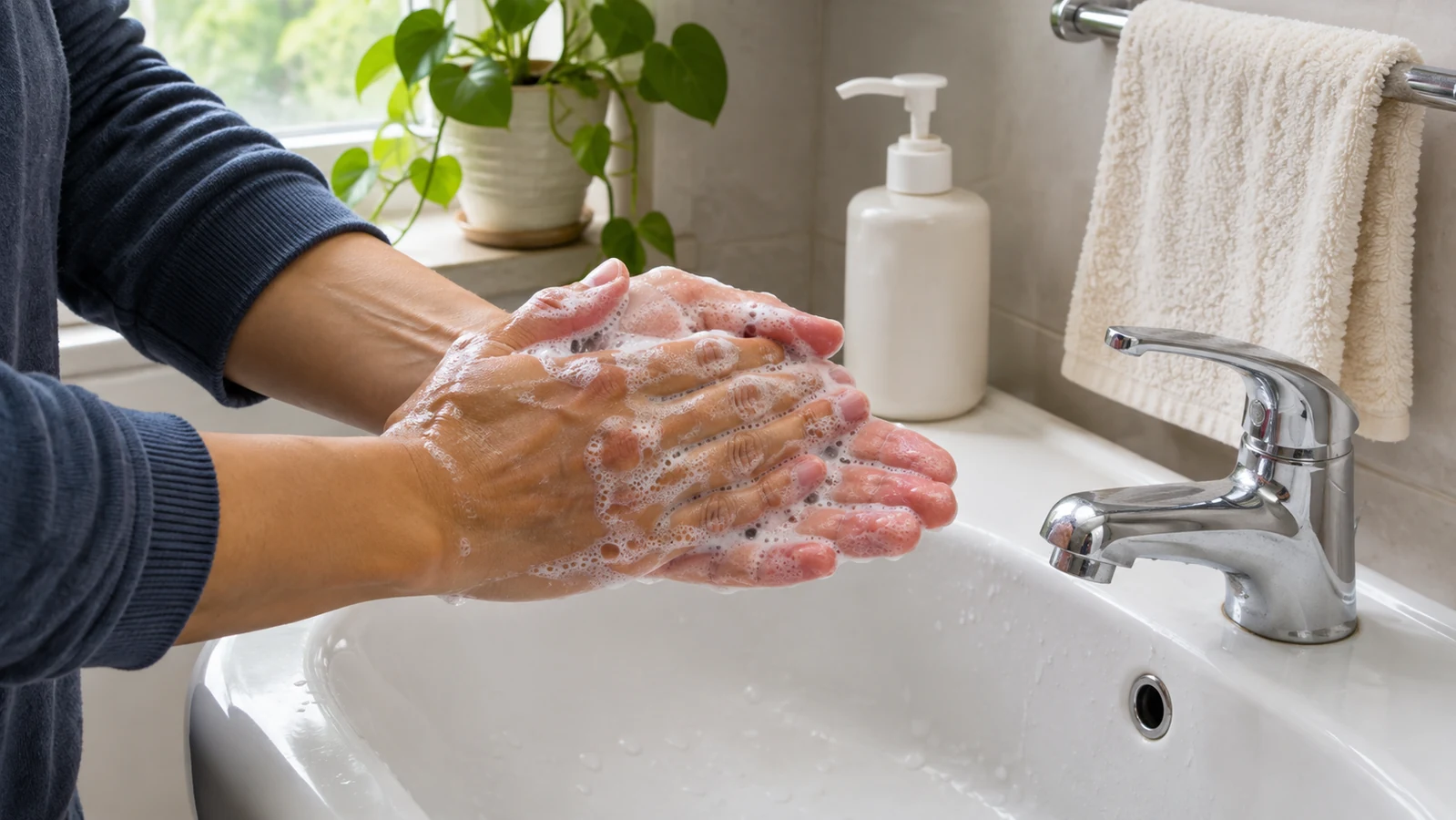
The NHS illustrated guide shows rubbing the backs of the hands, spaces between fingers, thumbs, and fingertips rather than concentrating only on palm-to-palm rubbing. Use the linked guide to review areas you may be rushing past. The original image on this page shows one moment of lathering; it is not a complete instructional diagram or evidence that every step has been performed. As a practical learning approach, read the sequence once when you are not hurrying. Trying to learn from a single photograph is less useful than understanding the full guidance and then giving the parts of the hands deliberate attention.
Give scrubbing its own time
CDC’s household advice calls for scrubbing with soap for at least twenty seconds before rinsing. Treat that as time for the rubbing step, not as a reason to spend most of the interval waiting for water while your hands remain still. You can use a simple timing cue if it helps you avoid rushing. This is general community guidance, not an attempt to standardize every professional hand-hygiene procedure. If you are working, receiving care, or assisting someone in a setting with specific instructions, follow that setting’s appropriate guidance. A short website explainer cannot certify professional technique or compliance.
Comfortable water is different from scalding water
CDC’s hand-hygiene FAQ says that warm or cold water can be used and does not give hotter water an advantage for removing germs in normal handwashing. There is no need to make the water painfully hot to show that you are taking the task seriously. FoodSafety.gov likewise includes warm or cold clean running water in its steps. The point is to use water as part of washing and rinsing with soap, not to try to heat-disinfect the skin. This article does not advise on water emergencies or determine whether a particular household’s supply is safe; follow relevant local guidance when a water advisory applies.
Rinse away the soap rather than skipping ahead
After the rubbing step, rinse well with clean running water. FoodSafety.gov includes rinsing as a separate part of the sequence, not an optional extra once the hands look soapy. It is easy to focus on making lather and then rush away from the sink, especially while cooking or answering a door. An editorial reminder is to think ahead to where the clean hands are going next: complete the rinse and drying before returning to the task. This is not a claim that bubbles reveal how many germs are present. Looking clean and completing a recommended routine are different kinds of information.
Drying belongs in the routine
Drying is part of the task, not merely a comfort preference. CDC’s FAQ explains that germs spread more easily from wet hands and recommends drying completely. It also says evidence is insufficient to establish that a clean towel or an air dryer is better at reducing germs on hands. Rather than turn that uncertainty into a contest between devices, use an appropriate available option and finish the drying step. At home, that may be a clean towel. In another setting, it may be the drying facility provided. This article does not endorse a device or claim that a drying method eliminates every possible risk.
Look after the towel you use at home
If you use a reusable hand towel, CDC recommends a clean one and says it should be changed when visibly dirty and before remaining damp allows mildew to develop. A household planning suggestion is to keep a clean replacement accessible and make the used towel’s care part of the laundry routine. That does not create a universal number of hours or a guarantee based on appearance alone. Avoid confusing the existence of a towel rail with having a suitable towel ready. The practical question is whether the drying option is usable now, not whether the room looks well organized in a photograph.
Do not turn every touch into a reason for alarm
A reasonable hygiene routine does not require a website to assign danger to every subsequent touch. CDC’s FAQ notes uncertainty about the significance of germs picked up from a bathroom door handle and offers hands-free ways of opening a door if someone is concerned. This article does not convert that discussion into a rule that every touch cancels the entire routine. Return to the relevant occasions for washing and the guidance for the task you are doing. Avoid treating a general explainer as a checklist for repeatedly checking your hands, measuring contamination, or deciding whether ordinary activities are safe for you personally.
Make the setup easier for the people using it
Make the setup manageable for the people who use it. As practical examples, think about whether someone can operate the tap, reach the soap, and reach a drying option without an awkward stretch. A reminder can describe the sequence in plain language rather than rely on a decorative product display. These are household organization ideas, not an assessment of a disability or a prescribed adaptation. If a person needs specific assistance, ask what is useful and seek appropriate advice for the situation. A generic photograph cannot show every access need, and a routine should not depend on copying someone else’s bathroom layout.
Know the limits of a general household guide
Keep the scope clear when reading hand-hygiene information online. Community advice and healthcare procedures may differ because they address different settings. This page does not give instructions for surgical preparation, wound care, treatment of skin disease, chemical exposure, or making hand sanitizer. Nor should a household surface-cleaning product be treated as hand soap simply because both are described as cleaning products. Read the intended use and directions of what you are using. For personal skin problems, product reactions, or other health concerns, consult an appropriate healthcare professional rather than use this article to select treatment or assess the cause.
Optional commercial reading is separate from hygiene evidence
The three optional commercial links lead to Weight Loss Breeze, The Blood Pressure Program, and The Oxidized Cholesterol Strategy, existing books in the site’s broader food and everyday-wellbeing catalog. They are separate reading options, not evidence for handwashing, endorsements by the public-health sources, or instructions for infection control. Purchasing a program is unnecessary to wash your hands or understand this guide. The CDC, FDA, NHS, and FoodSafety.gov links below provide the relevant public information. This article does not assess the commercial programs as treatments, recommend changing medicines or diet because of them, or promise a health outcome from a purchase.
The takeaway and general-information disclaimer
The useful reset is simple: have the supplies ready, use plain soap and clean running water, rub across the hands for the recommended time, rinse, and dry. Give attention to the whole sequence rather than rely on a quick splash or a product label. This is general household health education, not diagnosis, individualized medical advice, a clinical hand-hygiene protocol, or a guarantee against illness. Local instructions and individual circumstances may differ. AI assisted with drafting, organization, and the original editorial image. Mr.Hotsia reviewed sourcing and clarity only; no clinical review or medical qualifications are implied.
Sources and further reading
Medical information was checked against these public health sources on November 21, 2026.
- CDC — About Handwashing: community guidance ↗
- CDC — Hand Hygiene Frequently Asked Questions: community settings, drying and soap ↗
- FDA — Skip the Antibacterial Soap; Use Plain Soap and Water (U.S. consumer-product context) ↗
- NHS — How to wash your hands: illustrated sequence ↗
- FoodSafety.gov — Wash Your Hands for Health: food-preparation context ↗
This article is general health education, not a diagnosis or personal medical advice. Do not change treatment or supplements based on this article. Discuss individual results with a qualified healthcare professional.