Physical activity · Warm-ups and cool-downs
Warm-Ups and Cool-Downs: Gentle Transitions for Everyday Exercise
Starting more easily and easing down afterward can make an exercise session less abrupt. Learn what public-health guidance recommends, what recovery research does not promise, and when symptoms mean stopping rather than finishing a routine.
AI assisted with drafting, organization, and the editorial image. Mr.Hotsia reviewed sourcing and clarity only; no clinical review or medical credentials are implied.
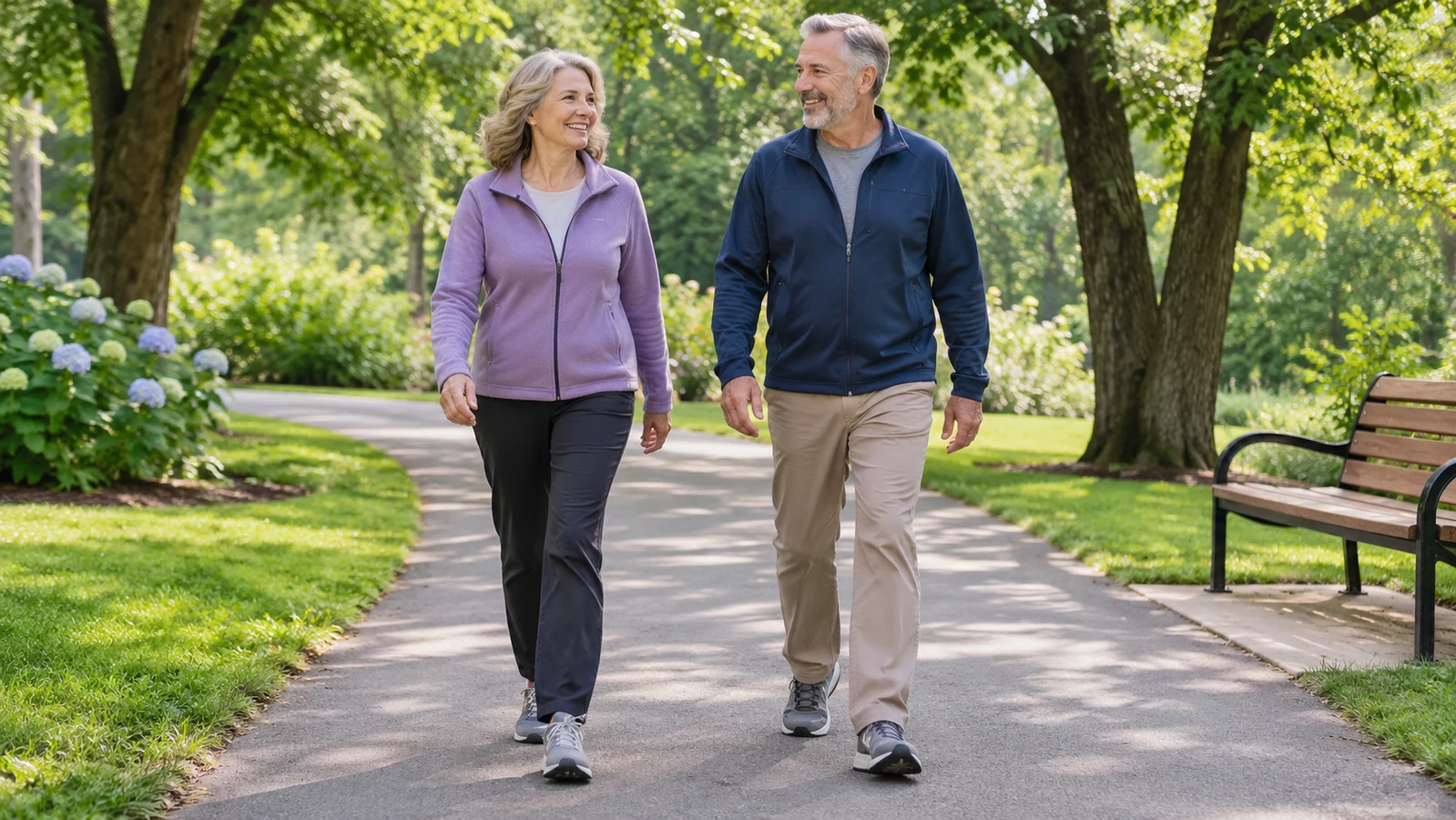
Leave room for the beginning and the ending
It is easy to think of exercise as only the brisk walk, the cycling interval, or the set of exercises in the middle. Getting started and finishing can become hurried afterthoughts. A more useful plan leaves room to move from rest toward the chosen activity and then ease back down. That does not require an elaborate ritual, special equipment, or a fitness score. This guide explains general principles for adults undertaking ordinary activity. It is not a rehabilitation program, a personal exercise prescription, or permission to continue through symptoms because a routine says there are minutes left.
What a warm-up is meant to do
The American Heart Association describes a warm-up before moderate or vigorous aerobic activity as a way to allow heart rate and breathing to rise gradually. It suggests doing the planned activity at an easier pace. The practical idea is a transition rather than an immediate jump to the hardest part. A warm-up should not be confused with proving fitness or exhausting yourself before the main session. Nor does finishing one establish that a particular exercise, load, or intensity is suitable for you. Suitability still depends on the activity and the person undertaking it.
A time guide is not a personal prescription
The AHA gives a general guide of five to ten minutes for warming up. The NHS illustrates a particular warm-up routine lasting at least six minutes, with a sequence of movements. These examples are not competing medical rules or a guarantee that every body needs the same number on a stopwatch. The planned activity, current ability, and any professional advice matter. Use guidance in its context rather than combining several online routines into a longer, harder sequence. If you need a tailored plan, ask an appropriate professional instead of treating a general article as a personal assessment.
Keep the first movements familiar
For someone who already walks comfortably, a practical example is beginning on an easy, level stretch before choosing a brisker pace. Someone using an exercise bike might begin with a familiar easier setting if that is appropriate for their equipment and ability. These examples illustrate the slower-start principle; they are not a universal sequence or an instruction to increase intensity afterward. Starting gently can also be a chance to notice that the route is unsuitable, the equipment needs adjusting, or today does not feel right. You are allowed to change the plan rather than complete it because you wrote it down.
Stretching is not a competition
Stretching and gradually starting an activity are related ideas, but they are not interchangeable tasks. A dramatic stretch is not required to make a warm-up look convincing. If stretching is included in a suitable plan, the AHA advises avoiding bouncing and keeping it non-painful. Do not have a partner push you farther to match a photograph or another person’s range. Someone with an injury, joint problem, or uncertainty about a movement may need individualized guidance. A general demonstration cannot assess balance, joint stability, surgical restrictions, or what a particular sensation means for an individual.
What a cool-down is meant to do
For cooling down, the AHA suggests reducing walking speed for five to ten minutes so that activity decreases gradually. This is intended as an easier ending, not an extra hard workout. As an organizational example, a walker could choose a route that leaves a level final stretch before reaching home. Avoid turning the last part into a sprint simply because the session is nearly over. This principle concerns a person who feels well enough to continue easy activity; it is not advice to keep walking when pain, dizziness, or illness makes movement unsafe.
Do not promise soreness-free recovery
A gradual ending should not be advertised as guaranteed injury prevention or a cure for next-day soreness. A 2018 narrative review by Van Hooren and Peake found little support for many commonly claimed recovery benefits of active cool-downs, including a consistent reduction in muscle soreness or prevention of injuries. Its studies, activities, and participants varied, and it is not a current individualized guideline for every clinical population. The useful distinction is between choosing a gentle transition and promising a measured recovery outcome. Neither feeling sore nor feeling fine proves that you performed a cool-down correctly or incorrectly.
Plan the transitions before time gets tight
Transitions are easier to include when they are part of the available time from the beginning. If you have a limited break, do not automatically fill every minute with the most demanding activity and hope to fit the ending in later. A practical planning choice may be to shorten the main portion instead. Put shoes, equipment, and anything needed afterward where you can reach them without rushing. These are organizational examples, not research-tested doses. The goal is a repeatable session that fits your day, not squeezing the maximum possible effort into a crowded schedule.
Symptoms take priority over completing the routine
The NHS advises stopping exercise if you feel pain or become unwell. That instruction takes priority over finishing a warm-up, reaching a distance, or completing a cool-down. NHLBI also advises discussing chest pain or dizziness during activity with a doctor. Do not diagnose such symptoms as simply being out of shape or assume that a slower pace makes them harmless. If symptoms are severe or suggest an emergency, seek urgent medical help rather than treating an online exercise routine as the response. This article cannot identify the cause of symptoms or decide whether it is safe for you to resume.
Health conditions and rehabilitation need individual guidance
NHLBI recommends asking a doctor about suitable activity when a person has a heart problem or a chronic condition such as diabetes or high blood pressure. NHS exercise guidance also advises professional input when someone has an injury, is unwell, has recently had a significant health event, or is unsure whether the exercises fit their fitness level. A prescribed rehabilitation plan may have its own preparation, monitoring, and stopping instructions. Follow that plan and ask questions rather than replacing it with generic advice. Do not change medicines or rehabilitation restrictions in order to match a workout.
Make the setting easier to use
A usable setting makes an easier start and finish more practical. At home, consider whether there is enough clear space for the movements you intend to do and whether you can use any equipment confidently. Outdoors, think ahead about the surface, route, visibility, and where you will finish. A crowded pavement or an unexpected steep final hill may not match the session you planned. These are ordinary planning considerations, not a safety certification for a particular route. If conditions are unsuitable, changing the location, choosing another activity, or postponing is a valid decision—not a failure to commit.
A group does not need one pace for everyone
When exercising with others, agree that preparation and the ending do not need to become a race. A friend’s comfortable pace may be demanding for someone else, and a group timetable cannot establish what is appropriate for every participant. You might agree on a meeting point or let an instructor know that you need a different option. Those are communication examples rather than instructions for adapting a medical condition. Ask about modifications before trying unfamiliar movements, and do not feel obliged to copy a faster participant or remain in a session that no longer feels suitable.
Write a simple plan without turning it into a test
A short written plan might name the activity, the easier beginning, the point where you intend to ease down, and the circumstances that would make you stop or ask for advice. It need not include heart-rate targets, calorie estimates, or a detailed diary. If a professional has given you specific instructions, keep those available and clarify anything you do not understand. The plan is there to reduce confusion, not to judge your character. An interrupted session, a changed route, or a day when you decide not to progress can still provide useful information about what fits your life.
Build the wider habit gradually
The wider activity pattern matters more than perfecting one transition. NHLBI encourages people who have been inactive to start with a low level and build gradually, choosing activities they enjoy and making them part of a routine. A manageable beginning is more useful than adding several ambitious goals at once. Notice practical barriers such as time, access, confidence, or equipment before assuming that motivation is the only issue. If you want to progress, ask what a suitable next step looks like for you; this article does not specify how quickly to increase duration, resistance, frequency, or intensity.
Optional commercial resources are not exercise evidence
The site’s existing pages for The Arthritis Strategy, The Blood Pressure Program, and Weight Loss Breeze are optional commercial reading connected with joint comfort, cardiovascular interests, and everyday lifestyle habits. They are not the scientific sources for this article, personalized exercise programs, or evidence that a product prevents injury or treats a condition. No purchase is required to leave time for an easier start and finish. Evaluate commercial claims separately from the public-health guidance and research below. Do not replace professional assessment, prescribed exercise, or medical treatment with a product page.
The takeaway and general-information disclaimer
For ordinary activity, think of a warm-up and cool-down as gradual transitions, not protective guarantees or tests to pass. Keep the movements appropriate, leave enough time, and put symptoms and individual guidance ahead of the schedule. This article provides general health education, not diagnosis, individualized exercise treatment, or medical advice. AI assisted with drafting, organization, and the original editorial image. Mr.Hotsia reviewed sourcing and clarity only; no clinical review or medical credentials are implied. The practical planning examples are illustrative, not findings from trials. The linked sources explain their own populations, recommendations, and evidence limits.
Sources and further reading
Medical information was checked against these public health sources on November 20, 2026.
- American Heart Association — Warm Up, Cool Down ↗
- NHS — How to warm up before exercising ↗
- NHLBI — Getting Started and Staying Active ↗
- NHLBI — Physical Activity and Your Heart: Risks ↗
- Van Hooren and Peake (2018), Sports Medicine — Do We Need a Cool-Down After Exercise? DOI: 10.1007/s40279-018-0916-2 ↗
This article is general health education, not a diagnosis or personal medical advice. Do not change treatment or supplements based on this article. Discuss individual results with a qualified healthcare professional.