Sleep health · Reading and the evening wind-down
Reading Before Bed: A Gentle Wind-Down, Not an Insomnia Treatment
A few pages can be an enjoyable way to step away from the day. Learn what sleep guidance supports, how to make reading comfortable and flexible, and why a bedtime book is neither a sleep test nor a substitute for care.
AI assistance was used for drafting, organization, and the editorial image. Mr.Hotsia reviewed sourcing and clarity only; no clinician reviewed this article and no medical credentials are implied.
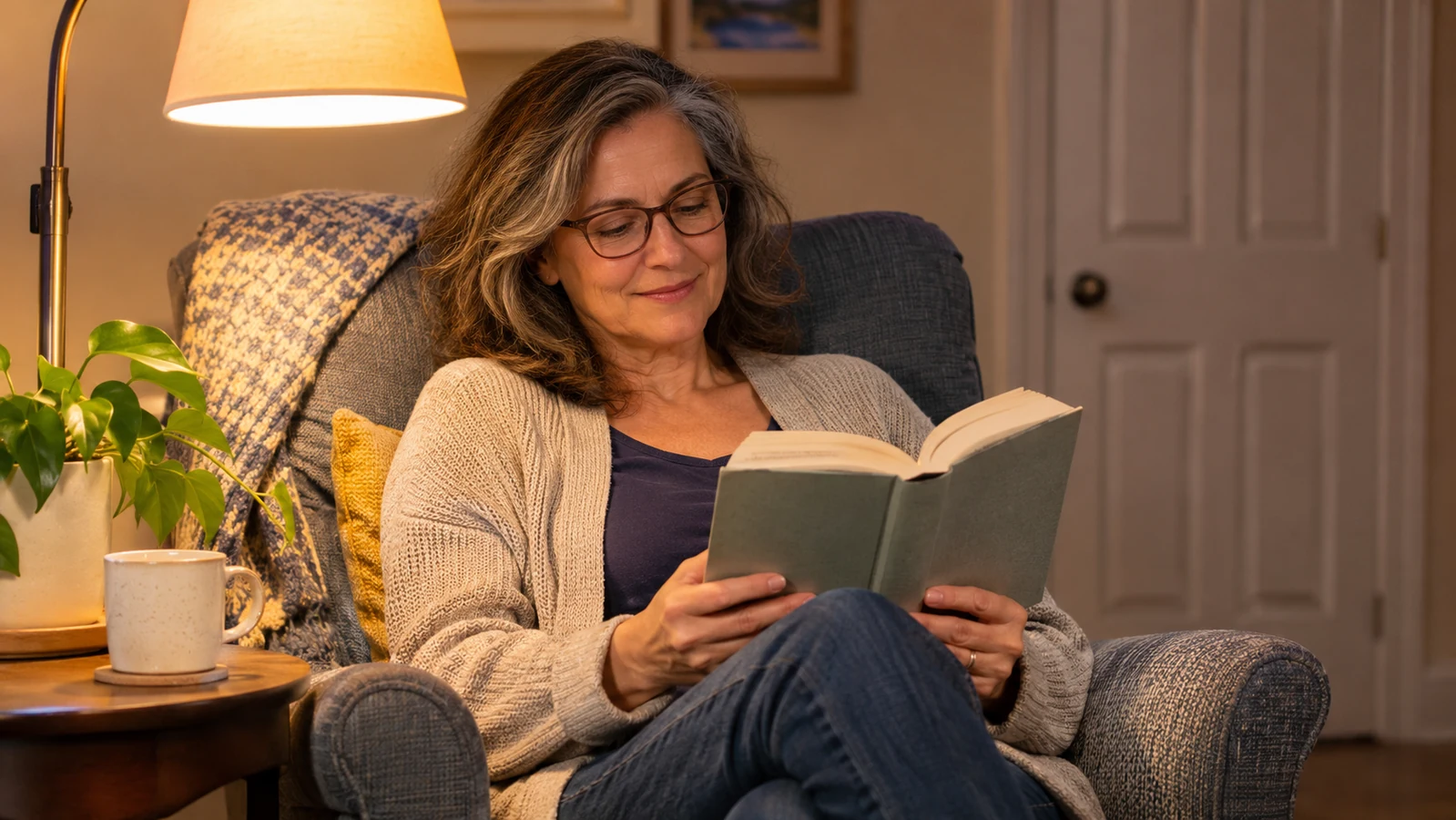
A book is an option, not a bedtime obligation
For some people, opening a book offers a welcome change from work messages, chores, or an evening of scrolling. Reading may feel absorbing without being demanding, and a familiar story can make the end of the day enjoyable. Other people find reading tiring, frustrating, or too engaging to stop. Neither response is a failure. The useful question is whether reading fits your preferences and leaves room for rest—not whether you can complete a certain number of pages or make yourself sleepy on command. This guide concerns adults and ordinary wind-down choices, not a personalized sleep plan.
What the guidance actually recommends
NHS Every Mind Matters includes reading something enjoyable among possible relaxing activities before bed. NHLBI similarly suggests quiet time in the period before sleep and gives reading as an example of a wind-down routine. These are practical suggestions within broader sleep guidance. They do not establish that a particular book, genre, number of pages, or reading duration reliably treats a disorder. The recommendation is best understood as permission to choose a calm activity you like. It is not an instruction to purchase a special book or copy someone else’s evening exactly.
A pleasant routine is not a clinical treatment
Relaxing before bedtime and treating chronic insomnia are different goals. NHLBI describes cognitive behavioral therapy for insomnia, or CBT-I, as a structured treatment that may include several coordinated components. A reading habit alone is not equivalent to that treatment, and a commercial guide is not automatically CBT-I. If you are receiving care, ask how an evening activity fits your plan rather than adding rules from an article. Do not independently restrict sleep time, change prescribed treatment, or assume that difficulty sleeping means you have not relaxed hard enough.
Choose something you can comfortably put down
There is no medically required genre. A familiar novel, an essay, a magazine, or a short passage might suit one person, while another prefers something different. As a practical example, someone who feels compelled to finish a suspenseful chapter could save that book for daytime and try less absorbing material in the evening. This is a preference-based adjustment, not evidence that thrillers are harmful or that fiction is superior to nonfiction. Notice your own response without treating the choice as a moral judgment about what counts as worthwhile reading.
Keep the experiment small
A small experiment might be to keep a book where you already sit in the evening and read a few pages when it feels appealing. You could stop at a natural break, when your attention fades, or when it is time to move toward bed. Those are examples, not a prescribed dose. There is no need to set a challenge, buy a timer, or add reading to a crowded evening if it feels like another task. A wind-down routine can remain flexible when work, caregiving, pain, or household responsibilities change the day.
Make the setting usable, not perfectly styled
A comfortable setup is more useful than recreating a photograph. Use enough light to see the page comfortably, choose a position you can tolerate, and place the book where you do not need to strain to hold it. You do not need a special chair, lamp, blanket, or decorative bedroom. If reading causes persistent discomfort or you have a visual or physical difficulty, seek appropriate advice rather than forcing the setup. A general sleep article cannot assess eye symptoms, posture, pain, or which assistive device would suit an individual.
Paper and screens involve practical trade-offs
A printed book may make it simpler to avoid notifications, but it is not the only possible format. An e-reader or other device may offer useful text enlargement or access to a library. Devices also differ in lighting, notifications, and the ease of switching into messages or other activities. CDC and NHS guidance recommend reducing electronic-device use before sleep. If a device keeps drawing you into other tasks, consider a different format or another time to read. Do not assume that a display setting alone makes every device or pattern of use equivalent.
Reading in bed is not right for every sleep plan
An evening reading session need not happen in bed. NHLBI explains that stimulus control, one component of CBT-I, aims to reconnect bed with sleep and can involve reserving the bed for sleep rather than wakeful activities. That is why a general suggestion to read before bedtime should not be translated into a universal instruction to read in bed for a long time. A chair or another suitable place may fit better. If a clinician has given you a sleep plan, follow it and ask about reading rather than improvising your own treatment rules.
Accessibility matters more than a particular format
Reading is not equally accessible or relaxing for everyone. Language, literacy, vision, fatigue, hand function, available space, and cost all matter. Large print, a supported book, or borrowed material may help some readers, while others prefer listening or a non-reading activity. NHS guidance lists several relaxation options, not just books. You do not need to explain or overcome a preference for another format to deserve rest. If a chosen alternative uses audio, keep the setup comfortable and compatible with hearing important household sounds; the goal is not complete isolation.
Do not turn pages into a performance score
Avoid turning the routine into a daily assessment of success. A note such as “enjoyed reading” or “wanted to keep going” may be enough to guide a practical change. It does not diagnose a sleep problem or prove that reading caused the next morning’s mood. Sleep varies for many reasons. Repeated clock checking, page targets, and comparisons with a partner can distract from the simple purpose of an enjoyable pause. There is no requirement to log the habit at all unless doing so serves a clear purpose you have chosen.
Keep reading from crowding out sleep
The point of winding down is not to replace the opportunity to sleep with another obligation. If reading regularly pushes bedtime later than intended, consider an earlier reading period, a shorter passage, or a different place for the most absorbing book. This is an organizational choice, not a medical treatment. Someone may enjoy reading intensely and still need enough time for sleep. Protecting that time also depends on circumstances beyond personal habits, including work and caregiving; a person should not be blamed for a schedule that does not leave adequate room for rest.
Look at the wider pattern when sleep remains difficult
A book cannot address every factor that affects sleep. NHS guidance describes a range of contributors, including stress, environmental conditions, substances, medicines, pain, and sleep conditions. Reading may be enjoyable even when it does not change a difficult night. If trouble persists, look beyond the activity rather than making the routine increasingly strict or spending more on products. This article cannot tell whether insomnia, sleep apnea, another condition, or daily circumstances are responsible. Do not stop medicines or start supplements simply because you are trying a different evening habit.
Know when to ask for professional help
If sleep difficulty keeps affecting daily life, discuss it with a healthcare professional. CDC recommends seeking help for sleep problems, and the NHS advises assessment when changes in habits have not helped or problems make daily life hard to cope with. You can describe when the difficulty began, what happens at night, and how you feel during the day. Mention other symptoms or concerns rather than attributing everything to the book or screen. Bringing a concise account can support the conversation; it is not necessary to produce a perfect diary before asking for help.
Keep everyday safety in view
Feeling drowsy is not a signal to continue an activity that requires alertness. The NHS advises not driving when sleepy. Arrange a safer alternative if you are not alert enough to drive or operate equipment. At home, keep the route between your chair and bed clear and use sufficient light to move safely. These are ordinary practical precautions, not proof that reading itself creates a hazard. If you unexpectedly fall asleep during everyday activities or have another worrying change, describe that to a qualified professional instead of relying on a wind-down routine to explain it.
Optional commercial pages are not evidence
The site’s existing pages for The Insomnia Program, Overthrowing Anxiety, and Brain Booster are optional commercial reading related to sleep routines, relaxation, and cognitive-wellness interests. They are not research sources, clinical recommendations, or proof that a program treats insomnia or anxiety or improves cognition. Their inclusion does not mean that reading prevents disease or that a purchase is needed for an evening routine. Evaluate program claims separately from the public-health information linked below, and do not replace assessment or prescribed care with a product page.
The takeaway and general-information disclaimer
Reading before bed can remain a modest pleasure: choose material you enjoy, use a comfortable and accessible setting, and stop when it no longer fits the evening. It is optional, and it does not need a measured effect on sleep to be worthwhile. Persistent sleep problems deserve appropriate attention, not self-blame or a more elaborate ritual. This article provides general health education, not diagnosis, individualized treatment, or medical advice. AI tools assisted with drafting, organization, and the editorial image. Mr.Hotsia’s review concerns sourcing and clarity only; no clinical review or medical credentials are implied.
Sources and further reading
Medical information was checked against these public health sources on November 19, 2026.
This article is general health education, not a diagnosis or personal medical advice. Do not change treatment or supplements based on this article. Discuss individual results with a qualified healthcare professional.