Everyday nutrition · Cooking oils and dietary fats
Cooking Oils and Saturated Fat: Make a Practical Swap, Not a Superfood Purchase
A useful oil choice starts with what it replaces, how you cook, and what you can afford. Understand fat types, compare labels fairly, and keep ordinary kitchen decisions separate from promises about cholesterol or weight.
AI assisted with drafting, organization, and the original editorial image. Mr.Hotsia reviewed sourcing and clarity only; no clinical review or medical credentials are implied.
Start with the meal you actually cook
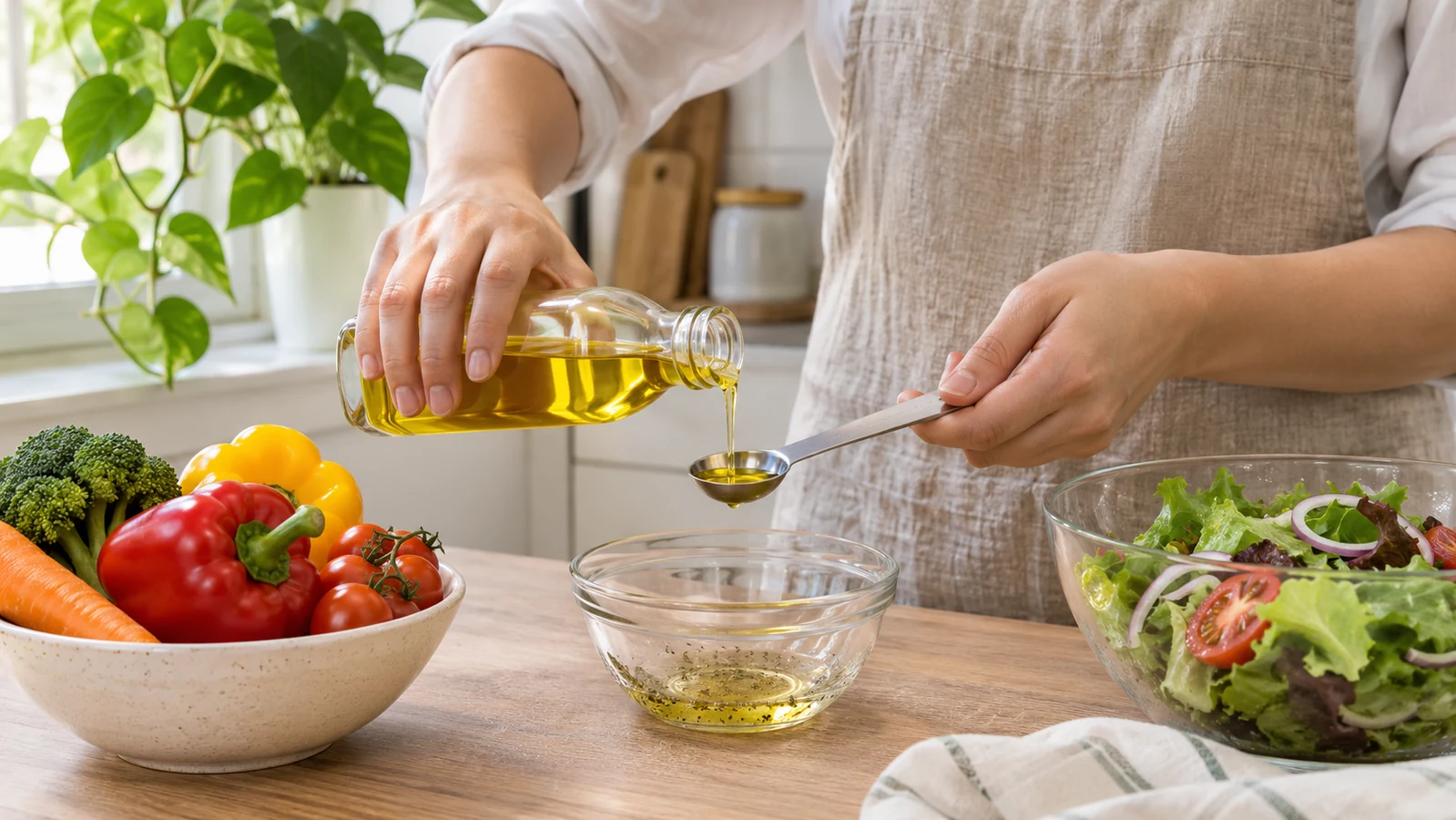
Choosing a cooking oil can feel like choosing sides in a debate. One bottle promises tradition, another sounds scientific, and a third costs much more than the ingredients for dinner. A more useful starting point is the meal you actually make: what fat are you using now, what could replace it, and what will work in your kitchen? This guide concerns ordinary adult food choices, not a diet prescription. You do not need to declare one ingredient a miracle or discard an entire cuisine to make a thoughtful change. A manageable comparison is more useful than a cupboard full of expensive bottles.
Fat is a nutrient, not a single ingredient
The NHS explains that some fat is essential in a balanced diet, including as a source of essential fatty acids and to help absorb vitamins A, D, and E. Most fats and oils contain a mixture of saturated and unsaturated fats rather than belonging entirely to one category. Unsaturated fats include monounsaturated and polyunsaturated types. This is why the name on the front of a bottle is only a starting point. Learning these terms is not a test of whether you eat correctly; it is a way to understand what public-health guidance means when it recommends changing the balance of fats.
Replacement matters more than adding a special oil
WHO’s 2023 guidance emphasizes both the quality and quantity of dietary fat. It recommends that fat consumed from age two onward should be primarily unsaturated, and identifies polyunsaturated fats, plant-source monounsaturated fats, and carbohydrates from naturally fiber-containing foods as replacements for saturated fats. The important word for a kitchen decision is replacement. Adding an oil to an otherwise unchanged meal is not the same comparison as using it instead of some butter or ghee. Nor does this guidance establish that a particular brand will change your blood test by a predictable amount. Population recommendations are not individual treatment targets.
Several ordinary oils can fit
The American Heart Association lists canola, corn, olive, peanut, safflower, soybean, sunflower, and vegetable oils among options with more unsaturated fat and less saturated fat than solid fats or tropical oils. Blended vegetable oils can fit too. There is no requirement here to buy the rarest or most expensive bottle. For a practical first step, identify an available option that works with the food you enjoy and the cooking you do. Trying a smaller bottle before committing to a large one can also make the choice less costly if its flavor turns out not to suit the household.
Plant-based does not automatically mean low in saturated fat
Coconut and palm oils are plant-derived, but the NHS lists them among sources of saturated fat, alongside foods such as butter, ghee, cheese, and fatty meat. A plant-based description therefore does not answer the saturated-fat question by itself. That distinction need not become a judgment about a cultural dish or a family recipe. Consider the overall pattern and possible substitutions rather than dividing every meal into approved and forbidden categories. An occasional ingredient and a main everyday cooking fat play different roles in a kitchen; this article cannot calculate an individual’s intake from a list of favorite foods.
Compare the same amount on the label
On a U.S. Nutrition Facts label, FDA explains that percent Daily Value describes a nutrient’s contribution from one serving to a daily diet. As a general guide, five percent or less is low and twenty percent or more is high. Compare equal serving sizes before using those figures to compare saturated fat. If local labels instead give amounts per one hundred grams, compare that same basis across products. Do not compare a small serving on one bottle with a larger serving on another and assume the percentages settle the question. Label formats vary by country, so use the information actually provided.
Use a simple comparison without inventing a health score
For an illustrative shopping comparison, put two suitable bottles side by side and find the serving amount first. Next find saturated fat, then look at ingredients and the stated cooking uses. You do not need a spreadsheet or an invented score that combines every number into one verdict. A lower saturated-fat amount does not tell you whether the taste fits your recipe, whether the bottle fits your budget, or whether an ingredient is unsuitable for someone eating the meal. This is a decision sequence, not a comparison of tested products: no brand or numerical nutrient example is being endorsed here.
The amount still counts
Unsaturated does not mean unlimited. The NHS notes that all fats provide nine calories per gram, whether saturated or unsaturated. Its practical advice for reducing fat includes measuring cooking oil with a teaspoon rather than pouring without checking the amount. That suggestion is a measuring aid, not a prescription that every meal or person needs one teaspoon. For example, a household might first notice how much normally goes into a familiar recipe, then decide whether a smaller amount still works. Someone who needs a tailored nutrition plan should not infer their energy needs from this article or from a bottle’s serving size.
Cooking method is part of the choice
The NHS suggests methods such as steaming, poaching, baking, or grilling as alternatives to frying when reducing fat. An oil decision therefore does not always require buying another oil: sometimes the useful change is the method. As a practical example, choose a familiar vegetable dish and consider whether steaming it suits the meal, rather than automatically preparing every component in a pan with added fat. The purpose is to create options, not to prescribe one method for all food. Texture, equipment, cooking skills, and the needs of everyone sharing the meal affect what is workable.
Smoke point is not a complete health ranking
The British Heart Foundation explains that smoke point alone is not a complete measure of an oil’s stability or its value for heart health. Fat composition, refining, heat, and repeated use all matter. Its guidance distinguishes refined oils for many hotter cooking tasks from flavorful unrefined oils often used for dressings or gentler cooking. Follow the product’s stated uses rather than assuming every version of an oil behaves identically. The AHA advises not using oil that has started smoking and not reusing cooking oil. These are household handling points, not evidence that a particular frying temperature prevents illness or makes a meal heart-protective.
Store an amount you will use
The AHA recommends keeping oil in a cool, dark place, choosing smaller containers when use is infrequent, and discarding oil that smells bad. Think about those instructions before buying a large container simply because its price per unit is lower. A practical storage check could be whether the bottle can be kept as directed and used before its expiry date. Keep the manufacturer’s instructions available rather than transferring oil into an unidentified container. Storage is part of making a purchase usable; this article cannot assess whether a specific bottle is fresh or safe based on its appearance.
Make one familiar recipe the starting point
An achievable experiment is to choose one familiar recipe where changing the added fat is straightforward. Write down what you plan to replace, what oil or cooking method you will try, and whether the result is acceptable to the people eating it. Perhaps a vegetable dish works well with a suitable liquid oil in place of its usual solid fat; perhaps another recipe needs a smaller change. These are illustrative planning ideas, not a measured intervention or a promise of lower cholesterol. Keep what works, adjust what does not, and avoid changing several meals at once simply to meet an online challenge.
Keep cost, taste, access, and allergies in view
Cost and access are genuine parts of a food choice, not signs of commitment or its absence. A bottle that is affordable, usable, and acceptable to the household may be more practical than a specialty oil that sits unopened. Ask about ingredients when someone has a food allergy, and follow their established allergy guidance rather than assuming an oil is suitable because a general article lists it. Shared kitchens may also need clear labels and agreement about which ingredients are used. No one should be pressured to taste an unfamiliar ingredient to prove flexibility or to participate in a health habit.
A food choice cannot replace a care plan
Choosing an oil cannot diagnose high cholesterol, explain an individual blood result, or determine whether medicine is needed. Do not stop or change prescribed treatment because you have made a dietary swap or because a product page describes a natural approach. If a clinician or dietitian has given you an individualized plan, ask how a proposed substitution fits it, especially when several nutrition needs overlap. This article provides no schedule for retesting and no expected size of change. A useful care conversation can include the foods you actually eat, the changes you can sustain, and the questions that remain unclear.
Optional commercial reading is separate from the evidence
The existing pages for The Oxidized Cholesterol Strategy, The Blood Pressure Program, and Weight Loss Breeze are optional commercial reading related to the site’s broader cardiovascular and lifestyle topics. They are not the sources of the oil guidance here, an endorsement of their medical claims, or evidence that a product treats disease. The three links are provided separately from the public-health references below. No purchase is required to compare labels or try a practical kitchen substitution. Evaluate commercial claims independently, and do not replace professional assessment, medicines, or individualized nutrition support with a program page.
The takeaway and general-information disclaimer
For an everyday choice, ask what the oil replaces, compare equivalent amounts, match the product to the cooking task, and consider storage, cost, and preference. Aim for a workable pattern rather than a perfect bottle. This is general health and nutrition education, not diagnosis, individualized dietary treatment, or medical advice. AI assisted with drafting, organization, and the original editorial image. Mr.Hotsia reviewed sourcing and clarity only; no clinical review or medical credentials are implied. The shopping and recipe examples are illustrative, not trial results. The references describe their own recommendations and limits; none guarantees a health outcome for a reader.
Sources and further reading
Medical information was checked against these public health sources on November 20, 2026.
- WHO — WHO updates guidelines on fats and carbohydrates (2023) ↗
- NHS — Fat: the facts ↗
- American Heart Association — Healthy Cooking Oils ↗
- FDA — The Lows and Highs of Percent Daily Value on the Nutrition Facts Label ↗
- NHS — How to eat less saturated fat ↗
- British Heart Foundation — Using oils in cooking: which oil is the healthiest? ↗
This article is general health education, not a diagnosis or personal medical advice. Do not change treatment or supplements based on this article. Discuss individual results with a qualified healthcare professional.