Everyday food safety · Frozen vegetables
Frozen Vegetables: Read the Cooking Instructions Before Cold Meals
A bag of frozen vegetables is not automatically ready to eat. Check the preparation directions before adding peas, sweetcorn, or a vegetable mix to a cold dish.
AI assisted with drafting, organization, and the original fictional image. Mr.Hotsia reviewed sourcing and clarity only; no clinical review or medical qualifications are implied.
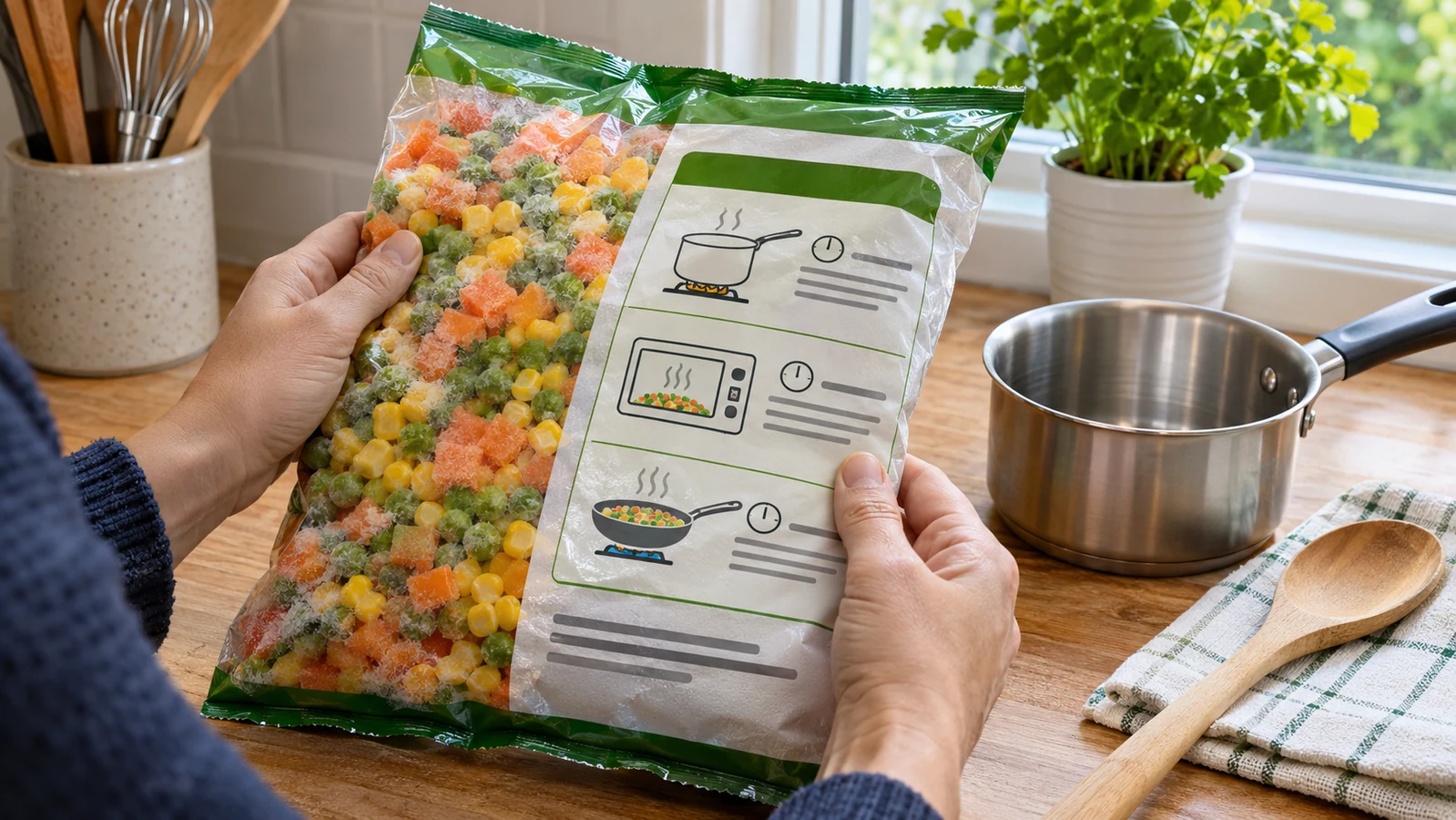
A convenient ingredient still needs a preparation check
Frozen peas, sweetcorn, and vegetable mixes can make everyday meals easier, but convenience does not establish that a product is ready to eat. Before tipping a handful into a salad or blender, look for the preparation directions. Health Canada says most packaged frozen vegetables need cooking according to their package instructions before they are eaten or added to another dish. The useful distinction is between an ingredient that has been kept frozen and one that the manufacturer identifies as ready for the intended use. This article focuses on that decision, not on diagnosing foodborne illness, choosing a special diet, or judging the nutritional value of every frozen product.
Start with the actual package
Begin with the bag in your hand rather than a remembered instruction from a different brand. Find the product name, preparation panel, storage information, and any statement about cooking before consumption. An editorial example is to turn the bag over before planning the meal, while you still have time to choose a suitable preparation method. Do not assume that two similar-looking vegetable mixes carry identical directions. A familiar picture on the front may help identify the contents, but it does not tell you every step required before serving. Reading the whole relevant panel is more useful than looking for one reassuring word in isolation.
Thawing is not the same as cooking
Health Canada specifically warns against simply thawing packaged frozen vegetables and eating them when cooking is required. Becoming softer or losing ice crystals is not the same preparation step as following the cooking directions. An editorial kitchen example is to avoid treating a bowl left to defrost as if it were a finished salad ingredient. If you discover that the recipe omitted a required cooking step, pause and change the plan rather than deciding the vegetables must be ready because they are no longer hard. This distinction does not mean every frozen food has the same instructions; it means the particular product’s directions still matter.
A cold recipe can still need a cooking step
The Food Standards Agency addresses cold dishes directly: check the packaging before using frozen vegetables in salads or smoothies, and cook them first if the directions require it. Food Standards Scotland likewise advises cooking frozen vegetables before cold use, followed by appropriate cooling and refrigeration. Serving temperature and preparation are therefore different questions. A dish intended to be eaten cold is not permission to skip a cooking requirement. This article is not a complete cooling or storage timetable for every finished recipe. Follow relevant local food-safety guidance as well as the product directions when preparing food ahead of time.
Do not let a picture replace directions
A photograph of a colourful bowl can be appealing without explaining how its ingredients were prepared. As an editorial reading habit, treat the picture as a serving illustration and look separately for the written directions. The same applies to a social-media recipe that shows vegetables moving straight from a bag to a blender: the video may not display every step, or may use a different product. You do not need to infer safety from editing choices. Compare what the recipe asks you to do with what your own package says before deciding whether the recipe fits the ingredient you actually bought.
Match the method to the product
Cooking instructions may describe a particular appliance, quantity, or sequence. Follow the method provided for that product rather than borrowing the shortest time you remember from another packet. As a practical example, read whether the directions specify cooking from frozen or another starting condition, and whether they include stirring or standing steps. The Food Standards Agency’s general cooking guidance emphasizes following packet instructions carefully. This article does not supply an alternative microwave power, saucepan time, or air-fryer conversion. If the available method does not match your equipment, ask the manufacturer rather than improvising a safety claim from a texture preference.
Keep the instructions with the ingredient
Keep the information available until you have finished preparing the food. An editorial option, if you transfer part of a bag into another suitable container, is to retain the original package or a clear photograph of its preparation and identification details. A container labelled only peas may not tell the next person how the original product was intended to be prepared. This suggestion is about keeping instructions accessible; it does not certify a storage container or create a new storage life. Follow the package’s storage directions and avoid inventing a new expiry date simply because the contents have changed containers.
Plan the sequence before opening the bag
A little sequencing can prevent a rushed choice. Before opening the freezer, decide whether the dish is being cooked now or assembled for later, and locate the required preparation directions. Set out the equipment needed for the stated method. If you want a cold meal but do not have time for its required cooking and cooling steps, choose another suitable ingredient instead of dropping those steps. These are editorial planning examples, not a promise that organisation alone prevents contamination. A checklist is useful when it helps you follow a real instruction, not when it becomes a substitute for one.
Clean equipment still matters
Preparation instructions sit alongside ordinary kitchen hygiene, not above it. Health Canada advises handwashing, clean equipment, and separation from raw meat, poultry, seafood, and their juices when handling produce. For a practical example, choose a clean bowl and utensil rather than reusing equipment that has just held raw meat. A frozen vegetable bag does not make other surfaces clean. This article does not offer a disinfectant recipe, recommend mixing cleaning chemicals, or claim that a quick rinse replaces a required cooking step. Keep the task simple: use appropriate clean equipment and follow the product’s preparation directions.
Shopping and storage are separate questions
Shopping, storage, and cooking answer different questions. Health Canada recommends buying cold or frozen foods near the end of a shopping trip and returning products that need to stay frozen to the freezer at home. Those steps help maintain intended storage conditions, but they do not change a cook-before-eating instruction into a ready-to-eat statement. An editorial example is to check storage directions when unpacking groceries and preparation directions when making the meal. Do not use this article to judge whether food affected by a power cut, a damaged package, or an unknown temperature history can be rescued by cooking.
Ask a precise question when directions are unclear
If instructions are missing or unclear, a useful manufacturer question identifies the exact product and intended use. You might ask whether that particular vegetable mix must be cooked before a cold salad, and which preparation directions apply to your appliance. Keep the product name and identification details available so the answer is about the right item. A generic internet answer about frozen vegetables cannot resolve every product-specific uncertainty. This article does not suggest tasting an uncooked sample to decide. If you cannot establish appropriate directions, choose a different ingredient with clear instructions rather than guessing from another product’s packaging.
Avoid inventing a universal cooking chart
There is no universal time in this article for every bag, portion, or cooking method. That omission is deliberate: the central habit is to follow the relevant instructions, not to replace them with a memorable number. Food Standards Scotland reminds readers to check that food is heated throughout, including the middle. A practical reading question is whether you have followed the whole stated process, rather than stopping as soon as one corner feels warm. This is general food-handling education, not certification of a particular meal, appliance, or thermometer, and it does not guarantee that any method can correct improper earlier handling.
Keep a recall notice separate from a recipe
A cooking instruction is not the same as a product-recall notice. FDA advises following product-specific recall instructions. If an item is recalled, follow the specific official notice rather than treating routine cooking advice as a way to make it acceptable. As an editorial organisational habit, keeping the package can also make it easier to compare a product name or identification code with a notice. This article does not announce a current recall or claim that a named brand is affected. Its focus is everyday preparation. For an actual recall question, use the relevant authority’s current notice and the exact product details, not a photograph that merely resembles your bag.
Nutrition goals do not cancel preparation instructions
Choosing vegetables for a meal and preparing them appropriately are compatible goals. You do not need to turn this food-safety reminder into a claim that all frozen vegetables are unhealthy or that fresh produce is automatically safer in every situation. The question here is what the selected product requires before eating. An editorial example is to keep using a convenient vegetable mix while allowing time for its stated method. If you have a medically prescribed eating plan, allergies, or individual nutrition questions, ask a qualified professional. This general article does not select portions, interpret blood tests, or recommend vegetables as a treatment.
Optional books are not food-safety authorities
The three optional commercial links accompanying this page concern broader weight-management, blood-pressure, and cholesterol reading. They are not food-safety manuals, evidence for these preparation instructions, or a reason to buy a program before cooking vegetables correctly. No purchase is needed to read the free government sources below. The cited authorities do not endorse those commercial programs through this article. Use the package and appropriate public food-safety guidance for the preparation question; discuss personal health decisions with a qualified professional. The links are separate, optional reading for readers already exploring those wider topics, not recommendations to start or change treatment.
The useful habit and general-information disclaimer
The practical summary is short: check the actual package, distinguish thawing from cooking, and do not assume a cold recipe removes a preparation requirement. Keep directions available, use clean equipment, and seek a product-specific answer when wording is unclear. This article draws on Canadian and UK public guidance, not a claim that food regulations or products are identical everywhere. It is general educational information, not personalized medical advice, diagnosis, treatment, or a guarantee of food safety. AI assisted with drafting, organisation, and the fictional image. Mr.Hotsia’s review credit covers sourcing and clarity only; no clinical review or medical qualifications are implied.
Sources and further reading
Medical information was checked against these public health sources on November 22, 2026.
- FDA — Food Recalls: follow product-specific recall instructions ↗
- Health Canada — Produce safety: packaged frozen vegetables and preparation ↗
- Food Standards Agency — Cooking your food: frozen vegetables and cold dishes ↗
- Food Standards Scotland — Cooking food: frozen vegetables and cooking instructions ↗
This article is general health education, not a diagnosis or personal medical advice. Do not change treatment or supplements based on this article. Discuss individual results with a qualified healthcare professional.