Heart & circulation · Swollen ankles and feet
Swollen Ankles and Feet: Common Causes, Useful Clues, and When to Seek Help
Ankle swelling can follow a long day on your feet, but it can also have medical causes. Learn what patterns may mean, what an evaluation can involve, and which symptoms need urgent attention.
Swelling is a sign, not a diagnosis
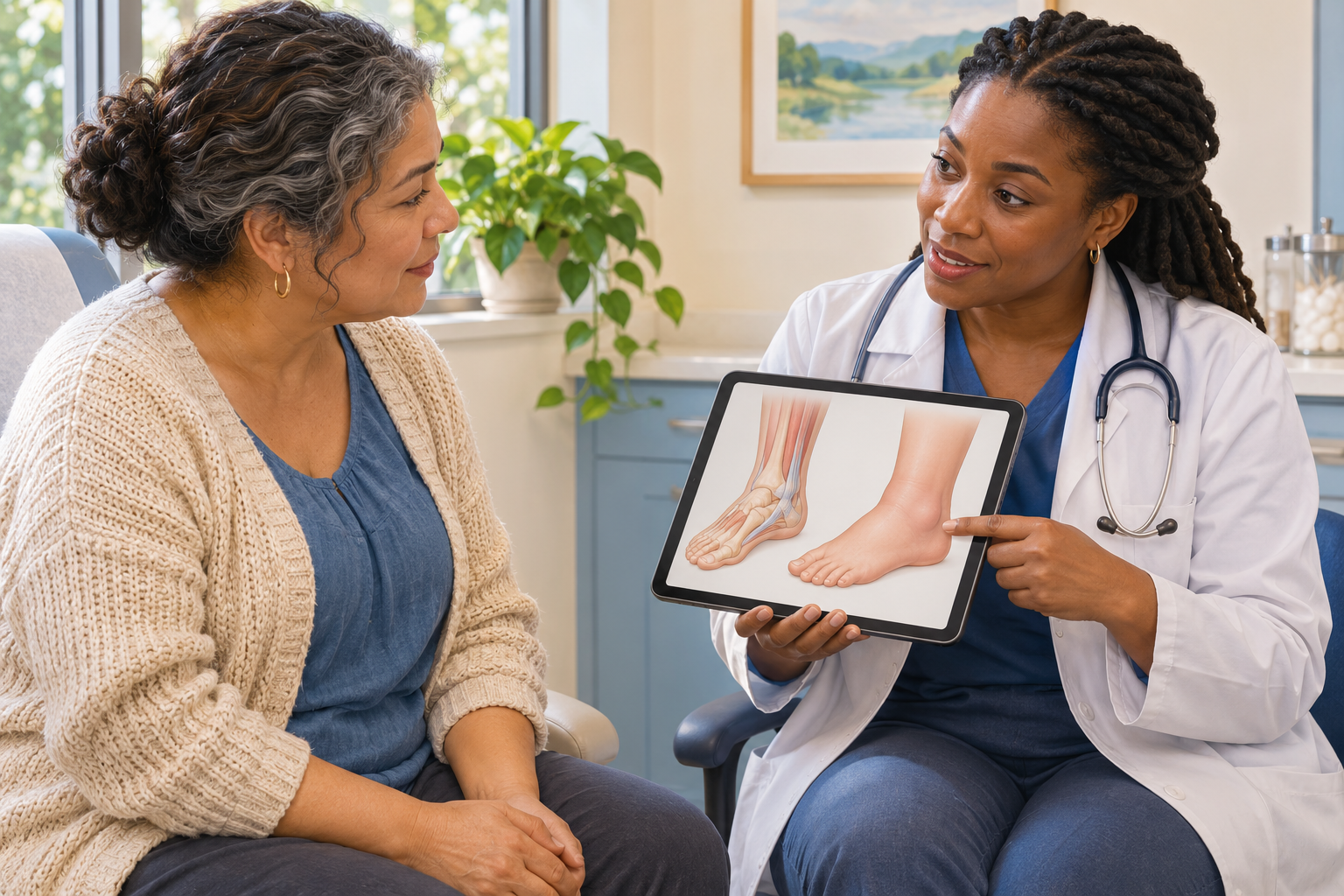
Puffy ankles at the end of a hot day can be temporary. The same change can also be a sign of an injury, a medicine effect, a vein problem, or a condition affecting the heart, kidneys, liver, or lymphatic system. Because the causes range from minor to urgent, swelling is best treated as a clue—not a diagnosis. This guide explains common patterns and what a clinician may ask about. It cannot determine why a particular person’s ankles or feet are swollen.
What edema means
Edema is the medical term for swelling caused by excess fluid in body tissues. In the lower legs, gravity can make fluid more noticeable around the ankles and feet, especially after staying in one position for a long time. Skin may look stretched or shiny, shoes may feel tighter, and pressing a swollen area may leave a temporary indentation. Not every cause produces the same appearance, and checking for a dent cannot identify the underlying problem. A symptom’s timing, location, associated changes, and personal health history all matter.
Everyday triggers are only one possibility
The NHS lists prolonged sitting or standing, pregnancy, varicose veins, some medicines, thyroid problems, injury, infection, and conditions affecting the heart, liver, or kidneys among possible causes of swollen ankles, feet, and legs. Salt intake, heat, or a long day upright may contribute for some people, but it is easy to over-attribute new swelling to lifestyle. A familiar pattern that settles may be less concerning than sudden, painful, or one-sided swelling—but only an appropriate assessment can sort out the cause when it is unclear.
Medicines can contribute
Some blood-pressure medicines, hormone treatments, antidepressants, steroids, and other drugs can be associated with swelling. A medicine may be one factor, but that does not make it safe to stop or change it. The timing of a new prescription or dose change is useful information to share with the prescriber or pharmacist. Bring a complete list of prescriptions, over-the-counter products, and supplements. A professional can review possible side effects alongside the reason each medicine was prescribed and decide whether any change is appropriate.
Veins, lymph, heart, kidneys, and liver may matter
Leg veins return blood toward the heart, and problems with that circulation can be associated with persistent swelling or visible varicose veins. The lymphatic system also helps move fluid; disruption after certain operations or because of other conditions can cause longer-lasting swelling. Heart, kidney, or liver conditions may affect fluid balance in different ways. These categories can overlap, and symptoms alone do not tell which system is involved. A commercial wellness program, a home test, or a search result cannot replace a medical assessment.
One leg or both: a clue, not a conclusion
Swelling on both sides can occur after prolonged sitting or with a range of health conditions. New swelling in only one leg—especially when it is painful, warm, red, or unexplained—deserves prompt advice because a blood clot is one possible cause. But neither one-sided nor two-sided swelling proves a clot or rules one out. Recent surgery, hospitalization, limited movement, a long journey, pregnancy or recent birth, a prior clot, cancer, and some hormone use can affect clot risk. Share relevant history when seeking help.
Pregnancy has its own warning signs
Some gradual swelling of the feet and ankles is common during pregnancy, particularly later in pregnancy or after standing. A sudden increase in swelling of the face, hands, or feet is different: NHS guidance says to contact a midwife, GP, or maternity unit immediately, especially with a severe headache, vision changes, pain below the ribs, vomiting, or feeling very unwell. These can be warning signs of pre-eclampsia. Pregnancy-related swelling should not be interpreted using general advice alone; contact the maternity team for guidance tailored to the pregnancy.
What an evaluation may involve
A clinician may ask when swelling began, whether one or both legs are involved, whether it changes during the day, and what makes it better or worse. They may ask about pain, skin color or temperature, breathlessness, recent travel or surgery, pregnancy, medical conditions, and medicines. Examination may include the legs and feet and, depending on the history, other parts of the body. MedlinePlus notes that tests can sometimes include blood or urine tests, an ECG, imaging, or an ultrasound of leg veins. Which tests are useful depends on the individual findings.
A short record can make a visit more useful
Before an appointment, note when the swelling started and whether it is improving, stable, or getting worse. Record whether one or both legs are affected, any pain or warmth, recent injuries, long periods of sitting, travel, medication changes, and other symptoms. If a clinician has already asked you to track weight or symptoms for a diagnosed condition, follow that care plan and report changes as instructed. Do not start a new daily weighing or fluid-tracking regimen as a substitute for an assessment, particularly if you have not been given a plan.
Low-risk comfort steps have limits
When swelling is mild, familiar, and not accompanied by concerning symptoms, general measures such as changing position, taking gentle movement breaks, elevating the legs when resting, and wearing comfortable footwear may help some people. The NHS suggests avoiding long periods in one position and raising the legs when possible. These are comfort measures, not proof that swelling is harmless. If symptoms are new, persistent, worsening, or unexplained, seek professional advice rather than relying on self-care. A person with a known heart or kidney condition should follow their own care team’s instructions.
Why not to self-treat with water pills or compression
Do not take someone else’s diuretic or start a ‘water pill’ to reduce swelling. Do not stop prescribed medicine, sharply restrict fluids, increase salt, or start compression stockings without asking a qualified professional who knows your history. MedlinePlus specifically advises against stopping medicines suspected of causing swelling without first speaking with a healthcare provider. Fluid and compression advice can differ by cause; a measure suitable for one person may be inappropriate for another. Avoid home remedies that promise to identify or remove the cause.
When a clot needs urgent assessment
A deep vein thrombosis (DVT) is a clot in a deep vein, usually in a leg. NHS guidance lists pain in one leg, swelling, skin color changes, and swollen veins among possible symptoms, while noting that a person may have only some of them. If you think you may have a DVT, seek urgent medical help rather than waiting for it to pass or attempting to massage it away. A clinician can decide whether testing is needed. This article cannot estimate an individual’s clot risk.
Emergency symptoms should not wait
Call your local emergency number for severe shortness of breath, chest pain or tightness, coughing blood, fainting, or sudden serious illness—particularly when leg swelling is also present. A clot can travel to the lungs and become life-threatening. The NHS and MedlinePlus both identify breathing difficulty or chest pain with leg swelling as reasons for emergency help. Do not drive yourself if you may be having an emergency. Use your local emergency service; emergency numbers and care pathways differ by country.
Questions to bring to an appointment
Questions can make the next step clearer: ‘What possible causes fit the timing and pattern?’ ‘Could any of my medicines be contributing, and should I continue them as prescribed while we review?’ ‘Which symptoms mean I should seek urgent help?’ ‘Do I need a test, and what will it help determine?’ If you are pregnant, ask your maternity team directly about any sudden or marked change. If you already have heart failure or kidney disease, ask what changes in swelling, breathing, or weight your own care plan says to report and how quickly.
A note about commercial wellness resources
Blue Heron Books offers an existing Blood Pressure Program page as an optional commercial wellness resource. It is not a medical source, does not evaluate ankle swelling, and is not presented as a way to diagnose or treat edema, heart failure, a blood clot, kidney disease, or any other condition. The health statements in this article come from the public medical sources listed below. The three links that appear in the article lead only to that existing program page; they are not medical recommendations.
The practical takeaway
Swollen ankles and feet have many possible explanations. A long day sitting or standing may be relevant, but so may medicines, veins, pregnancy, infection, a clot, or a heart, kidney, or liver condition. Sudden or unexplained one-sided swelling, redness, warmth, pain, worsening symptoms, or swelling with other body changes deserves prompt advice; breathing difficulty or chest pain calls for emergency help. Do not change prescribed medicines or begin treatment based on an article. This is general health education, not diagnosis or personal medical advice. Mr.Hotsia’s editorial contribution is limited to sourcing and clarity; he is not a healthcare professional, and this article has not undergone clinical review.
Sources and further reading
Medical information was checked against these public health sources on November 5, 2026.
This article is general health education, not a diagnosis or personal medical advice. Do not change treatment or supplements based on this article. Discuss individual results with a qualified healthcare professional.