Digestive wellness · Toilet habits
An Unhurried Toilet Routine: Make Space Without Sitting and Straining
How to distinguish giving yourself time from staying on the toilet, notice practical barriers, and prepare useful questions without diagnosing hemorrhoids yourself.
AI assisted research, drafting and creation of the illustrative image. Sources were checked for this article. This is general education, not a clinician-reviewed treatment plan.
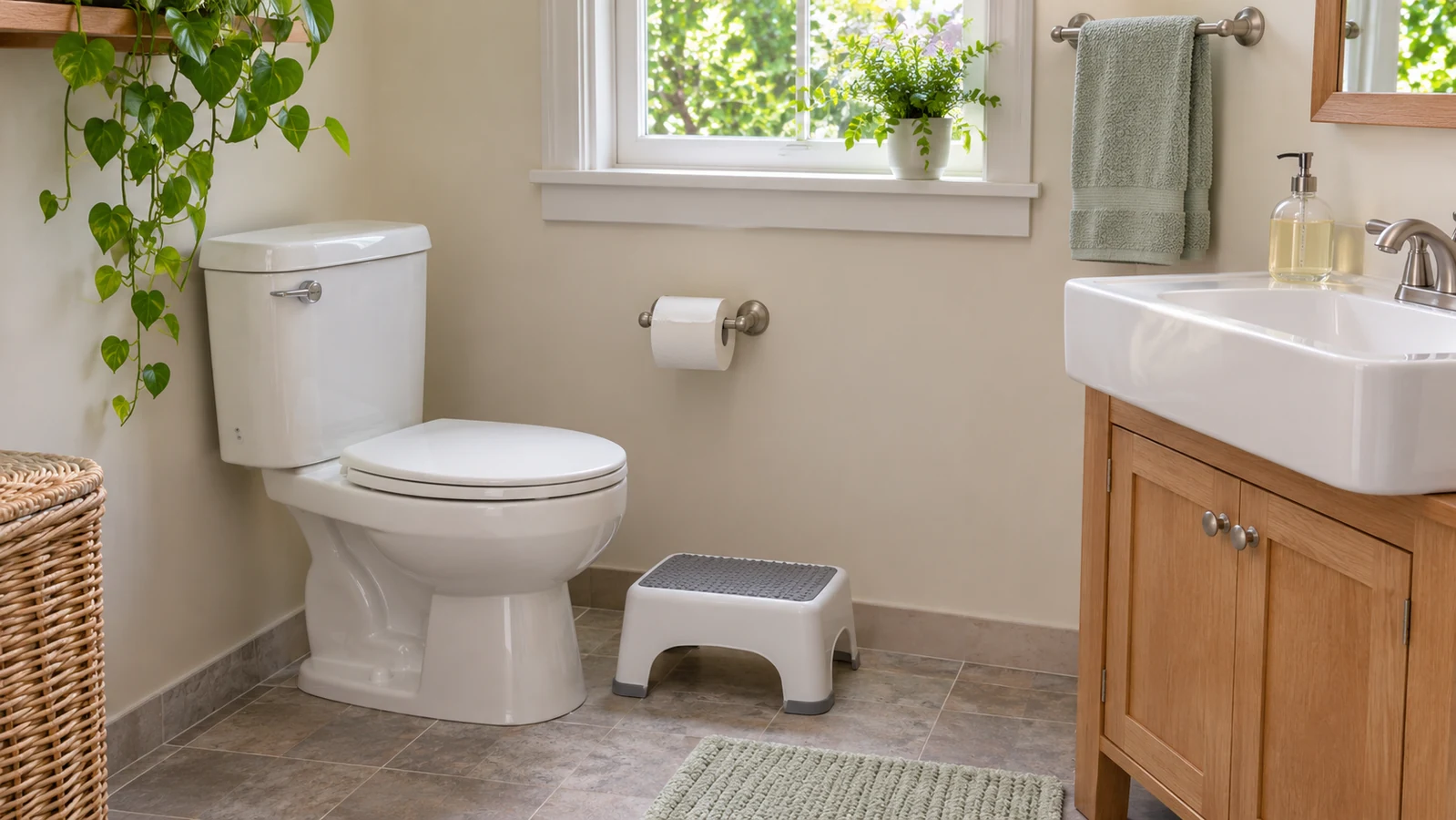
Unhurried does not mean staying seated
Advice to give yourself time in the bathroom can sound confusing when other guidance says not to sit on the toilet for long periods. These are not opposite instructions. You can make room in your day for a bowel movement without turning the toilet into a waiting room or a place to force a result. This article explains that distinction for adults interested in bowel habits and hemorrhoid-related education. It does not determine why a bowel movement is difficult, diagnose a lump or bleeding, or provide a treatment plan. The aim is a less pressured routine, not a promise that changing habits will cure a condition.
Why toilet habits belong in the conversation
NIDDK includes straining and prolonged toilet sitting among factors associated with hemorrhoids. Its advice includes avoiding both. That does not mean that one long bathroom visit proves you have caused an illness, or that every anal symptom is a hemorrhoid. Habit guidance is best understood as something to consider within a broader health conversation. It cannot identify what is happening inside the body. Someone with an established care plan should follow that plan rather than replace it with a general checklist. Someone with unexplained symptoms needs appropriate assessment, not reassurance based on how carefully they use the toilet.
Respond to an urge rather than a deadline
NHS guidance advises not delaying when you feel an urge to pass stool. In everyday life, the obstacle may be a meeting, a journey, an uncomfortable shared bathroom, or reluctance to leave a task. An original planning example is to notice where those obstacles occur and identify the nearest practical alternative before the next busy day. This is different from setting an alarm and demanding that your body perform at that exact moment. A routine can create an opportunity; it cannot guarantee a bowel movement on command. Avoid judging success against a colleague, partner or online schedule.
Protect an opportunity, not a performance target
The NHS also recommends a regular time and place with enough time available. NIDDK describes bowel training as something a clinician may suggest, including opportunities after breakfast. The useful principle here is permission to respond, not a universal timetable. For example, a person might avoid filling every moment before leaving home with chores, while still accepting that no urge may arrive then. A shift worker may need to discuss a different pattern. If a clinician has recommended a specific routine, ask how to adapt it on workdays, travel days or days when the usual opportunity is unavailable.
Make the bathroom usable before you sit
Look at the practical setup before assuming that the problem is a lack of willpower. Is toilet paper reachable? Can the door close for privacy? Is the route clear enough to use comfortably? These are environmental questions, not a medical assessment. An illustrative change might be moving supplies within reach or arranging bathroom access before starting a long journey. If you need help transferring, walking or managing clothing, use your established assistance arrangements. Do not improvise a new transfer technique from a bathroom photograph. The accompanying image is a fictional setting, not a demonstration of how any particular person should move.
Consider comfort without prescribing a posture
NHS guidance suggests a low footstool as an option that may make passing stool easier, with knees above the hips if possible. NIDDK also mentions foot support for comfort. An option is not a requirement, and a product label does not establish suitability. A person who has difficulty balancing or getting on and off the toilet may need individual advice before adding equipment. Keep any item from becoming an obstacle in the walking route. Do not stack unstable household objects or force your legs into an uncomfortable position. Comfort, stability and access matter more than copying an angle from an illustration.
Remove distractions as a practical experiment
Leaving a phone or magazine outside can be a practical way to separate a toilet visit from entertainment. This is an editorial suggestion for noticing habits, not evidence that a particular app causes hemorrhoids. Ask a simpler question: am I still here because my body is ready, or because I started reading? You do not need a stopwatch or an anxiety-provoking countdown. Public guidance here says to avoid long periods, rather than establishing one exact safe duration for every adult. If timing rules make you more tense, discuss a workable approach with a healthcare professional instead of adding more rules.
Do not turn an unsuccessful visit into a struggle
An unsuccessful attempt does not create an obligation to push harder. Avoid prolonged forcing or remaining seated simply to meet a target. If this happens repeatedly, bring it to a healthcare professional rather than building a more elaborate bathroom ritual. Difficulty can have different explanations, and a general article cannot distinguish them. An original way to describe the experience is: “I often feel an urge but cannot pass stool comfortably, and I end up trying for longer than I intended.” That statement communicates a problem without assigning a cause, choosing a medicine, or suggesting that persistence alone will solve it.
Keep food, fluids and activity in perspective
A toilet routine is only one part of everyday bowel health. Public guidance discusses fiber-containing foods, fluids and regular activity alongside bathroom habits. NHS advice is to increase fiber gradually; NIDDK advises discussing fluid needs in the context of hemorrhoid care. Avoid interpreting this as an instruction to suddenly eat large amounts of fiber or drink beyond a prescribed fluid allowance. People with dietary restrictions or existing medical plans should ask how general advice fits their circumstances. This article does not set a fluid target, prescribe supplements, or replace individualized nutrition guidance. Small feasible changes can be discussed without turning meals into another performance test.
Write down observations instead of conclusions
If you arrange an appointment, a short factual note may be useful. NIDDK explains that clinicians ask about bowel frequency, stool appearance, symptom duration, routines and medicines. An illustrative entry could record the date, whether passing stool felt difficult, and a practical interruption such as postponing an urge at work. Use ordinary language and mention a change from your usual pattern. You do not need to assign a diagnosis or collect an elaborate daily score. Keep the note private and bring it to the appointment. Do not delay getting advice because a diary is incomplete or because you have not recorded a perfect week.
Prepare a specific conversation about access
Access problems are easier to address when described specifically. For example: “I cannot leave the counter until someone covers me” identifies a practical barrier more clearly than “my routine is bad.” Depending on your setting, you might ask about break coverage, an accessible bathroom, or an agreed way to request assistance. These are communication examples, not legal advice or a promise about workplace accommodations. You can explain the practical need without sharing every medical detail. If you support another adult, ask what help they want and preserve privacy rather than monitoring bathroom visits or demanding reports.
Ask for advice without choosing your own treatment
If changes are not helping, a pharmacist or clinician can advise on the next step. NHS guidance points people toward professional advice when constipation persists, and says to speak with a GP before stopping a prescribed medicine. Bring a list of medicines and supplements, including anything you have already tried. Useful questions are: “Could any of these affect my bowel habits?”, “What should I do if this keeps happening?”, and “When should I contact you again?” This article intentionally does not select a laxative, cream or other treatment. Copying a friend’s regimen can miss differences in health needs and in the actual cause of symptoms.
Do not label bleeding as a routine problem
Bleeding should not be written off as the price of straining or proof of hemorrhoids. NIDDK advises seeking a doctor’s help for rectal bleeding and explains that anal symptoms can have other causes. If bleeding occurs, seek medical advice rather than using a habit checklist to decide what it means. Persistent or changing bowel problems also deserve a conversation with a healthcare professional. This section is a safety boundary, not a diagnostic guide. Do not wait for an optional book, a complete diary or a successful new routine before contacting a service about concerning symptoms.
Separate optional reading from healthcare decisions
Hemorrhoids Healing Protocol is the commercial guide associated with this article, not a source for its medical statements. The optional program links allow readers to review the existing product page, author information and seller terms. They do not indicate that the guide has been clinically validated, that it can diagnose symptoms, or that buying it is necessary to use the public information discussed here. Assess any health claim independently and keep healthcare decisions with qualified professionals. A purchase is not the next clinical step for unexplained symptoms, and a sales guarantee is not evidence of a health outcome.
Build a routine that leaves room for real life
A workable routine makes room for bodily needs without requiring a result at every attempt. Notice an urge, identify access barriers, keep the environment comfortable, and avoid turning the toilet into a place for prolonged sitting or forcing. Choose a manageable adjustment rather than changing the whole day at once. If difficulty continues, describe what happens and ask for help. The purpose is not to earn a perfect record or prove that you followed every suggestion. It is to create a practical routine while recognizing where general education ends and an individual healthcare conversation needs to begin.
Sources and further reading
Medical information was checked against these public health sources on November 26, 2026.
A practical guide for readers interested in Digestive wellnessA guide to Digestive wellness

Hemorrhoids Healing Protocol
By Scott Davis
A practical guide to diet, movement and daily habits intended to support comfort and regularity.
- Topic: Digestive wellness
- Author: Scott Davis
- Format: digital guide
 Trusted & secure checkout
This article contains affiliate links. We may earn a commission if you purchase through them, at no extra cost to you.
This article is general health education, not a diagnosis or personal medical advice. Do not change treatment or supplements based on this article. Discuss individual results with a qualified healthcare professional.