Digestive health · Everyday hygiene
Gentle Bathroom Hygiene With Hemorrhoid Concerns: Clean Without Scrubbing
Understand the difference between gentle external cleaning and repeated rubbing, why wipes and fragrances need caution, and when a hygiene problem belongs in a healthcare conversation rather than a shopping basket.
AI assisted research, drafting and creation of the illustration. Listed public sources were checked. This general-information article has not received clinical review; Mr.Hotsia’s review is limited to sourcing and clarity.
Aim for gentle cleaning, not a stronger routine
When the skin around the anus feels uncomfortable, it can be tempting to clean more often, wipe harder, or buy a stronger product. More effort is not always gentler care. Public guidance on hemorrhoids and anal skin irritation repeatedly distinguishes keeping the area clean from rubbing or scrubbing it. This article explains that distinction for adults and offers practical ways to organize ordinary bathroom supplies. It does not identify the cause of itching, bleeding or pain, prescribe a treatment, or give instructions for internal cleaning. If you have a specific care plan, use that plan and ask how general hygiene guidance fits it.
Do not assume that irritation proves hemorrhoids
Hemorrhoid concerns are not the same as a confirmed diagnosis. NIDDK explains that not every anal symptom is caused by a hemorrhoid, and that rectal bleeding can have other explanations. A change in toilet paper or a different washing routine cannot establish what is happening. Avoid treating a response to a product as a diagnostic test: feeling temporarily better does not prove the cause, and continued discomfort does not prove that you failed to clean properly. New or unexplained symptoms should be described to a healthcare professional rather than assigned a label from a general article.
Recognize the over-cleaning trap
The American Society of Colon and Rectal Surgeons, or ASCRS, warns that excessive cleaning can remove natural protective barriers and worsen irritation. The British Association of Dermatologists also describes intensive or over-frequent cleaning as a possible contributor to anal skin irritation. It means the goal is appropriate, gentle hygiene rather than repeated inspection and friction. An original reflection question is: “Am I removing ordinary residue, or continuing because I feel I must keep checking?” If persistent worry or discomfort is driving an elaborate ritual, bring that difficulty to a professional conversation.
Separate washing from scrubbing
Cambridge University Hospitals recommends gentle cleaning and, when possible, washing the external area with warm water after a bowel movement. Its leaflet advises against adding disinfectants or antiseptics to the water. Think of washing as a gentle external task, not an attempt to scrub the skin until it feels stripped. This article does not recommend inserting a nozzle, washing inside the rectum, or improvising a device. If your bathroom setup makes ordinary hygiene difficult, ask a nurse or other appropriate professional about a practical approach rather than copying a procedure from a photograph or an online demonstration.
Pat dry instead of rubbing
Drying is part of the routine, not a reason to start rubbing again. The NHS hemorrhoid page advises keeping the area clean and dry and patting rather than rubbing. Its itchy-bottom guidance gives the same distinction after washing. Patting means gentle contact rather than repeated back-and-forth friction. Do not use pain, stinging or a harsh sensation as evidence that the task has worked. If a towel or another item is uncomfortable, describe the problem and ask about a suitable alternative. This article does not set a universal number of wipes, drying time, or amount of pressure for every person.
Choose paper for the task, not a promise
Cambridge University Hospitals suggests soft or moist toilet paper used gently and discarding each piece after use. The relevant distinction is the material and how it is handled, not a claim that an expensive brand treats hemorrhoids. An original shopping check is to notice fragrance, texture, and what the package actually says rather than choosing the strongest-sounding promise. The British Association of Dermatologists identifies fragrance in toilet paper as one possible contact-allergy concern. That does not diagnose an allergy in you. If you suspect a product contributes to symptoms, keep its details for a pharmacist or clinician rather than conducting repeated challenges on irritated skin.
Read wet-wipe advice in context
Wet-wipe advice is not identical across patient resources. ASCRS mentions light dabbing with baby wipes or a wet washcloth, while the British Association of Dermatologists advises avoiding moist wipes in its pruritus ani leaflet. The NHS cautions against excessive wiping or rubbing with wet wipes. These differences are a reason to avoid presenting a single packet as universally suitable. Fragrance, other ingredients, existing skin problems and the way a product is used can matter. Do not assume that a baby label guarantees suitability for an adult’s irritated skin. Ask a professional if you need help choosing an approach, especially when symptoms continue.
Do not turn skin care into disinfection
Skin care is different from disinfecting a bathroom surface. The British Association of Dermatologists lists soaps, perfumes and antiseptics among products that can irritate this sensitive area. NHS advice also discourages scented soaps, bath products, perfumes and powders near the anus. Do not interpret a stronger smell, a tingling sensation, or an antibacterial sales claim as proof of better personal care. Keep household cleaning chemicals out of this routine. This is not a recipe for diluting a disinfectant or selecting a skin antiseptic; the safer educational point is not to improvise chemical treatments for a problem that has not been assessed.
Keep creams and medicines in a separate conversation
A cleansing product, a prescribed medicine and a protective skin preparation are not interchangeable. Hospital and professional-society leaflets discuss treatments in the context of individual care, but this article intentionally does not select a cream, steroid, anaesthetic, powder or dosing schedule. If you already use something, bring its name and instructions to the pharmacist or clinician and ask what it is intended to do. Do not add several products because they all mention comfort. Nor should you stop prescribed treatment simply because a general hygiene article describes a different routine. Clarify the plan with the professional responsible for your care.
Make the bathroom easier to use
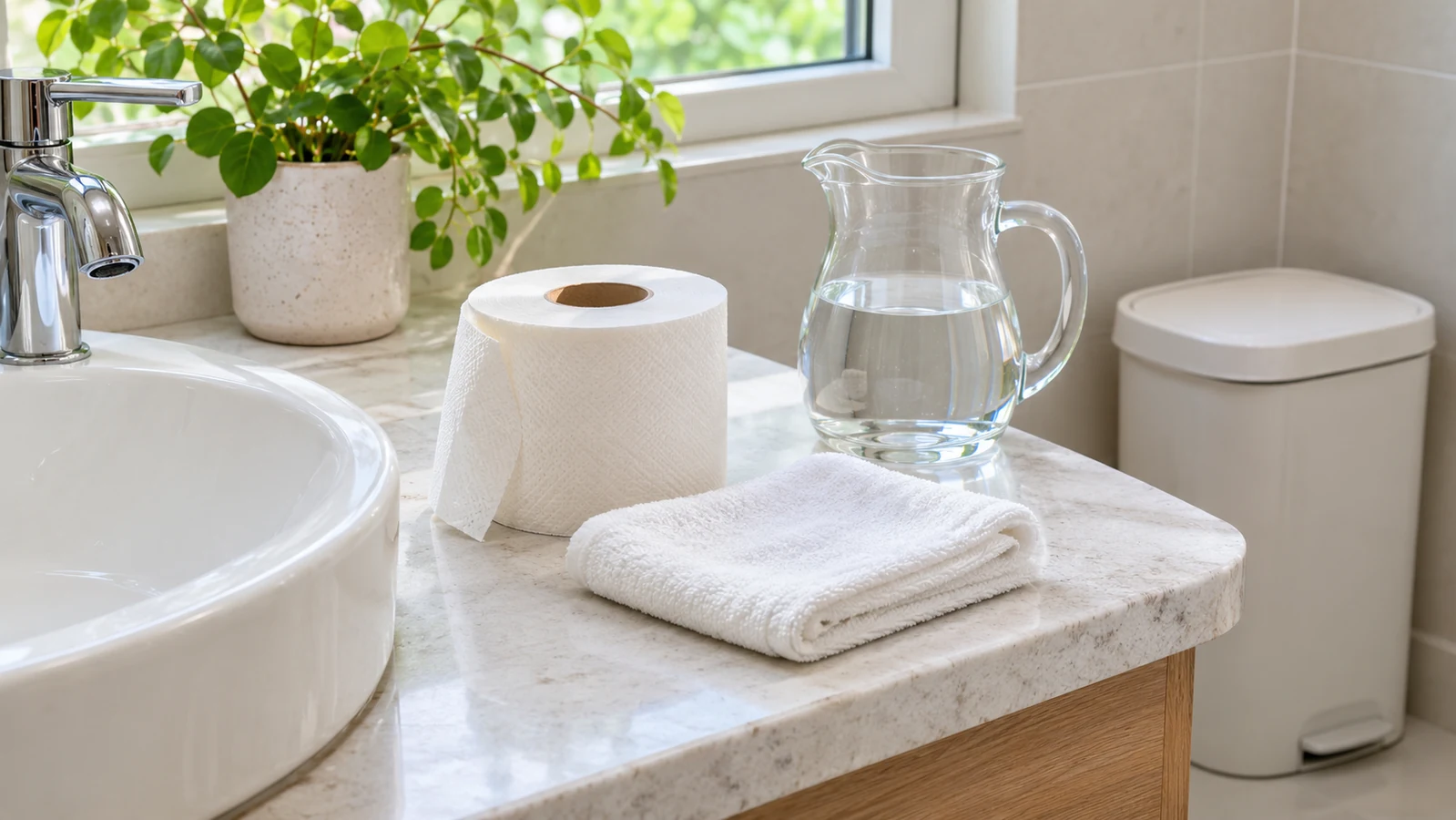
A small practical setup can reduce the urge to improvise. Original examples include placing ordinary supplies within easy reach, keeping a suitable drying item available, and checking that you can close the door for privacy. These are organizational suggestions, not a clinical equipment prescription or a transfer demonstration. If reaching, balancing or managing clothing is difficult, use established assistance arrangements and seek appropriate advice about access. Do not introduce an unstable stool or an awkward reaching position just to copy a bathroom image. The accompanying illustration shows fictional supplies, not an assessed setup for a particular person.
Plan modestly for time away from home
For work or a journey, think about the facilities you will actually have rather than packing an elaborate emergency treatment kit. An editorial example is to identify an accessible bathroom and carry a small amount of familiar, appropriate supplies. If a product has been advised for you, keep its label or instructions available instead of transferring it to an unidentified container. Avoid trying several new fragranced products for the first time simply because travel packaging is convenient. This is planning advice, not a guarantee that a trip will be symptom-free or an instruction to postpone care until you return home.
Ask for help with repeated soiling or difficult access
Repeated soiling, frequent bowel movements or leakage can make skin care harder and deserve practical help rather than blame. Cambridge University Hospitals describes these as situations in which soreness can occur and advises talking with a nurse or doctor, especially if skin is broken. The answer is not necessarily more vigorous wiping. Ask about the underlying difficulty and an appropriate care plan. If you support another adult, ask permission before assisting and preserve privacy. Do not inspect, photograph or monitor the area as part of a household cleanliness test. A person’s difficulty managing hygiene is not evidence of laziness or a moral failing.
Prepare a factual description for an appointment
A factual description can make an appointment more useful. Original examples include noting when discomfort started, whether there has been bleeding, which products touch the area, and whether cleaning itself has become uncomfortable. Bring product packaging or a written ingredient list if that helps explain what you have used; you do not need to diagnose an allergy or a skin condition first. NHS guidance advises seeking help when itching persists, and NIDDK advises a doctor’s assessment for rectal bleeding. Do not wait to assemble a perfect diary or complete a new hygiene experiment before contacting a professional about concerning symptoms.
Keep the optional commercial guide separate
Hemorrhoids Healing Protocol by Scott Davis is the optional commercial guide associated with this article. Its listing and purchase links are separate from the medical sources, and the title is not evidence that the guide heals hemorrhoids. This article does not validate the programme as treatment, promise a cure, or suggest that a purchase replaces an examination. Review any health claim independently and keep individual care decisions with qualified professionals. A refund policy describes a sales term, not a clinical outcome. You do not need to buy a guide to use the public patient information cited here or to seek appropriate healthcare.
Know when the checklist has reached its limit
The useful takeaway is not a longer list of bathroom rules. It is to distinguish gentle external cleaning from repeated friction, avoid improvising stronger products, and recognize when a difficulty needs professional advice. A hygiene routine cannot explain unexplained bleeding, diagnose a lump or resolve every cause of itching. If symptoms are persistent, changing or worsening, contact an appropriate healthcare service. If bleeding is heavy or you feel seriously unwell, seek urgent local medical help rather than relying on this article. Keep any individual instructions you have received central, and use general education to prepare clearer questions, not to replace care.
Sources and further reading
Medical information was checked against these public health sources on November 27, 2026.
A practical guide for readers interested in Digestive wellnessA guide to Digestive wellness

Hemorrhoids Healing Protocol
By Scott Davis
A practical guide to diet, movement and daily habits intended to support comfort and regularity.
- Topic: Digestive wellness
- Author: Scott Davis
- Format: digital guide
 Trusted & secure checkout
This article contains affiliate links. We may earn a commission if you purchase through them, at no extra cost to you.
This article is general health education, not a diagnosis or personal medical advice. Do not change treatment or supplements based on this article. Discuss individual results with a qualified healthcare professional.