Nutrition literacy · Cholesterol
Dietary Cholesterol and Saturated Fat: Read Both Label Lines
A cholesterol number does not describe a food’s saturated fat. Learn why these are separate entries, how their units differ, and what a front-of-package claim leaves unanswered.
AI assisted research, drafting and creation of the illustration. Listed public sources were checked. No clinical review was performed; Mr.Hotsia’s editorial role concerns sourcing and clarity, not medical qualifications or endorsement.
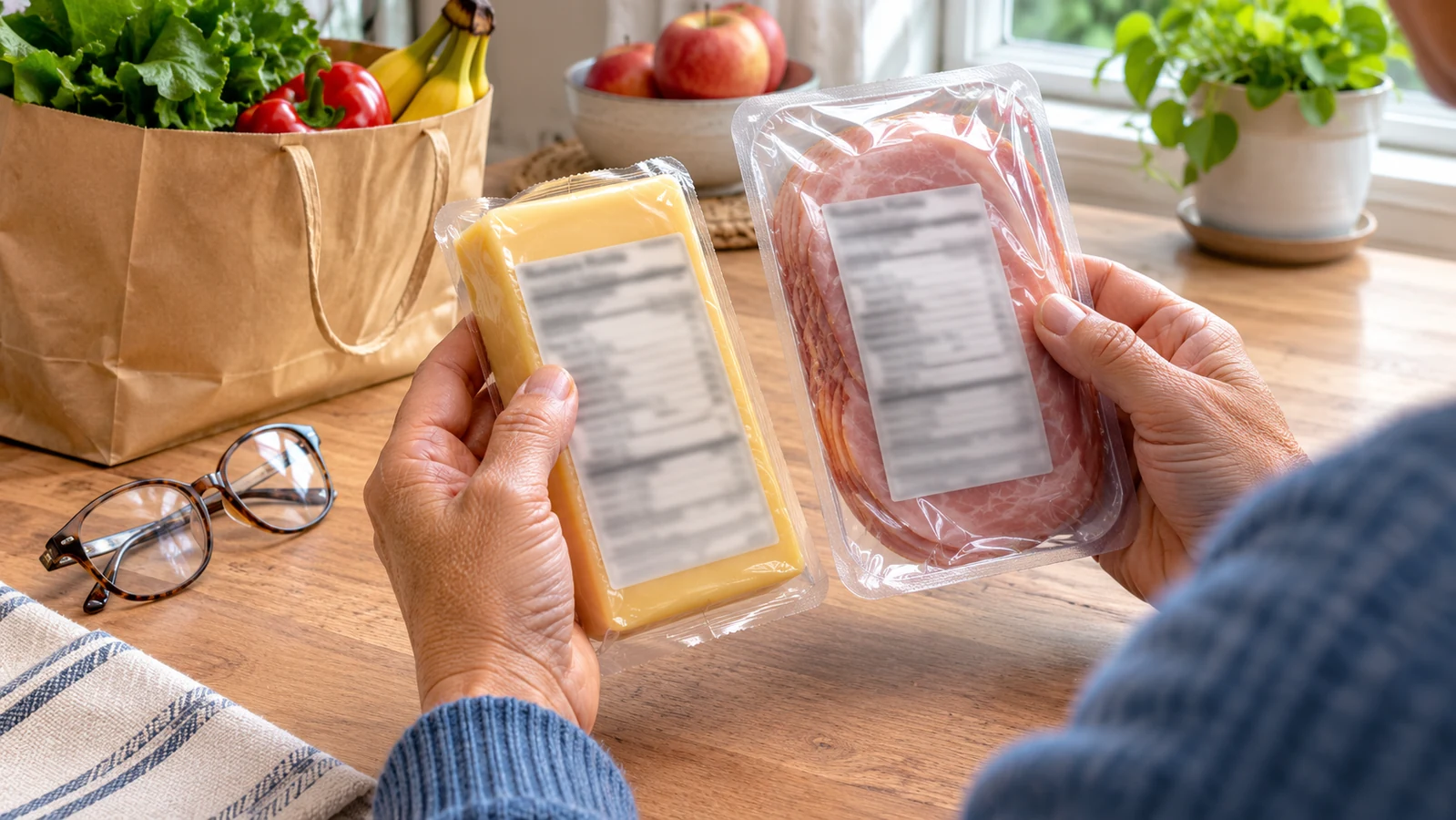
One familiar word can hide two questions
A package highlights a cholesterol claim, so a shopper assumes it must also be low in saturated fat. That conclusion answers a question the claim did not address. Dietary cholesterol and saturated fat are different things, and the U.S. Nutrition Facts panel gives them separate entries. Reading both can make a comparison more useful without turning shopping into a medical test. This article explains that distinction for adults using packaged-food information. It does not prescribe a diet, interpret a blood test, or decide which food fits an individual treatment plan. The examples are fictional teaching exercises, not tested products.
What dietary cholesterol means
The FDA describes cholesterol as a waxy, fat-like substance that the body makes, mainly in the liver. Cholesterol consumed in food is called dietary cholesterol. Its educational resource lists animal foods as the sources, including egg yolks, dairy products, meat, poultry, and shellfish. The term on a food panel therefore concerns cholesterol in that food, not a measurement taken from the person reading it. Knowing this definition does not require avoiding every food on the list or treating one ingredient as a diagnosis. A vocabulary distinction is a starting point, not an individualized menu.
What the saturated-fat line describes
Saturated fat is a type of dietary fat, rather than another name for cholesterol. The FDA’s saturated-fat resource explains its place on a nutrition panel, while the American Heart Association lists sources in both animal foods and tropical plant fats. The AHA also explains that eating too much saturated fat can raise LDL cholesterol in blood. That connection helps explain why saturated fat appears in heart-health discussions, but a connection does not make two substances identical. This article gives no prediction about how a particular meal will change a reader’s LDL or other laboratory result.
Why a plant ingredient does not settle both questions
A plant-derived ingredient can contain saturated fat even though dietary cholesterol comes from animal foods. The AHA includes coconut and palm among saturated-fat sources. That is why a cholesterol statement cannot, by itself, establish a low saturated-fat amount. An original shopping example is noticing a plant-based description on a package and then checking the saturated-fat entry rather than ending the comparison at the front. This is not a judgment about a cuisine or a ban on a particular ingredient. It is a reason to ask which nutrient the information actually describes.
Read the nutrient name before comparing numbers
On the U.S. panel, cholesterol is expressed in milligrams, written mg, while saturated fat is expressed in grams, written g. Read the nutrient name and the unit together. An original example is seeing 20 mg beside cholesterol and 2 g beside saturated fat: those are different substances, so comparing the bare numbers twenty and two gives no useful ranking of their importance. Converting units would not make them the same nutrient either. Keep each figure attached to its own label line rather than combining the two into an invented fat or cholesterol score.
Start with the amount the label describes
The FDA explains that nutrition information is usually given for one serving, although some containers also show information for the whole package. It also makes clear that a serving size is not a recommendation of how much to eat. Before comparing either nutrient, check what amount of food the number covers. An original reading habit is to identify the serving description and its metric amount on both products first. If the amounts differ, do not assume the lower printed number describes a lower amount in an equal quantity of food. Label formats outside the United States may differ.
Try a fictional two-product comparison
For a fictional arithmetic exercise, imagine two foods each listing a 30 g serving. Food A shows 0 mg cholesterol and 5 g saturated fat; Food B shows 0 mg cholesterol and 1 g saturated fat. The equal cholesterol figures do not make their saturated-fat figures equal. Two listed servings would mean 60 g of food and twice each saturated-fat amount: 10 g for A and 2 g for B. These invented figures identify no brand or food category, recommend no portion, and establish no overall winner. They demonstrate only why the two entries must be read separately.
Keep percent Daily Value in its proper role
Percent Daily Value, or %DV, describes how much a nutrient in one serving contributes to the daily reference used on the U.S. label. The FDA offers five percent or less as a general low guide and twenty percent or more as a high guide. Those percentages belong to each nutrient’s own reference, not to one shared mass of all nutrients. Use them as label-reading aids, not personal treatment targets. An original comparison is to keep the serving amount visible while reading the percentages, rather than copying a percentage into a shopping note without its nutrient name or serving context.
Do not confuse food amounts with a blood result
A food’s cholesterol entry is not your blood cholesterol, and the saturated-fat entry is not a blood-test result either. The FDA distinguishes dietary cholesterol from cholesterol circulating in lipoproteins in the blood. The practical implication is to avoid using a package as a forecast or explanation of one person’s laboratory numbers. An original example is bringing a food question to an appointment alongside an existing report, rather than claiming that a cholesterol-free purchase proves a result should be normal. A clinician can consider the wider situation. This article does not interpret lipid panels or recommend additional tests.
Use the ingredient list for another kind of information
The ingredient list and the nutrition panel answer related but different questions. The former tells you what ingredients the product contains; the panel supplies nutrient amounts for the stated basis. An editorial example is reading an ingredient you recognize and then checking the saturated-fat figure, rather than estimating the whole product from that ingredient alone. Recipes can combine several sources, and the word cholesterol is not a substitute for reading the separate saturated-fat entry. If an ingredient matters because of an allergy or an established nutrition plan, follow the relevant professional advice rather than relying on this general comparison.
Compare a food you actually intend to use
A useful comparison starts with foods that could serve the same practical purpose. As an original example, compare two packaged options you might realistically use for the same snack or meal, not an arbitrary small condiment serving with a much larger meal portion. Keep cost, taste, access, storage, and the needs of the people eating in view. A lower saturated-fat figure does not tell you whether a product is affordable, suitable for an allergy, or acceptable in a familiar recipe. Nor does a higher number authorize judging another shopper’s health or commitment from the contents of a basket.
Keep one nutrient from taking over the meal
The AHA emphasizes the overall dietary pattern rather than a single nutrient in isolation. That does not make label details useless; it places them within a larger decision. An original planning example is noticing one regularly purchased food, reading both relevant lines, and considering whether an acceptable alternative exists. There is no need to create a perfect-food list or replace every familiar meal at once. The purpose of this exercise is clearer information, not a promise of disease prevention. A package cannot summarize the nutritional contribution of an entire day, and this article does not calculate anyone’s requirements.
Treat the book listing as commercial information
The Oxidized Cholesterol Strategy by Scott Davis is the optional commercial guide associated with this article. Its verified listing concerns cholesterol-related nutrition and lifestyle topics. That makes the subject relevant to the catalogue, but it does not establish the guide’s medical effectiveness or validate claims about clearing arteries or replacing medicines. A title, testimonial, price, or refund policy is not clinical evidence. The independent public references below support this food-label explanation separately from the sales links and Recommended Reading box. No purchase is required to compare cholesterol and saturated fat on a label or seek qualified nutrition advice.
Take personal nutrition questions to the right person
If a clinician or dietitian has given you a personal plan, ask how these label entries fit it rather than replacing that plan with a general rule from a package. An original appointment question is whether you should focus on a particular nutrient, serving context, or overall food pattern given your circumstances. Bring the actual label if the question concerns a specific product. This article sets no cholesterol intake target, saturated-fat prescription, egg allowance, testing schedule, or medicine change. A food swap does not by itself justify stopping prescribed care, and difficulty finding an affordable option is a practical concern worth discussing.
A short reading routine to keep
For a short routine, identify the label system, check the serving basis, and read cholesterol and saturated fat as separate entries with their own units. Then consider the ingredient information and the rest of the meal. A front claim can prompt a question, but it cannot answer every nutrition question at once. Keep the comparison modest and relevant to the food you intend to use. This is general nutrition education, not diagnosis, individualized dietary treatment, or a clinical review. The goal is to understand what the panel says without adding conclusions about your health that it cannot supply.
Sources and further reading
Medical information was checked against these public health sources on November 28, 2026.
- FDA — Interactive Nutrition Facts Label: Cholesterol ↗
- FDA — Interactive Nutrition Facts Label: Saturated Fat ↗
- FDA — Serving Size on the Nutrition Facts Label ↗
- FDA — Daily Value on the Nutrition and Supplement Facts Labels ↗
- American Heart Association — Saturated Fats ↗
- NHS — Food labels: ingredients list ↗
A practical guide for readers interested in CirculationA guide to Circulation

The Oxidized Cholesterol Strategy
By Scott Davis
Explores nutrition and lifestyle concepts related to cholesterol oxidation and cardiovascular wellness.
- Topic: Circulation
- Author: Scott Davis
- Format: digital guide
 Trusted & secure checkout
This article contains affiliate links. We may earn a commission if you purchase through them, at no extra cost to you.
This article is general health education, not a diagnosis or personal medical advice. Do not change treatment or supplements based on this article. Discuss individual results with a qualified healthcare professional.