Health literacy · TMJ terminology
TMJ vs. TMD: Understand the Joint Name Before Reading Advice
TMJ names a joint; TMD refers to a group of disorders. Learn to keep anatomy, condition labels, research claims and commercial titles separate without diagnosing yourself.
AI assisted research, drafting and image creation. Listed public sources were checked. No clinical review was performed; Mr.Hotsia’s editorial role concerns sourcing and clarity, not medical qualifications or endorsement.

A small abbreviation can change the question
A search for TMJ can bring up an anatomy explanation, a discussion of jaw problems, a book advertisement, and a personal story on the same screen. The shared letters can make these pages appear to answer the same question when they do not. Before comparing their advice, it helps to know what the abbreviation names. This adult health-literacy article explains terminology and offers original reading exercises, not a way to identify a disorder, interpret symptoms, choose an exercise, or decide whether a treatment is appropriate for you.
TMJ is the joint, not a diagnosis
TMJ stands for temporomandibular joint. The National Institute of Dental and Craniofacial Research, or NIDCR, explains that there are two of these joints, one on each side of the jaw. MedlinePlus describes them as connecting the lower jaw to the skull. In this anatomical use, TMJ names a structure. It does not, by itself, say that the structure is diseased. An editorial comparison is the word knee: naming a body part is not the same as naming the reason someone has a concern about it. The comparison explains language only, not similarities between medical conditions.
TMD is a group name, not one explanation
TMD stands for temporomandibular disorders. NIDCR describes this as a group of more than 30 conditions involving the jaw joint and muscles that control jaw movement. That group description matters: a page about TMD is not automatically describing one identical situation shared by every reader. It also does not establish that every paragraph on the page applies to one person. For this reading task, keep the distinction simple: TMJ identifies the joint; TMD identifies a category of conditions. Neither abbreviation alone supplies an individual assessment, a cause, a severity level, or a suitable next clinical step.
Different headings can lead to the same topic
Real websites do not always use identical headings. The MedlinePlus topic page is headed Temporomandibular Disorders and also lists temporomandibular joint dysfunction, TMD, and TMJ disorders as other names. Seeing those variations is therefore not, on its own, proof that a resource is unreliable. An editorial habit is to read the opening definition before judging the heading. A website may use a familiar search phrase to introduce a topic and then explain its scope more carefully. Notice whether the full text makes that scope clear instead of treating a preferred acronym as a complete quality test.
Keep casual shorthand in its proper place
In conversation, someone might say they have TMJ. Rather than correcting them sharply, recognize that the phrase may be shorthand for a jaw-related concern. A communication example is asking what they mean by that phrase, if they want to explain, instead of supplying a diagnosis for them. You can also describe your own uncertainty plainly: you have encountered the abbreviation but do not yet know which meaning the writer intended. There is no need to turn a vocabulary distinction into a judgment about someone’s knowledge, credibility, or experience of discomfort.
Try a three-column reading exercise
For a practical reading exercise, divide a blank page into three columns headed structure, condition label, and claim. In the first column, an anatomy sentence might identify the temporomandibular joint. In the second, a heading might name temporomandibular disorders. In the third, a fictional advertisement might promise that one routine solves every jaw problem. These are different kinds of statements, even if all three use TMJ. The exercise is not a scoring system for disease or a verdict on a specific product. It helps you notice when a page moves from naming something to promising something.
A keyword match is not a personal match
Now imagine two fictional pages titled Understanding TMJ and Living With TMD. The first could be an introductory explanation of a joint; the second could be one person’s account. A matching abbreviation does not make their audiences, purposes, or evidence interchangeable. An original next question is what you are trying to learn: the meaning of a term, the experience of another person, or the basis for a claim. Keep that question visible while reading. Otherwise, an anatomy definition can quietly become apparent support for advice that the definition never tested or endorsed.
Separate a definition from an explanation
A definition and an explanation of cause are also different statements. Expanding the letters TMJ tells you what the letters stand for; it does not explain why an individual has a problem. In a fictional paragraph, the sentence defining a joint might be followed by a claim that a particular habit explains everyone’s discomfort. The second statement needs its own support. This is an editorial reasoning exercise, not an assessment of that habit. You can understand the first sentence accurately while remaining uncertain about the second, rather than accepting the whole paragraph as one inseparable fact.
Follow the research beyond a shared abbreviation
When a page cites research, look beyond the fact that its reference contains the same abbreviation. NCCIH’s explanation of research types distinguishes basic research, clinical trials involving people, and reviews of multiple studies. An original TMJ reading example is opening the cited paper and checking what it actually studied before treating its title as a recommendation. A study of one clearly described approach or participant group is not automatically a test of every product whose marketing mentions the joint. If you cannot establish the connection, record that uncertainty rather than filling it with an assumption.
A result needs more than an impressive adjective
NCCIH also notes that a single study rarely settles a question and distinguishes statistical significance from clinical significance. A striking adjective in a headline does not replace those details. A reading note might say that a website calls a result impressive, but the reader has not checked the comparison or effect size. That is a useful stopping point, not a research failure. You do not need to become a study reviewer, calculate an effect yourself, or make a care decision to recognize that the headline leaves questions unanswered.
Read a quoted sentence with its boundaries
Consider this invented sentence: a page says that people with TMD improved. Before repeating it, notice what has been left out. Which people, what was measured, compared with what, and over what period? This is a language exercise, not a report of an actual trial or a claim that any particular method works. A careful paraphrase would preserve the missing context instead of upgrading the sentence into a promise for everyone. In a saved note, keep the source link beside the wording so that a shortened quotation does not become detached from the page it came from.
Use the full term when searching
For another original exercise, search using the full phrase temporomandibular joint when you want an anatomical definition, and temporomandibular disorders when you want an overview of the condition category. Compare the definitions, not simply the order of the search results. MedlinePlus recommends checking who runs a health website, its purpose, sources, and dates. Applying those checks can help separate a public information page from a sales page, even when both contain the same keyword. A high placement, polished design, or familiar abbreviation is not a substitute for knowing what kind of page you have opened.
Do not turn a reading exercise into a body test
Keep these exercises on the page, not on your body. Nothing here asks you to repeatedly open your mouth, create a sound, press on a joint, or compare your jaw with an online demonstration. The image shows vocabulary cards, not anatomy or a clinical test. An editorial boundary is useful: learning what a label means is different from testing whether it applies to you. If the real question concerns your own health, take that question to a qualified dental or healthcare professional rather than using a terminology checklist to answer it.
A book title is not an outcome
The optional book associated with this article is TMJ No More by Christian Goodman. Its current seller listing makes it relevant to readers exploring jaw-related material, but the title is not proof of a health outcome. The sales links are commercial and separate from the public sources used for this explanation. MedlinePlus suggests checking a health book’s age, author expertise, references, range of perspectives, and expert review. Buying a guide is not required to understand these terms. A purchase guarantee describes a sales condition; it does not establish that the material is suitable for an individual.
Keep clarification separate from a care decision
If an unfamiliar term appears in an existing care discussion, an original clarification question is whether the speaker means the joint itself or a particular condition category. Asking for plain language does not commit you to a product, procedure, or explanation. Do not change prescribed care, order tests, or adopt a routine because a search result used the abbreviation you recognized. No clinical review of this article was performed. Its limited purpose is to make reading and conversation clearer, while leaving individual assessment and healthcare decisions with the person concerned and an appropriately qualified professional.
The takeaway: understand the label, then its limits
The useful takeaway is to read past the acronym. TMJ names the joint, while TMD refers to a group of disorders; actual resources may use several related headings. Separate the definition, the intended audience, and the claim being made. Then keep evidence and commercial wording in their own lanes. Understanding a term can help you ask a more precise question, but it cannot establish a diagnosis or validate every piece of advice attached to that term. A clear label is the beginning of understanding a page, not permission to assume the rest.
Sources and further reading
Medical information was checked against these public health sources on November 29, 2026.
A practical guide for readers interested in Jaw comfortA guide to Jaw comfort
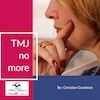
TMJ No More
By Christian Goodman
A lifestyle-oriented guide exploring jaw tension, posture, relaxation and repeatable at-home habits.
- Topic: Jaw comfort
- Author: Christian Goodman
- Format: digital guide
 Trusted & secure checkout
This article contains affiliate links. We may earn a commission if you purchase through them, at no extra cost to you.
This article is general health education, not a diagnosis or personal medical advice. Do not change treatment or supplements based on this article. Discuss individual results with a qualified healthcare professional.